Maurice Mikkers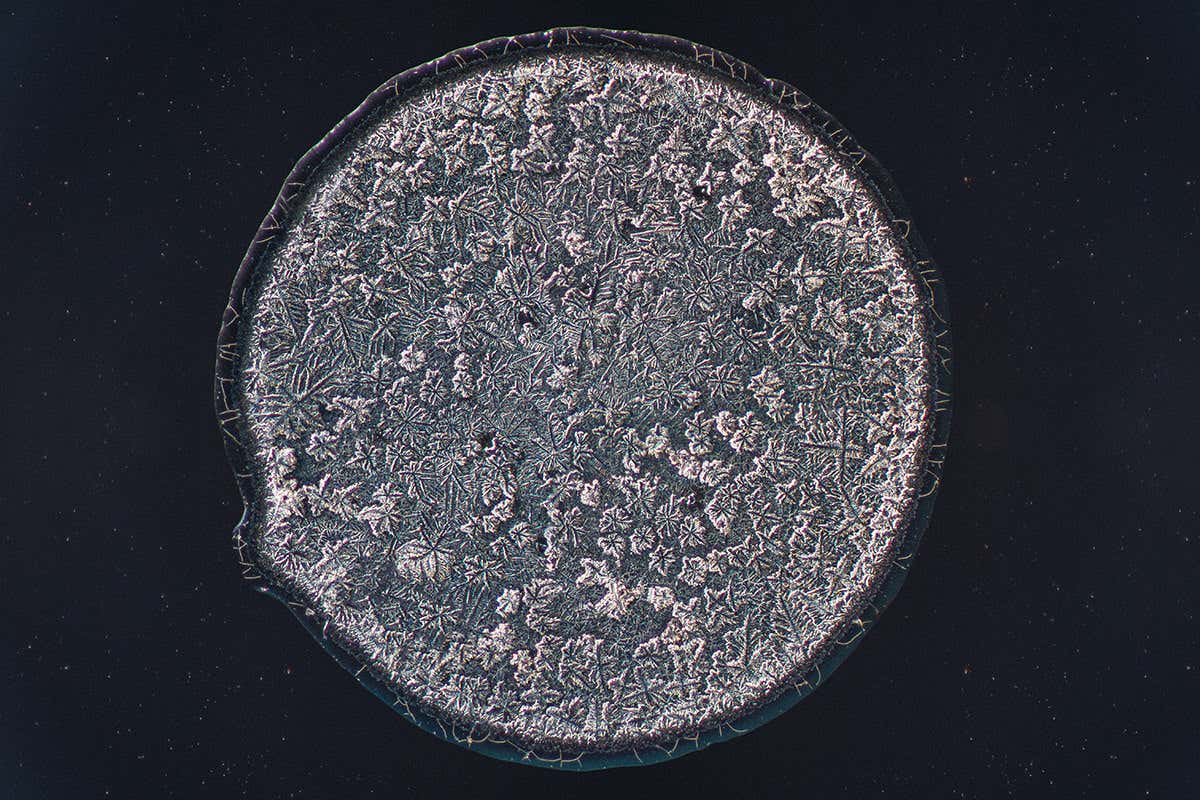
ARE these bubbles, bacteria or perhaps space rocks? No – they’re human tears as you’ve never seen them before.
Each disc is a tear droplet that has been pipetted onto a glass slide, allowed to evaporate and photographed using dark field microscopy. The delicate white structures are the crystallised salts left behind from the briny fluid. As well as salts, tears contain antibodies and other proteins that combat infections and help protect the eye.
Maurice Mikkers
Advertisement
Photographer Maurice Mikkers got the idea while imaging crystals of pharmaceutical drugs. He happened to bump into a table hard enough to trigger tears of pain, which became the subject of his next pictures. “I was amazed by what I saw,” he says. “People could not believe how beautiful it was.” Now he is seeking people to weep on demand for his growing collection.
Maurice Mikkers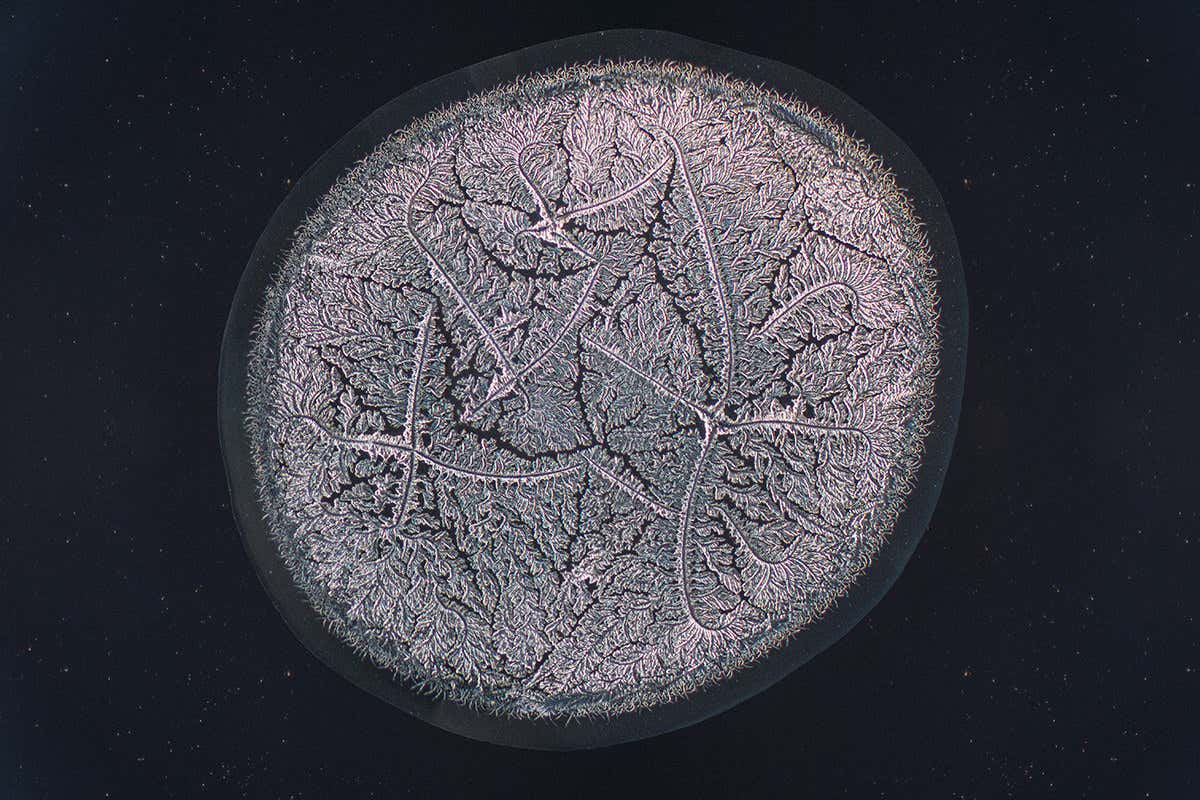
Mikkers advises his volunteers to have their own crying triggers prepared – sad movie scenes on YouTube or onions, for example. Tears of happiness are also welcomed. “It’s very personal.”
One crystallised tear looks different to the next, with no obvious hallmarks that could identify the person who produced it. “Every tear is as unique as a snowflake,” he says.
Maurice Mikkers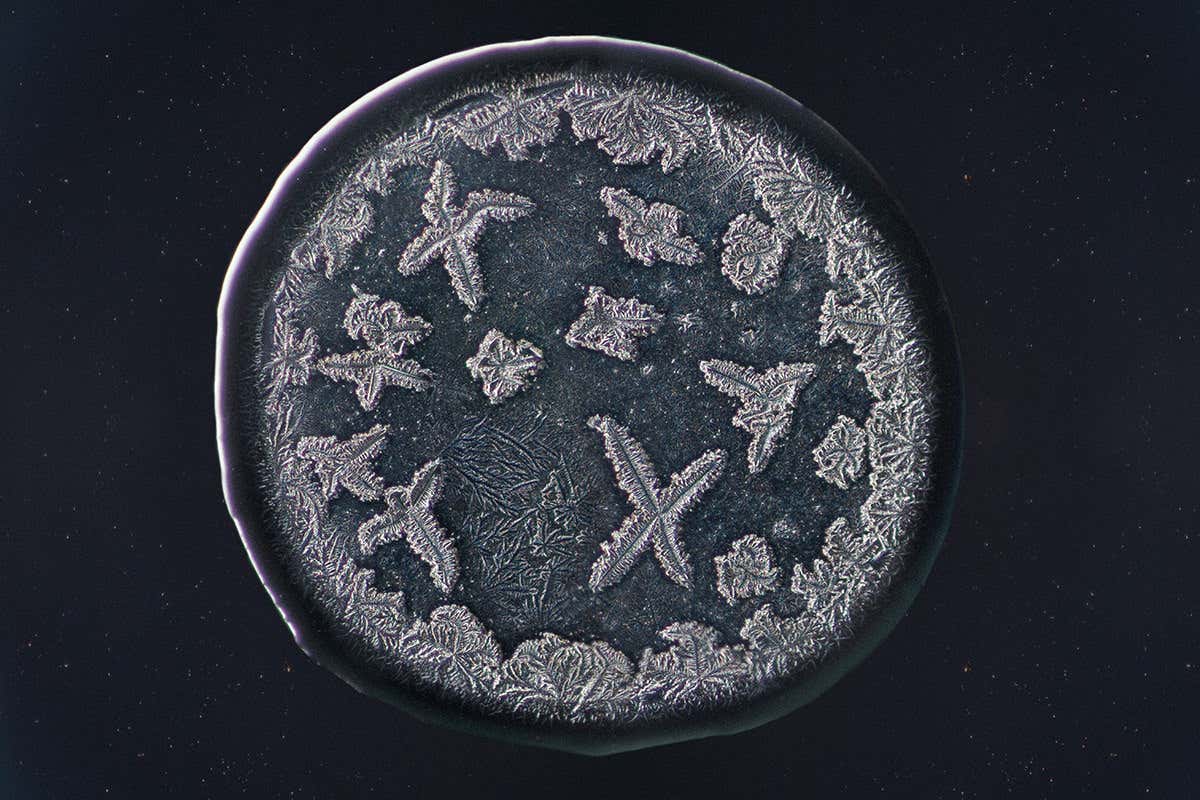
To find out more about why we weep see “The crying game: How tears can work for you“.
This article appeared in print under the headline “Cry me a snowflake”
Topics: