The sun sets in a market in Thailand, but the heat doesn’t always let up Sirichai raksue/Alamy Stock Photo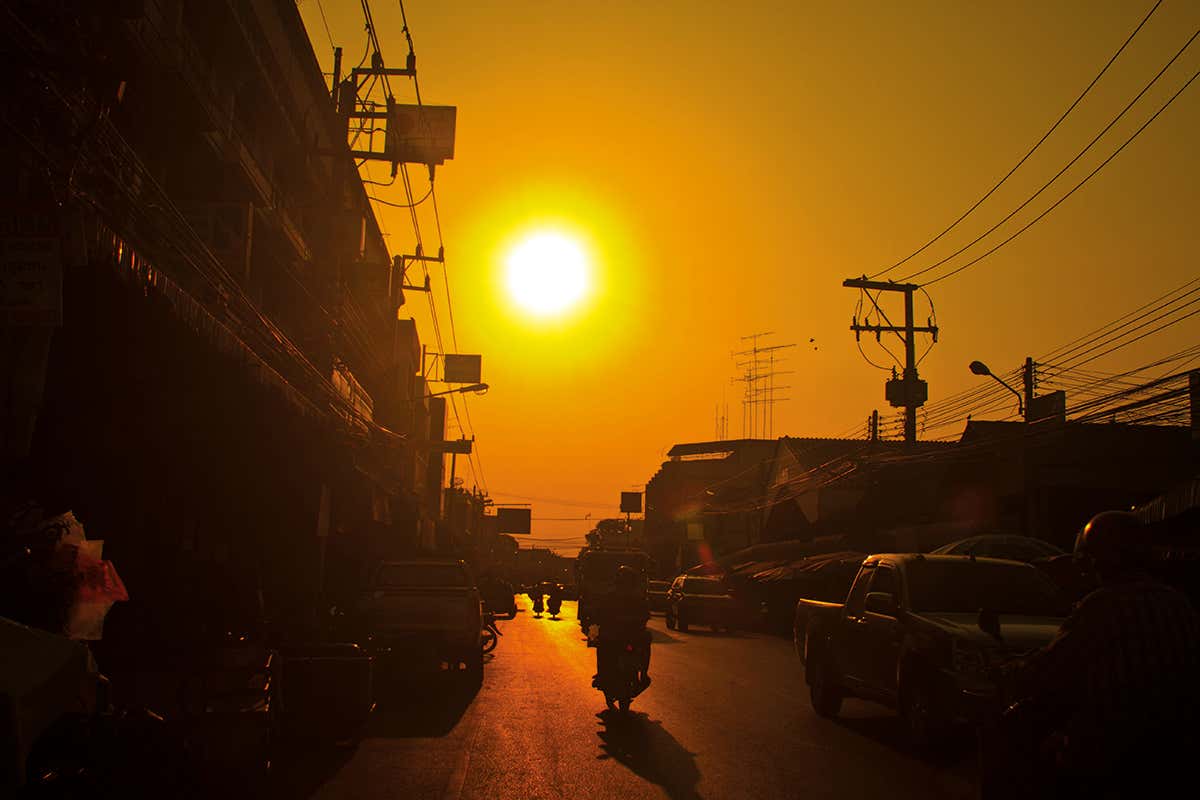
EVEN by Australian standards, last summer was a scorcher. January 2017 was the hottest ever recorded in Sydney and Brisbane, and great swathes of the south-east endured temperatures that often exceeded 40°C for weeks on end. In South Australia, soaring electricity demand caused an outage that left 90,000 homes sweltering through a blackout with no air conditioning. Across New South Wales, 87 bush fires blazed. It was so hot that dairy cows dropped dead in the fields.
This kind of heatwave isn’t a blip. It is part of a trend that saw Sydney’s temperature climb to over 47°C earlier this month – the highest recorded in the city for 79 years – and could see both it and Melbourne experiencing mega‑heatwaves with highs of 50°C by 2040. “Going out to 40 or 50 years, basically the summer we just had will be normal,” says Sarah Perkins-Kirkpatrick at the Climate Change Research Centre of the University of New South Wales (UNSW) in Sydney. “It hasn’t really sunken in yet in Australia.”
Australians are not alone: most of us fail to take the “warming” in global warming seriously. If you live somewhere temperate, you might even welcome a rise of a few degrees as offering more opportunity for picnics, barbecues and relaxed afternoons in pub gardens. That is unwise. Even now, heatwaves are deadly, and as global warming increases so will the death rate. Human physiology is not designed to cope with the temperatures predicted for…