Bolivia’s salt flats Robin Hammond/Panos Pictures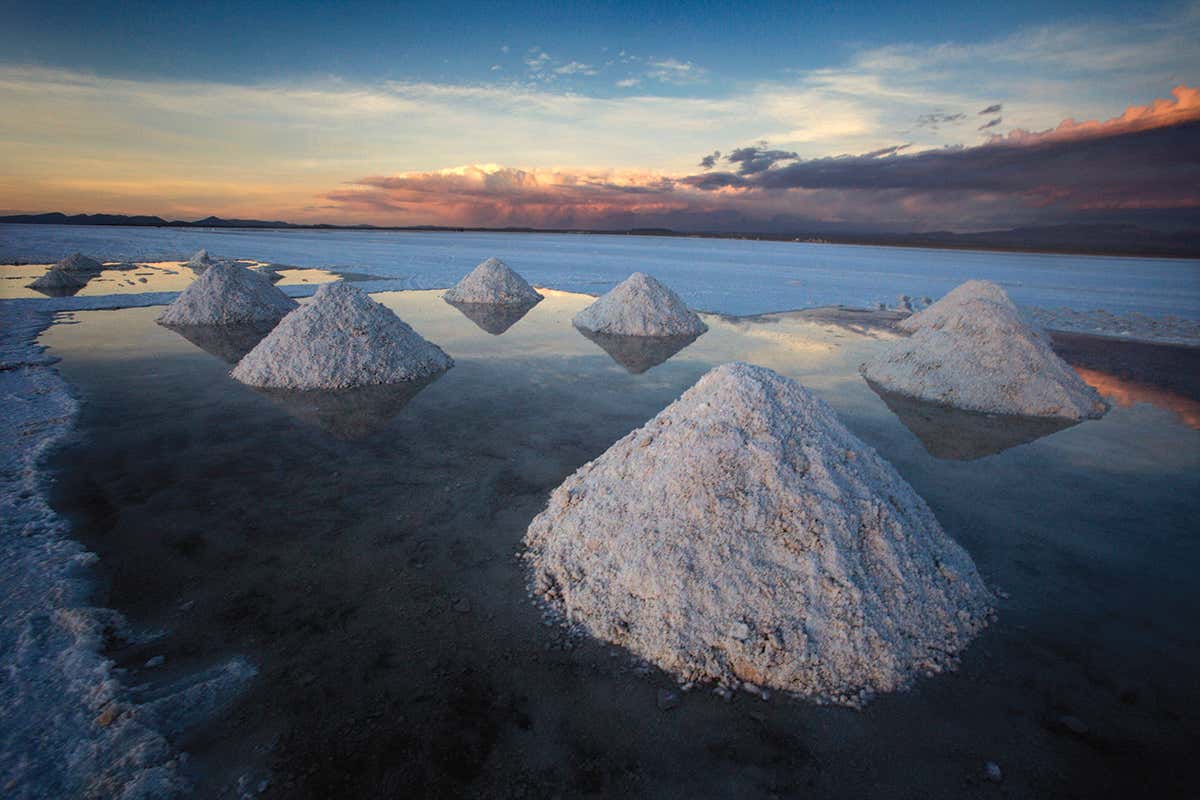
More than 300 million people around the world depend on drinking water extracted from the sea, but turning saltwater into freshwater isn’t always efficient. Computer pioneer Alan Turing had an idea more than 50 years ago that is just now being put to use to improve the process.
Two basic desalination methods exist: boil sea water and collect the evaporated pure water, or pump sea water through membranes that extract the salt. This process, called reverse osmosis, is favoured everywhere except in the Middle East, where boiling is cheaper. But with existing membranes there is always a trade-off…