False colour image of the South Pole-Aitken basin NASA/GSFC/University of Arizona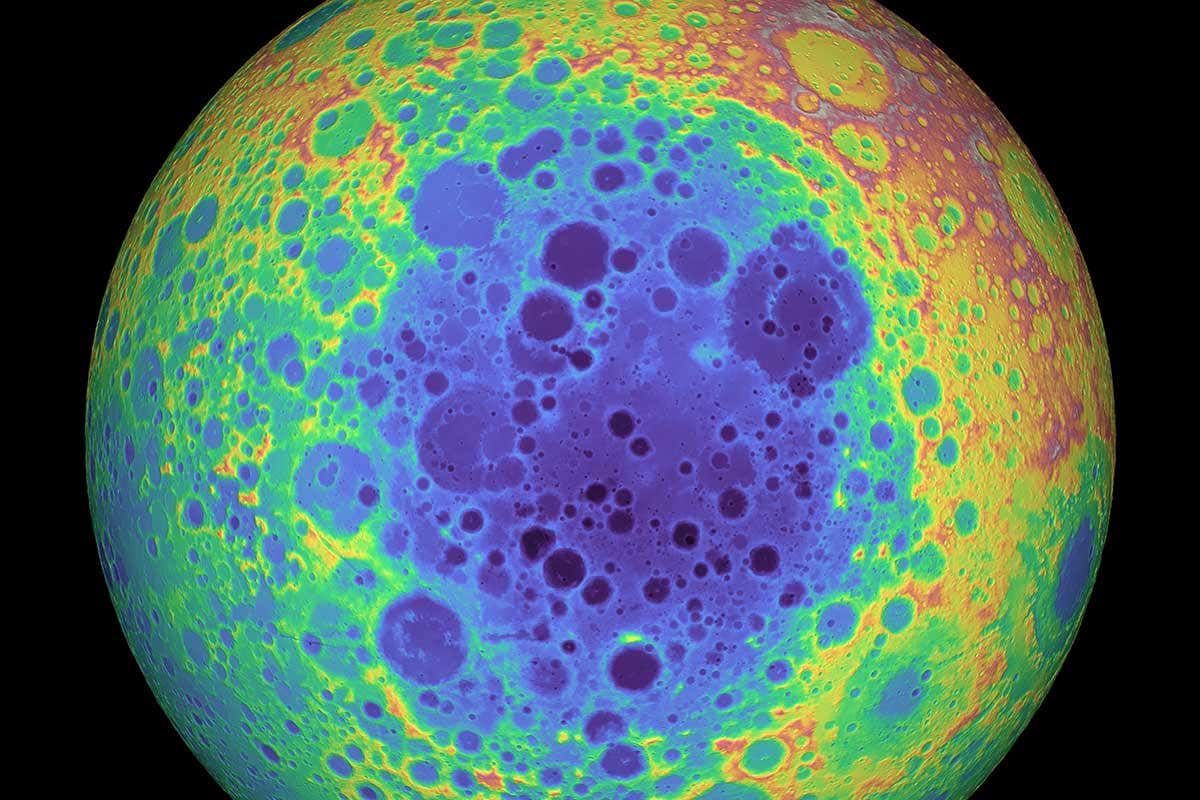
At the south pole of the moon is a giant crater called the South Pole-Aitken basin, measuring about 2500 kilometres across. It is thought to have been created by a large asteroid striking the moon 4 billion years ago, and is among the largest craters in the solar system. Now, researchers say the remains of that asteroid may have been found under the lunar surface.
Using gravity data from NASA’s GRAIL spacecraft, which orbited the moon from 2011 to 2012, Peter James at Baylor University in Texas…
![Small dome in the Compton-Belkovich region (61.33 ?N, 99.68 ?E). Evidence indicates a volcanic origin for this and other intriguing features in the region. Incidence angle is 64?, Sun is from the SSW, image is ~510 m across. NAC image number M139238146L [NASA/GSFC/Arizona State University].](https://images.newscientistbeta.com/wp-content/uploads/2023/07/07172644/SEI_163208069.jpg)