An artist’s representation showing fluorescent features on a heterodontosaur Brian Engh/dontmesswithdinosaurs.com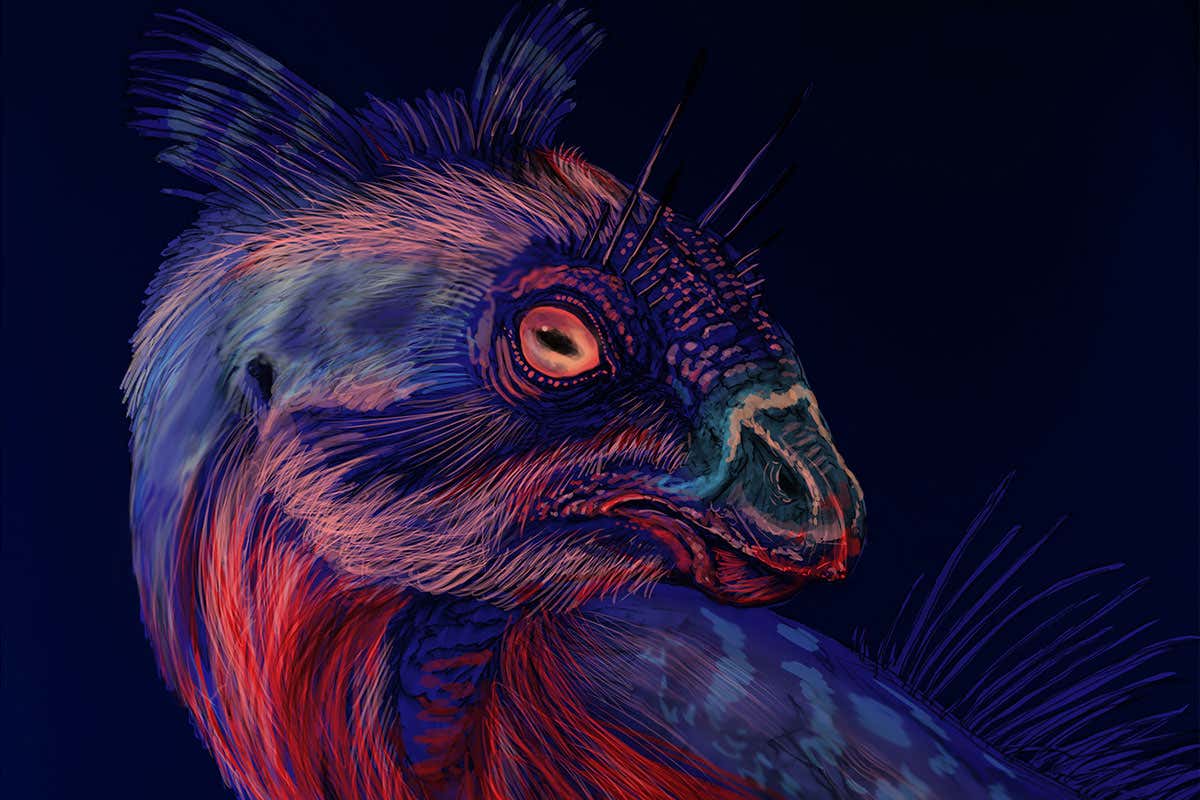
As well as being brightly coloured in normal light, some dinosaurs may have had ultraviolet, fluorescing horns, frills or feathers – and a few species might even have used this glow to attract a mate.
Fluorescence is relatively common among amphibians and several species of bird have fluorescent features, which absorb ultraviolet light and re-emit it at a different wavelength. Those body parts glow under UV light. Puffins have fluorescent patches on their beaks, for instance, and budgerigars have some fluorescent feathers on their heads.
D. Cary Woodruff at the…