Pyrite, a mineral that forms in the sea, traps trace metals MILLARD H. SHARP / SCIENCE PHOTO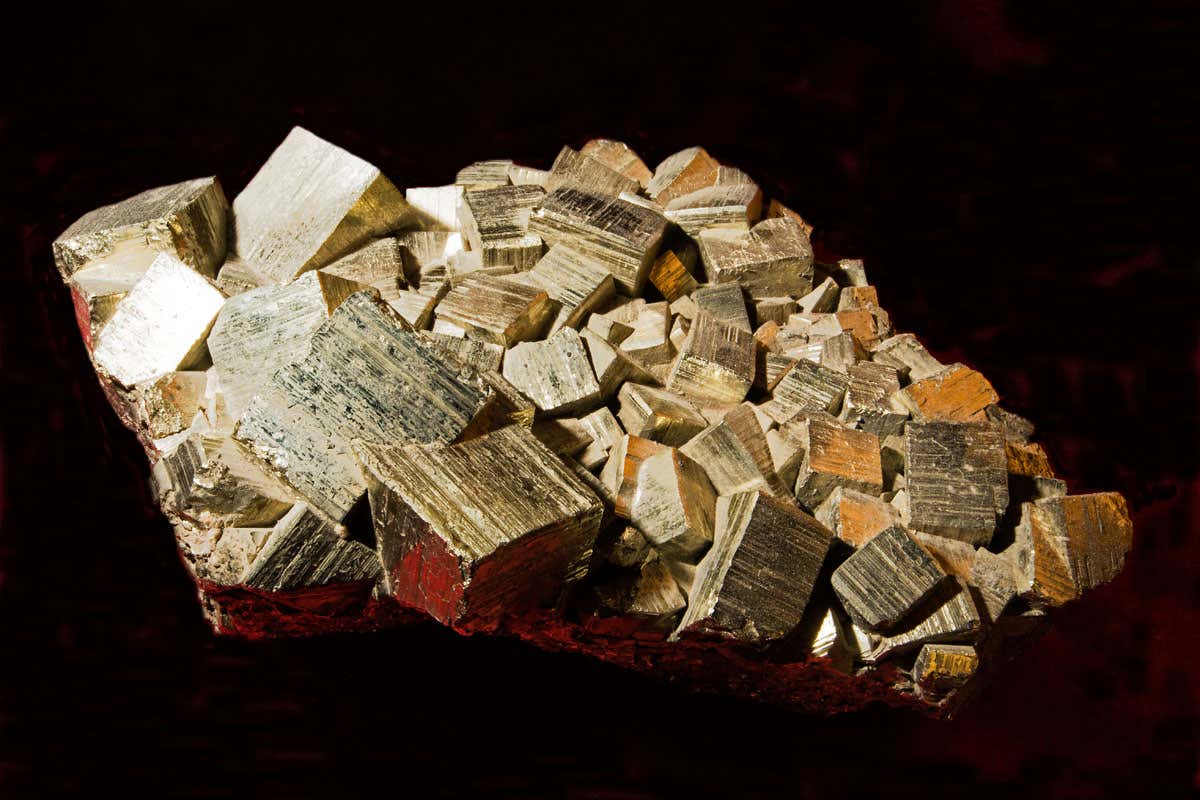
Trace metals like iron and copper became rare in the oceans between 2 and 1.2 billion years ago, after having been abundant for the previous billion years. This decrease may have caused a crisis for the simple microorganisms of the time, ultimately leading to the evolution of complex cells.
The oldest known living organisms were single-celled microorganisms called bacteria and archaea. However, nowadays there is a third group of organisms called eukaryotes, which have larger and more complex cells. Many eukaryotes are…