Your brain determines your perception of time YANDONG LIU / Alamy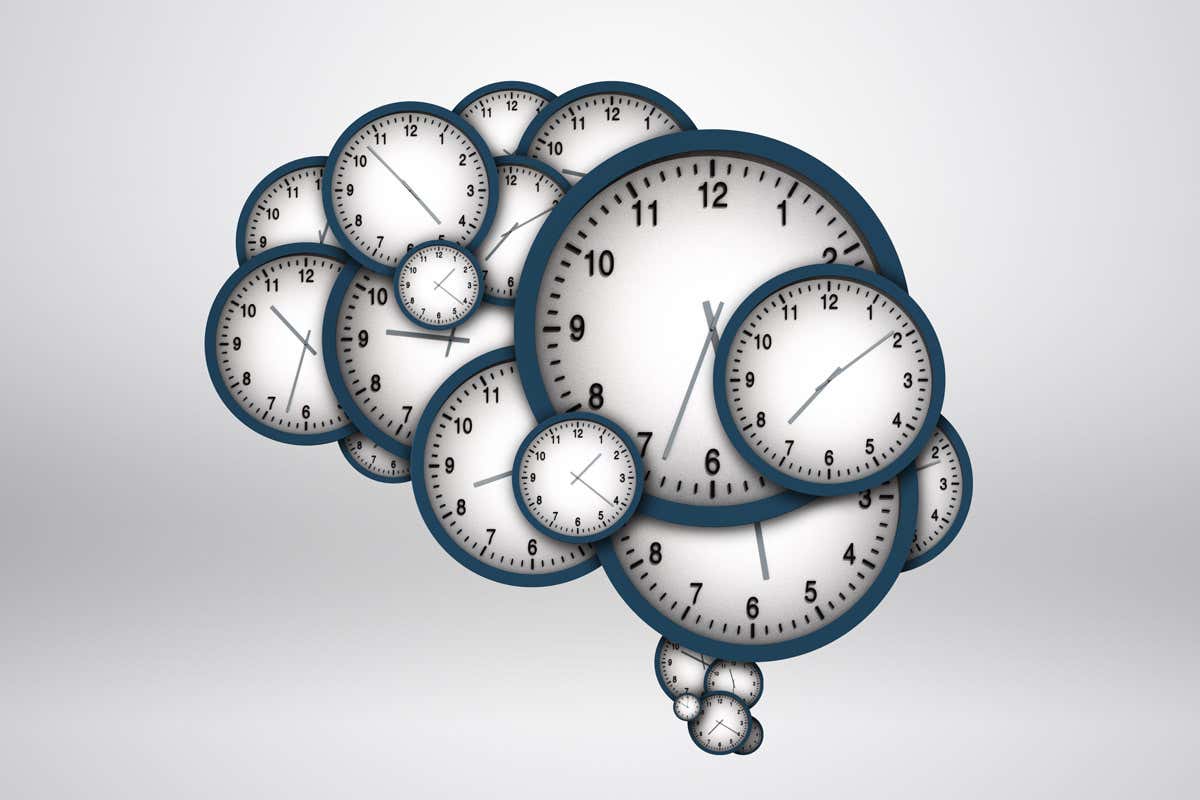
Time may sometimes seem slower than it is because part of our brain becomes fatigued.
“One might have experienced this manipulation after hearing music with fast tempo,” says Masamichi Hayashi at Osaka University in Japan. “The next song with a slightly slower tempo will feel even slower.”
Using a similar method of manipulation, Hayashi and his colleagues wanted to determine if there was a neural basis for our subjective sense of time. They focused their efforts on the brain’s supramarginal gyrus (SMG) after reading reports on how…