North Pole sign in melting ice and meltwater Sue Flood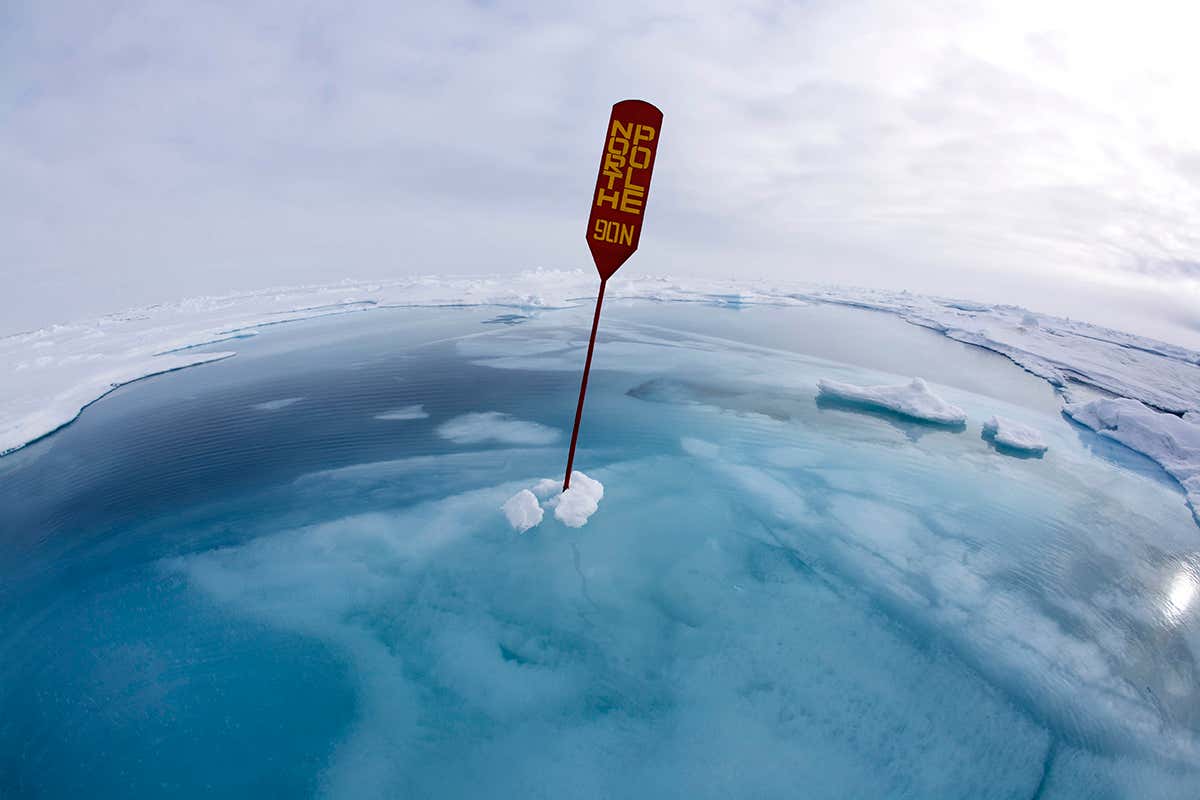
The terrifying, transformative effects of climate change are captured perfectly in North Pole Underwater, an image taken by photographer Sue Flood. The signpost at the centre of the photo represents the geographic North Pole in the Arctic, the northernmost point on the planet at a latitude of 90 degrees north, but rising sea levels caused by warmer global temperatures have been pushing its location east since 2005.
Flood says she hopes the photo will raise awareness of the “alarming” rate that polar ice is melting and the “urgent action” that is needed.
The shot won Flood the top prize in the climate change category of the 2020 Science Photographer of the Year competition, organised by the Royal Photographic Society.
Advertisement
Dr David Maitland FRPS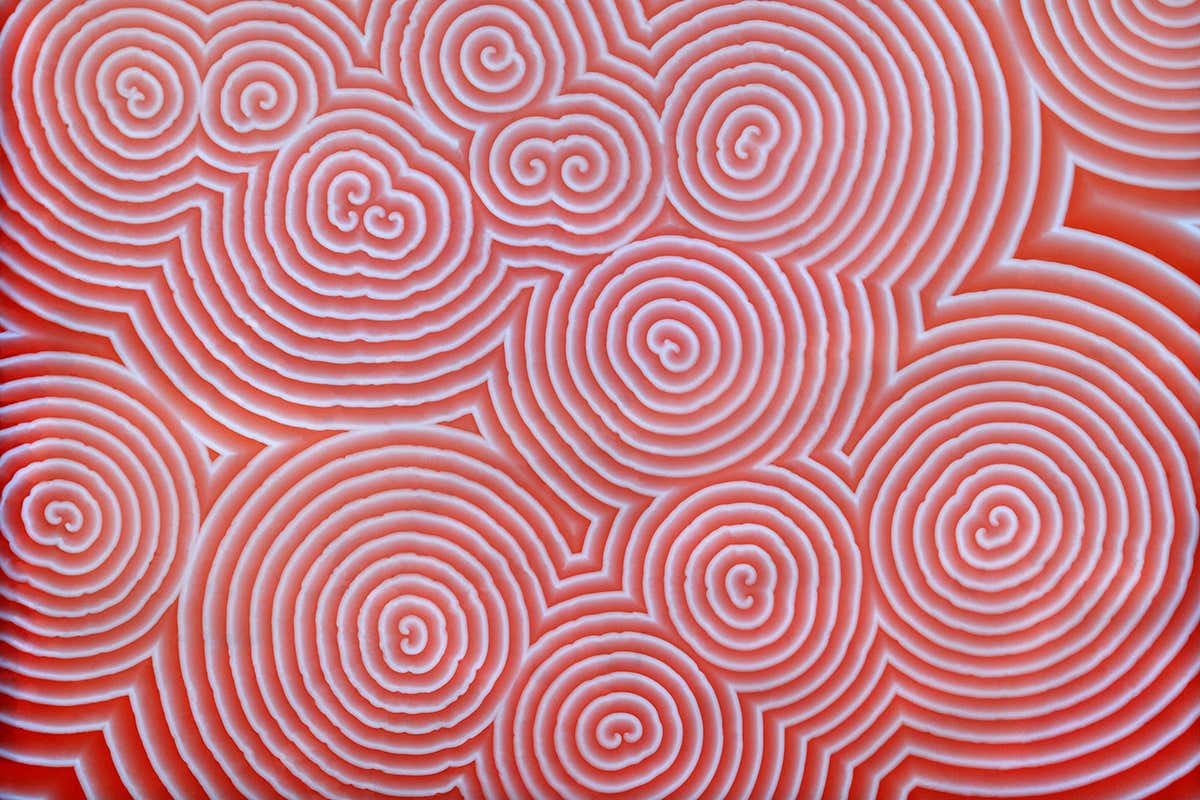
Among the competition’s other selected images is David Maitland’s Turing Patterns. The photo shows the hypnotic spiralling of chemicals on a Petri dish, caused by a Belousov-Zhabotinsky reaction. These oscillating chemical reactions were first predicted by mathematician Alan Turing.
Quartz and some of the associated minerals that give it color enter into the fossilizing process as solutions, gels, and sols. Although they move as liquids, gels and sols are made up of very small particles bound together by weak electrical bonds. In this specimen, the linear arrays of small round structures were produced by local condensations of particulate mineral. During their consolidation, small puddles of pigment formed that are unrelated to the structure of the bone itself. NORM BARKER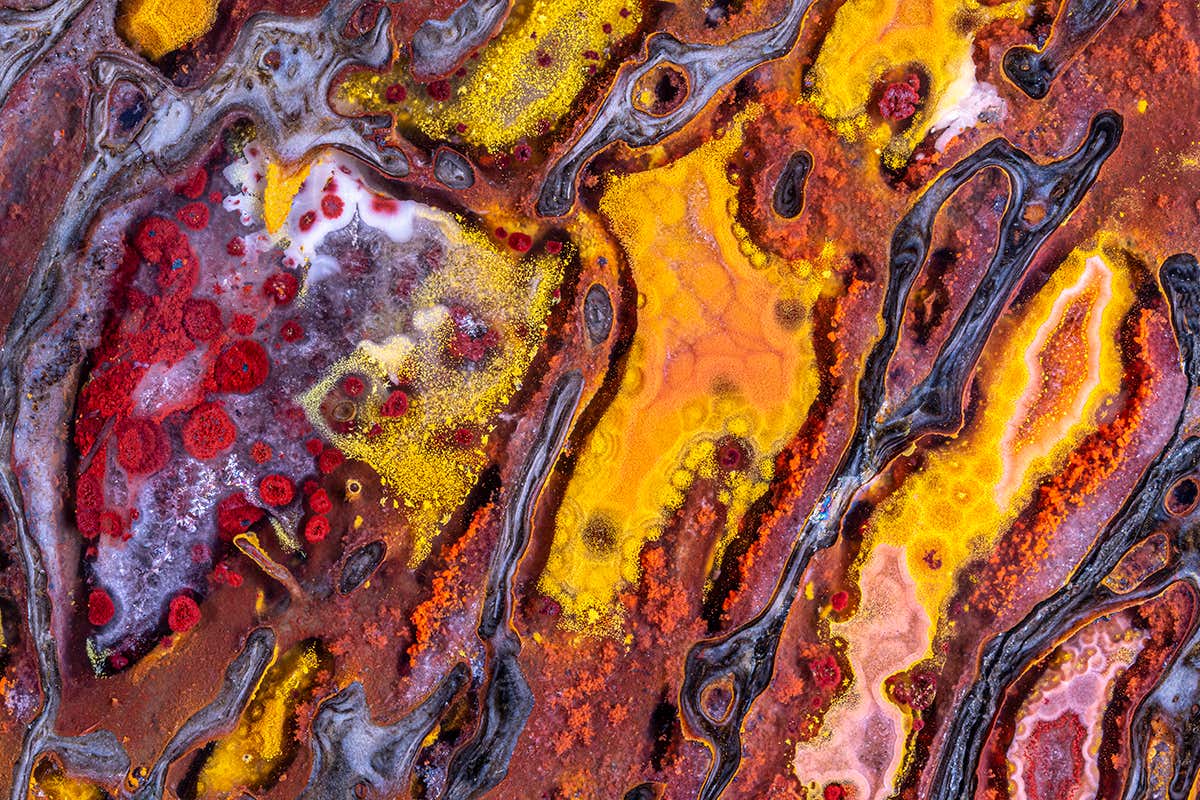
Norm Barker used a microscope to reveal a cross section of a dinosaur fossil for an image he calls Dinosaur Bone. The vibrant colours result from the changing mineral content during the fossil’s formation.
This series of time-lapse, colour, digital photographs show how a soap film reacts when subjected to the sound waves of Frank Sinatra's rendition of the song 'My Way'.The studio/lab set-up connects a small funnel dipped in soap solution to a loud speaker. The music emits sound waves at different frequencies in response to the spread of the acoustic sound waves.The film vibrates in all direction with ever-changing intensity to the musical beats, creating these amazing patterns of colour.This images has been created by combing eight separate, and individually photographed images taken over a period of repeated playings of the song. This is because the frequency of acoustic waves 'rippling' creates unsightly shadows in the film.The individual photographs illustrate soap bubble scientific phenomena. As such, post-production and digital manipulation must be kept to a minimum.The original photographs were cropped to 1:1 ratio and basic Adobe Lightroom and Photoshop adjustments made.Photographed in my Studio/Lab in February 2020, (as part of an Art + Science collaboration with Prof. Stefan Hutzler, Leader of the Foams + Complex Systems Group, School of Physics, Trinity College Dublin).My 'Bubble-Beats' series is inspired by a presentation, 'Sound and Vision: Visualization of music with a soap film, and the physics behind it', given by Prof. Florence Elias, (Materials + Complex Systems, Univ. Paris Diderot).Equipment:Nikon 800E, Rodenstock HR Digaron Macro f5.6 (on loan by Paula Pell-Johnson at Linhof Studio), 105mm Float, Gitzo tripod, Area Swiss Cube, Novoflex Castel Cross Q Focus Rack, Novoflex Balpro T/S Bellows with Novoflex ProShift +, tethered shooting. Kym Cox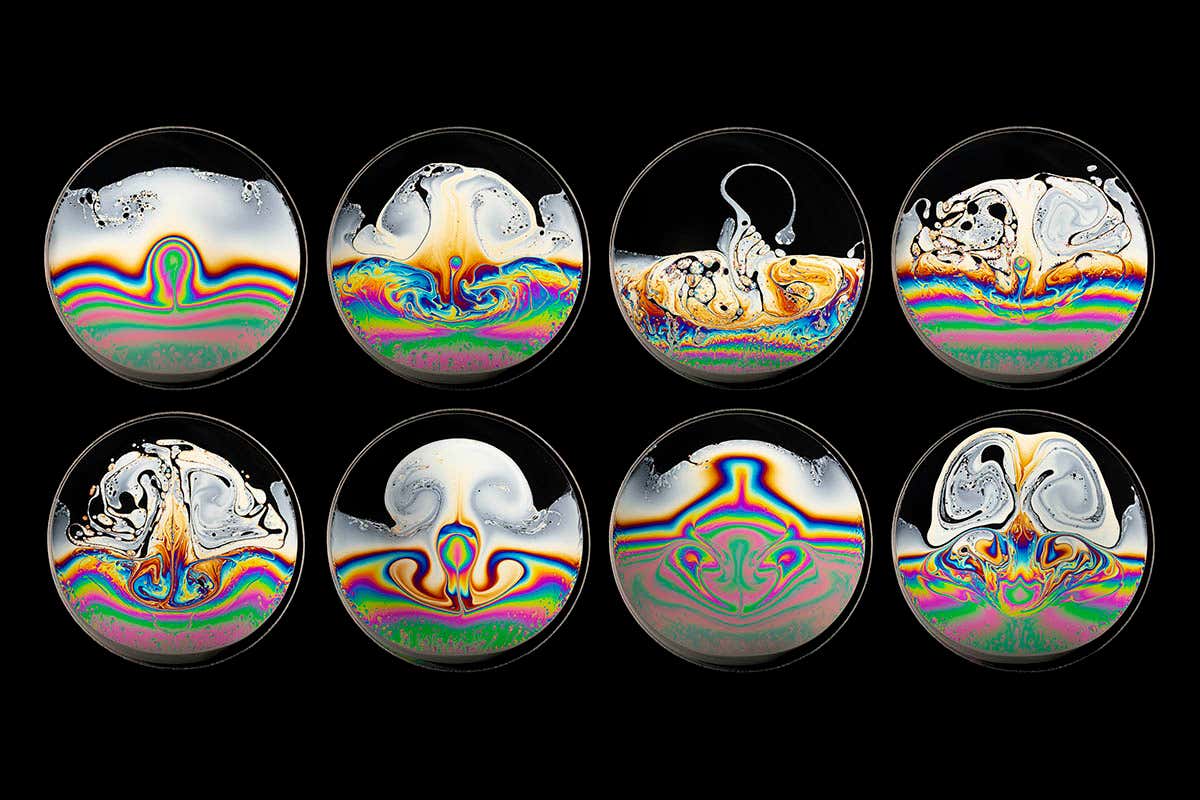
In My Way – Frank Sinatra, a composite shot from her photo series Bubble Beats, Kym Cox used sound to create patterns on a soap film stretched over a loudspeaker. This image was achieved with Sinatra’s signature song; varying sound frequencies alter the soap’s thickness, changing the colours that show up.
The competition’s winning and shortlisted images will be exhibited online by the Science and Industry Museum in Manchester, UK, from 12 February to 2 May.
The rest of the competition entries can be seen at rps.org/spoty.
Topics: