Chinese scorpion (Mesobuthus martensii) Eng Wah Teo / Alamy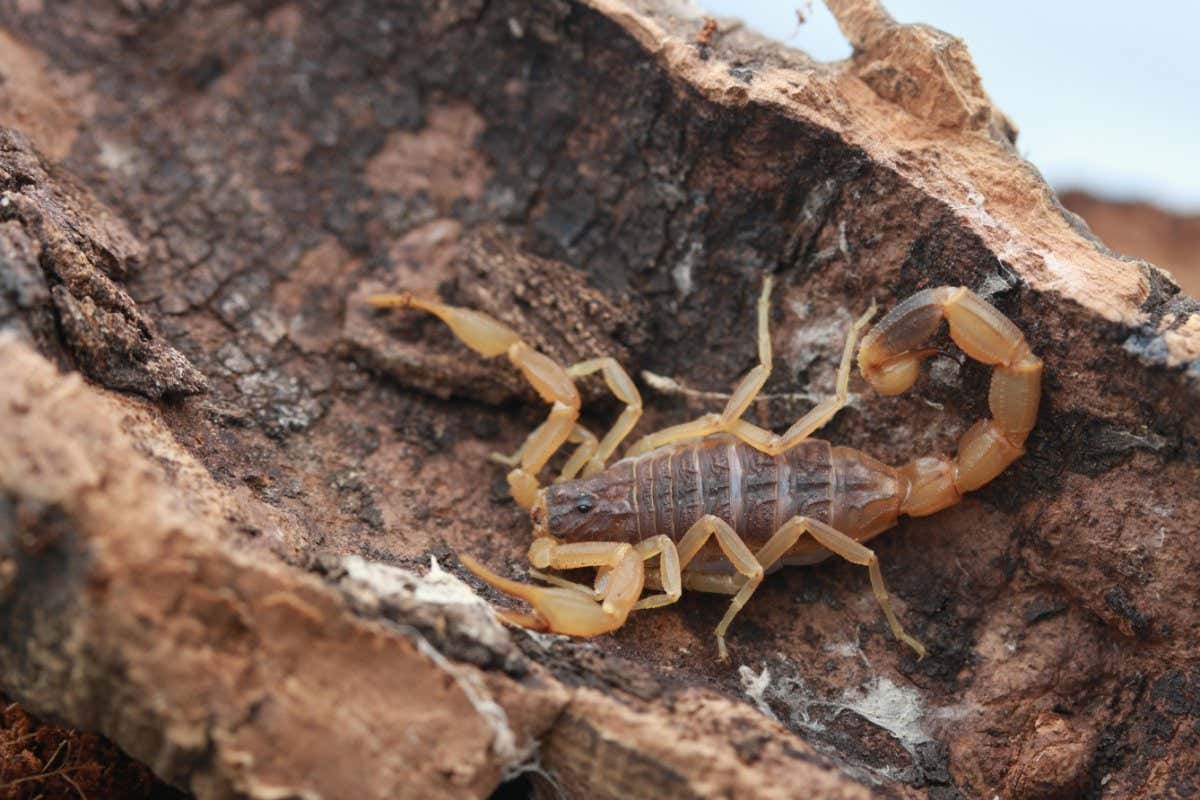
Newborn scorpions hitch a ride on their mother’s back for protection, and at this early stage in their lives cannot eat, excrete or sting. But scientists have found that they still accumulate venom, enabling them to catch prey and defend themselves as soon as they go it alone after shedding their first exoskeleton.
Such speedy development of venom production helps to explain scorpions’ remarkable survival ability since their ancient aquatic ancestors swam the seas more than 400 million years ago, surviving even mass extinction events, say the researchers behind…


