An illustration of NASA’s Cassini spacecraft diving through the plumes of Saturn’s moon Enceladus NASA/JPL-Caltech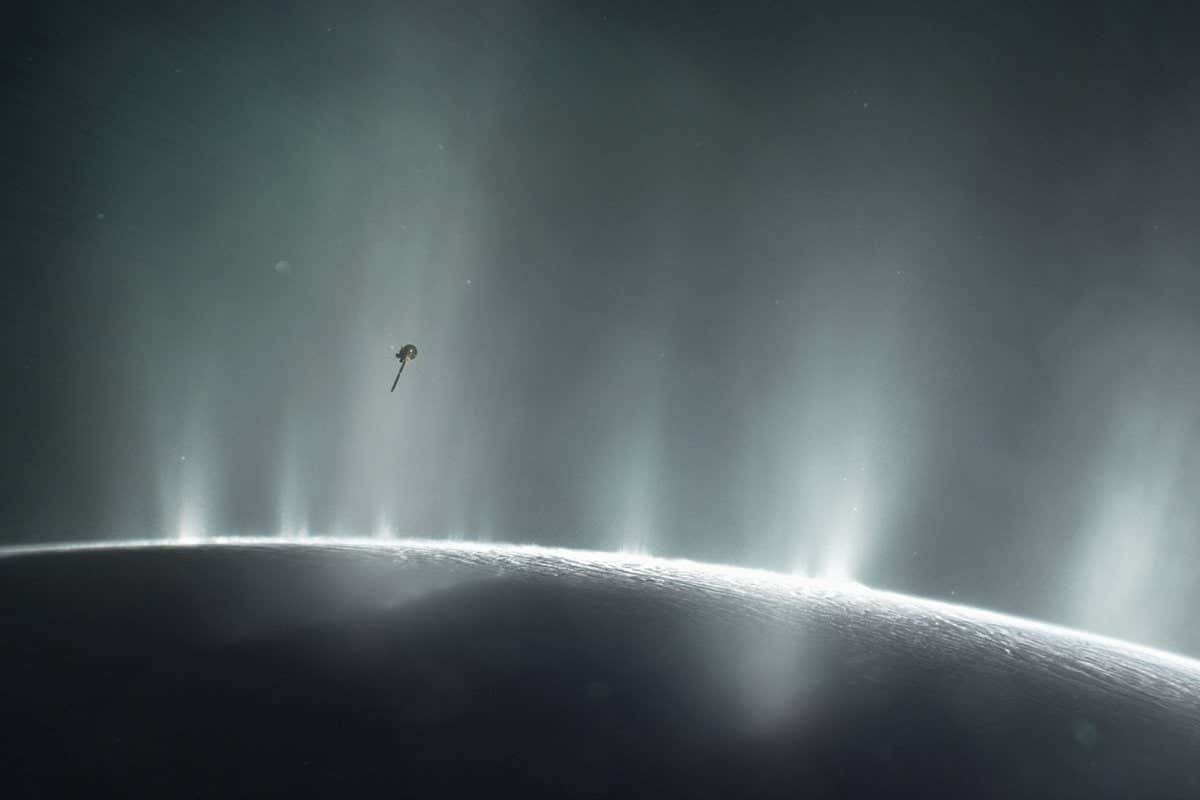
We should be able to detect signs of life like amino acids on Saturn’s moon Enceladus without destroying them in a high-speed collision.
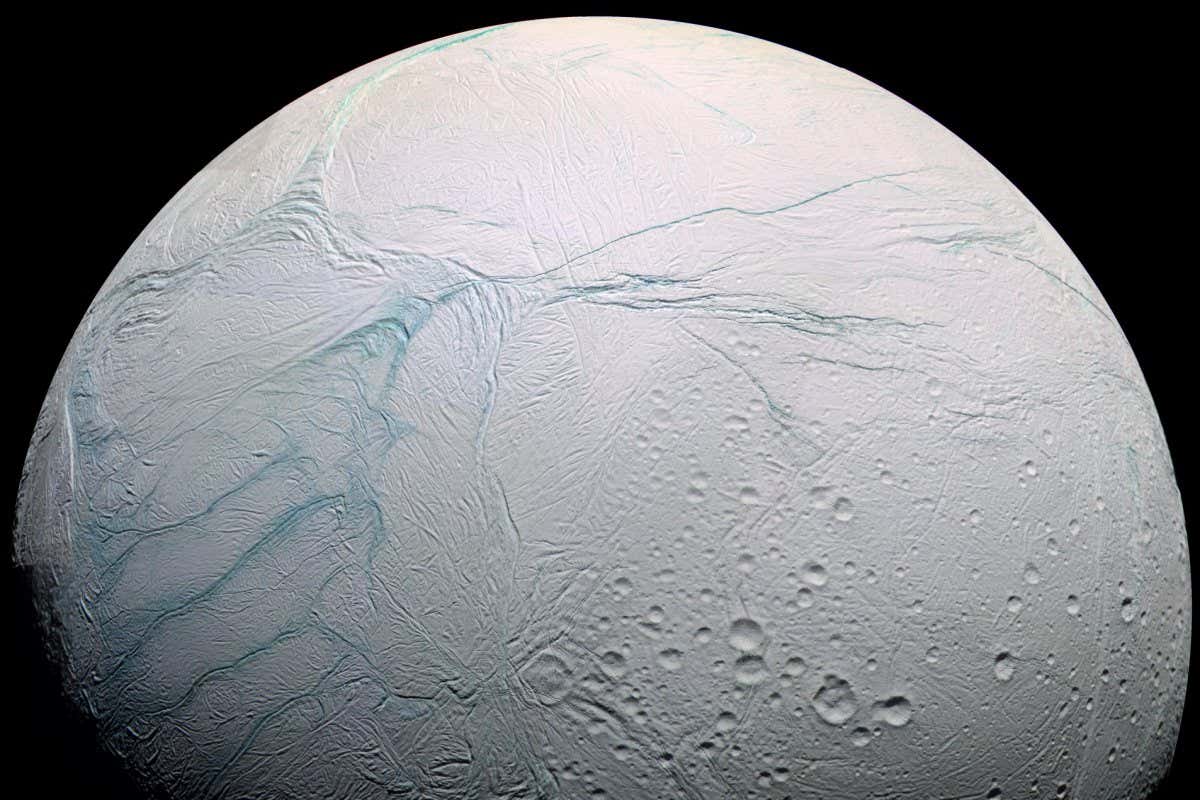
In 2005, NASA’s Cassini spacecraft found evidence that plumes of water ice were erupting from Enceladus, with images showing clear evidence they were coming from the moon’s south pole region. Later studies suggested these plumes originated from a subsurface ocean, located beneath an icy shell, which could host conditions right for life.
Cassini itself wasn’t able to look…