Computer model showing the molecular structure of a circadian clock Kai protein found in cyanobacteria LAGUNA DESIGN/SCIENCE PHOTO LIBRARY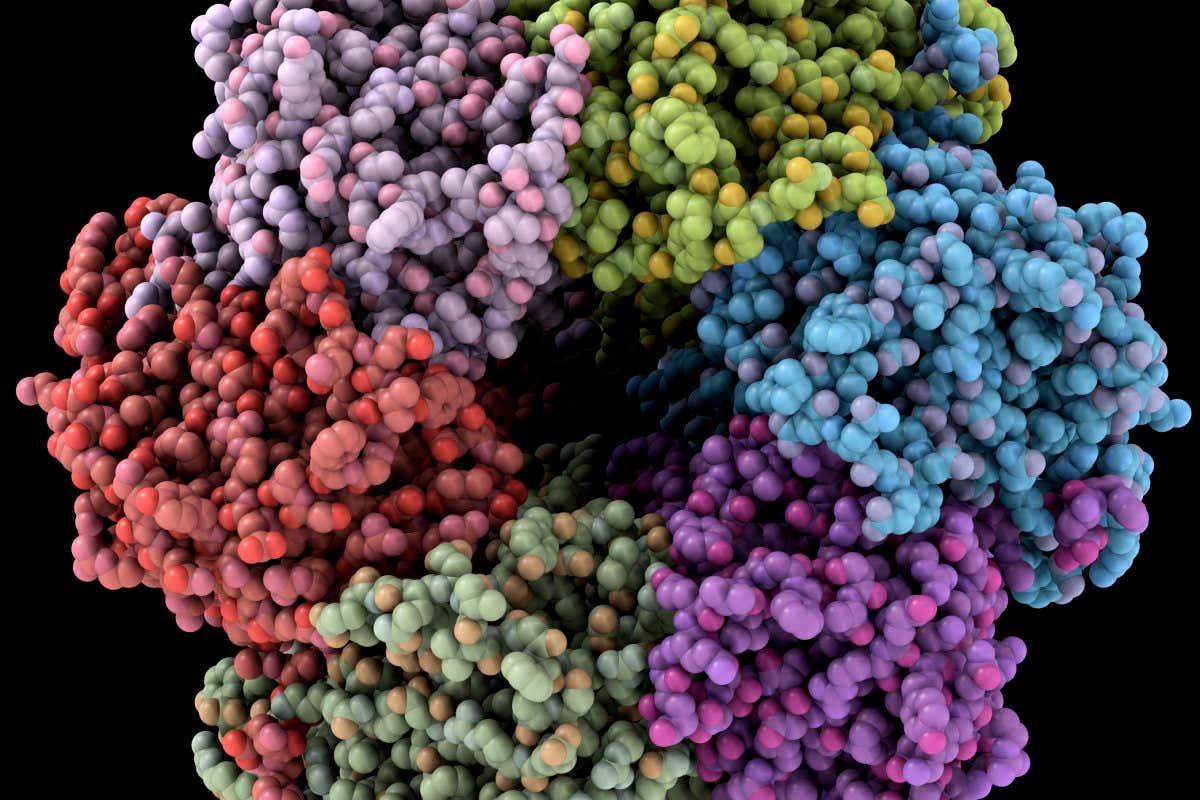
A circadian clock has been recreated in full inside a test tube. It is the first time the cellular pacemaker has been produced outside a living organism.
The clock, copied from a cyanobacteria, was devised by Carrie Partch at the University of California, Santa Cruz, and her colleagues. It is made from six proteins and can work without any human intervention for several days. “I think the record we’ve got so far is two weeks,” says Partch.
Circadian clocks regulate…