Subscribe now

Space

Sun-like stars may go through brighter phases as they grow up

Computer modelling supports the idea that nascent stars brighten dramatically during growth spurts, which could explain an astrophysical mystery

By Will Gater

2 December 2021

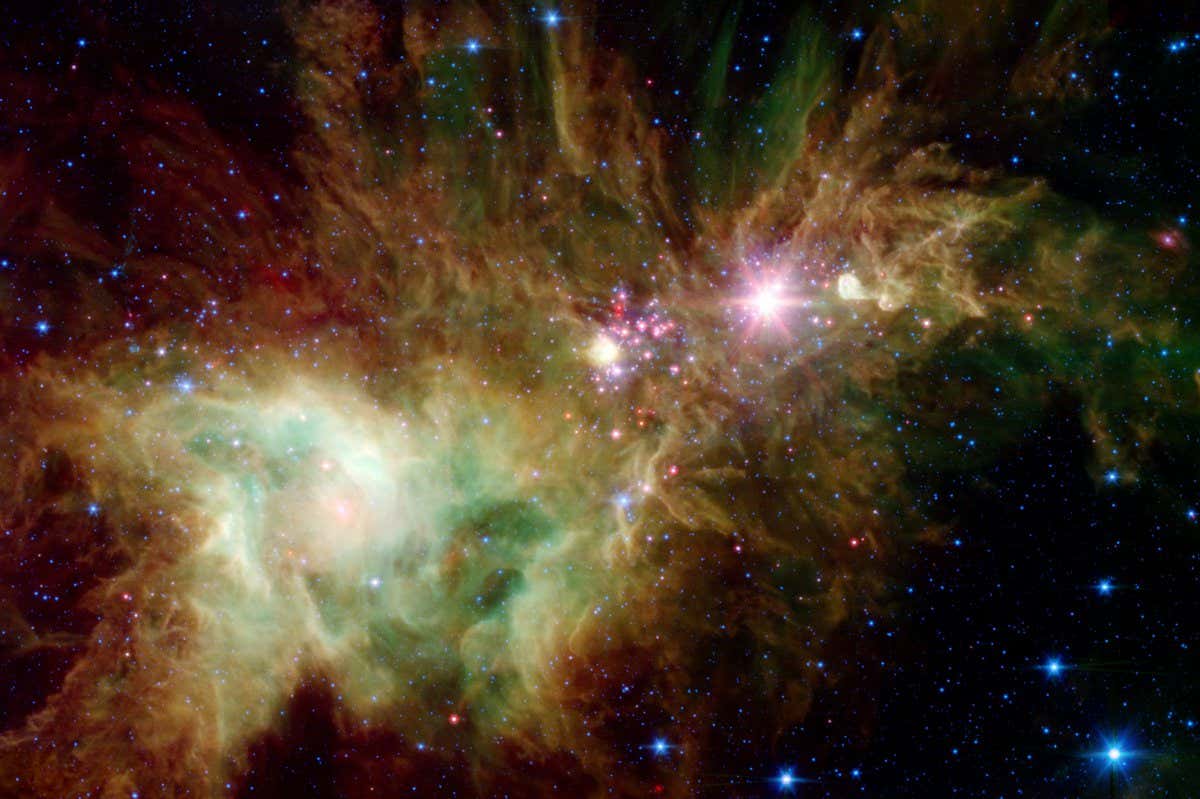
Newborn stars, hidden behind thick dust, are revealed in this image of a section of the so-called Christmas Tree Cluster from NASA's Spitzer Space Telescope. The newly revealed infant stars appear as pink and red specks toward the center and appear to have formed in regularly spaced intervals along linear structures in a configuration that resembles the spokes of a wheel or the pattern of a snowflake. Hence, astronomers have nicknamed this the

Newborn stars appear as pink and red specks in the centre of this image from NASA’s Spitzer Space Telescope

NASA/JPL-Caltech/P.S. Teixeira (Center for Astrophysics)
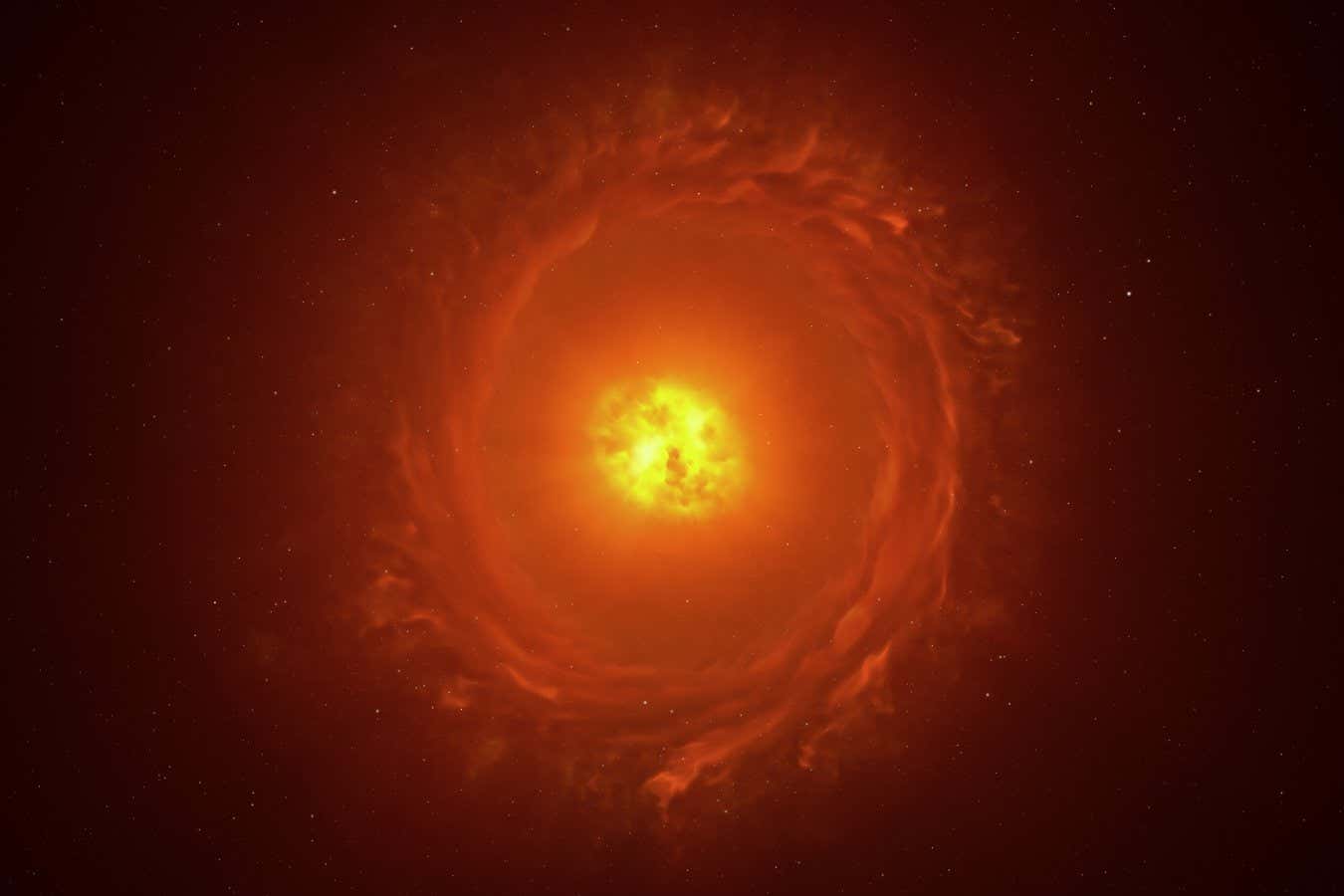
Powerful outbursts of energy from young sun-like stars could be central to how they and their planetary systems form, according to a modelling study. The results hint at a possible explanation for a decades-old astrophysical mystery.

One theory for how stars like our own are born, known as the steady-state concept, makes predictions about how bright young stars should be when they’re under construction, continuously gathering gas and dust. Yet when we look into the …
Sign up to our weekly newsletter

Receive a weekly dose of discovery in your inbox. We'll also keep you up to date with New Scientist events and special offers.

Sign up

To continue reading, subscribe today with our introductory offers

Popular articles

Trending New Scientist articles

Piano Exit Overlay Banner Mobile Piano Exit Overlay Banner Desktop