Subscribe now

Physics

Photons could be ‘split’ in two to create a weird new form of light

Physicists have shown that "splitting" particles of light into so-called Majorana bosons, a feat long thought to be mathematically impossible, may be achievable

By Leah Crane

15 December 2021

Split photon

Artistic illustration of a photon split in two

Trustees of Dartmouth College
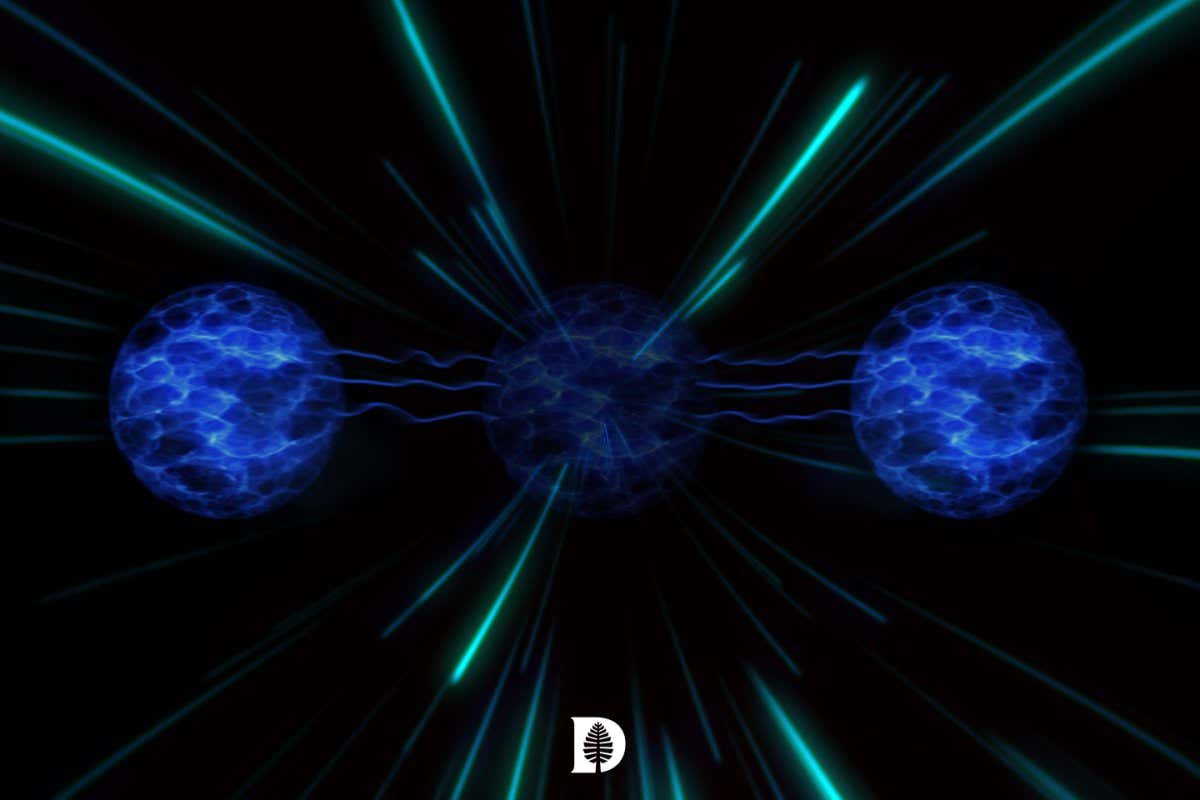
A type of light that was previously thought to be impossible may be real after all. Creating it would involve “splitting” a single photon of light between two locations to produce particles called Majorana bosons.

In 1937, Italian physicist Ettore Majorana suggested that some electrons, which fall into a category of particles called fermions, could be split into two theoretical particles called Majorana fermions. This wouldn’t involve physically breaking the electrons in half, but rather using quantum effects to give the electron the appearance of being split.…
Sign up to our weekly newsletter

Receive a weekly dose of discovery in your inbox. We'll also keep you up to date with New Scientist events and special offers.

Sign up

To continue reading, subscribe today with our introductory offers

Popular articles

Trending New Scientist articles

Piano Exit Overlay Banner Mobile Piano Exit Overlay Banner Desktop