Photo taken by the Lunar Reconnaissance Orbiter camera showing the swirl region within Mare Ingenii NASA/GSFC/ASU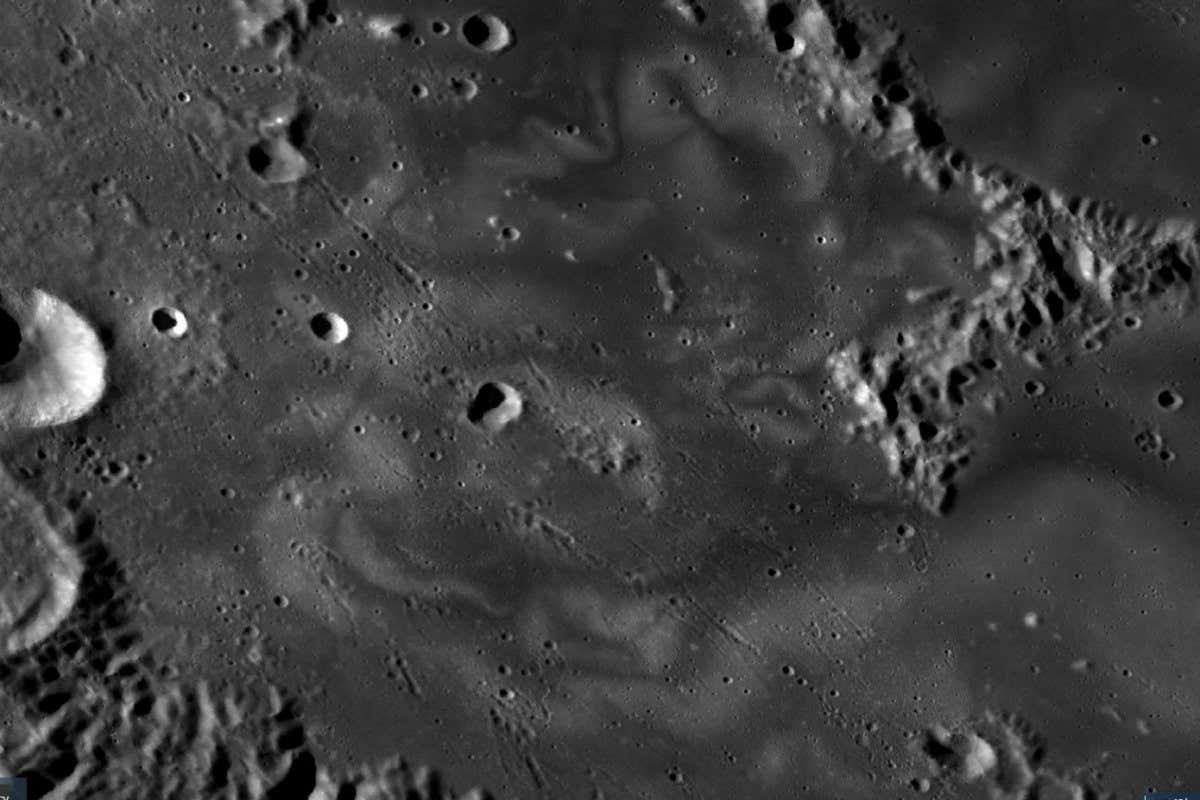
Strange bright patterns on the moon’s surface called lunar swirls don’t seem to be simply draped across the ground, as researchers thought, but instead correlate with topographical changes. This means they may be more complicated than we realised.
The swirls, which resemble cream being stirred into coffee, range in size from a few metres across to more than 50 kilometres, and they have been spotted all over the surface of the moon. But their nature – and how exactly they form – has…
![Small dome in the Compton-Belkovich region (61.33 ?N, 99.68 ?E). Evidence indicates a volcanic origin for this and other intriguing features in the region. Incidence angle is 64?, Sun is from the SSW, image is ~510 m across. NAC image number M139238146L [NASA/GSFC/Arizona State University].](https://images.newscientistbeta.com/wp-content/uploads/2023/07/07172644/SEI_163208069.jpg)