Artwork of a superconducting chip TU Delft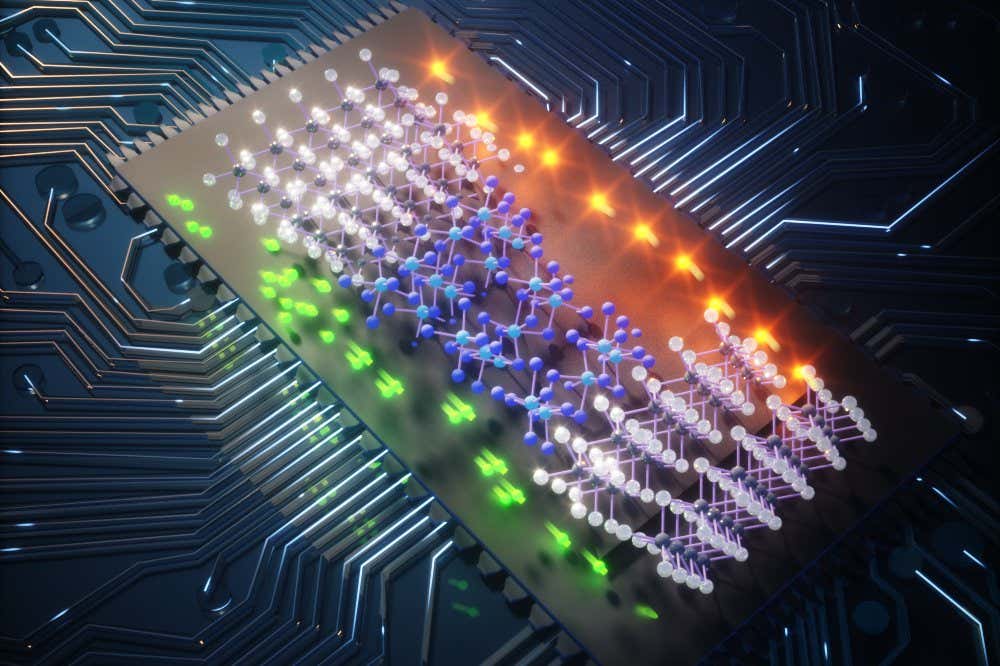
A superconducting diode built from a sandwich of atom-thick layers could save vast amounts of power in traditional computing and transform superconducting quantum computers.
The diode – an electronic component that lets electricity preferentially travel in one direction – is a fundamental part of the transistor, the foundational component of modern computing. Diodes and transistors are made from semiconductors that have electrical resistance, meaning energy is lost in the form of heat.
Superconductors are materials with no resistance and so no energy loss, but they don’t work as diode components, since resistance is…