Subscribe now

Life

Ancient predator was one of first vertebrates to grow fast while young

The bones of 2-metre-long tetrapod Whatcheeria reveal that it had an early growth spurt – a trait that was thought to have evolved later

By Riley Black

28 November 2022

Whatcheeria

The early tetrapod Whatcheeria was a large predator

Courtesy the FIeld Museum of Natural History
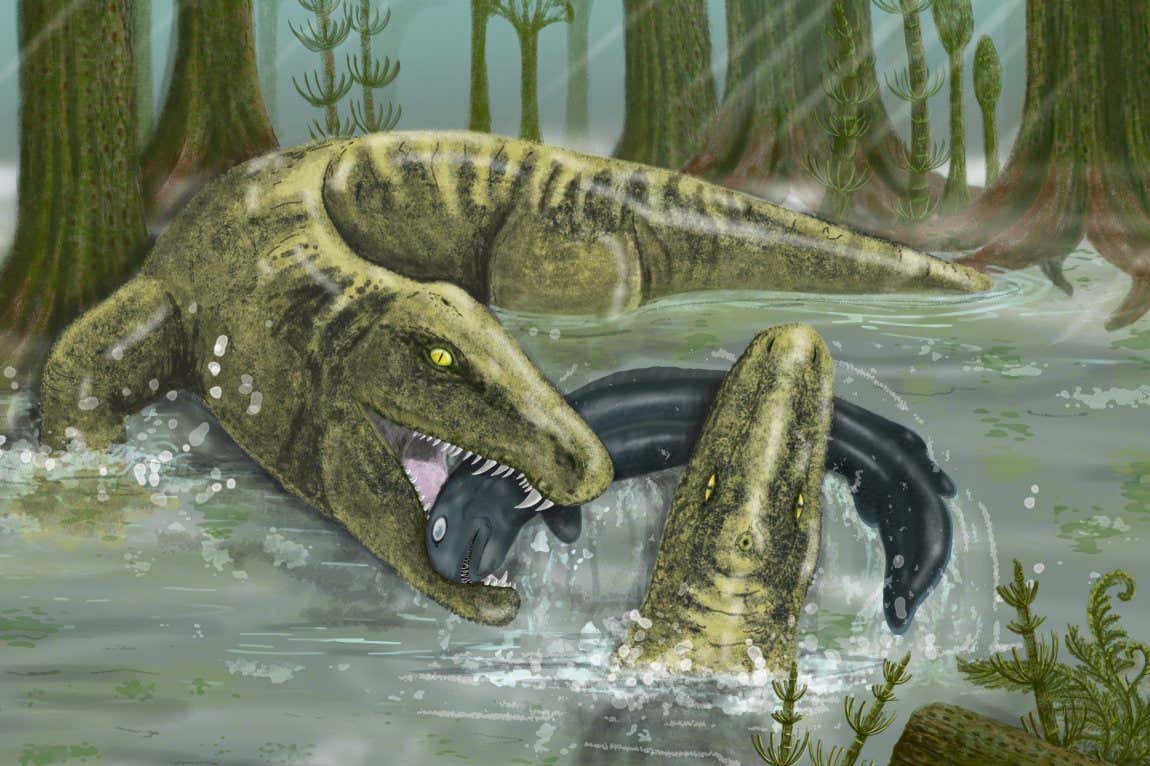
A large, crocodile-like animal that lived more than 340 million years ago was one of the earliest vertebrates to have a fast-growing phase in its youth.

Whatcheeria was an early tetrapod – one of the first vertebrates to have arms and legs instead of fins. At 2 metres long, it was one of the biggest carnivores of the era, and its anatomy hints that it snatched prey from the water by ambush, just like modern crocodiles. But how Whatcheeria reached such an impressive size for…

Sign up to our weekly newsletter

Receive a weekly dose of discovery in your inbox. We'll also keep you up to date with New Scientist events and special offers.

Sign up

To continue reading, subscribe today with our introductory offers

Popular articles

Trending New Scientist articles

Piano Exit Overlay Banner Mobile Piano Exit Overlay Banner Desktop