Plant-based plastics don’t readily deteriorate at sea Shutterstock/MikeDotta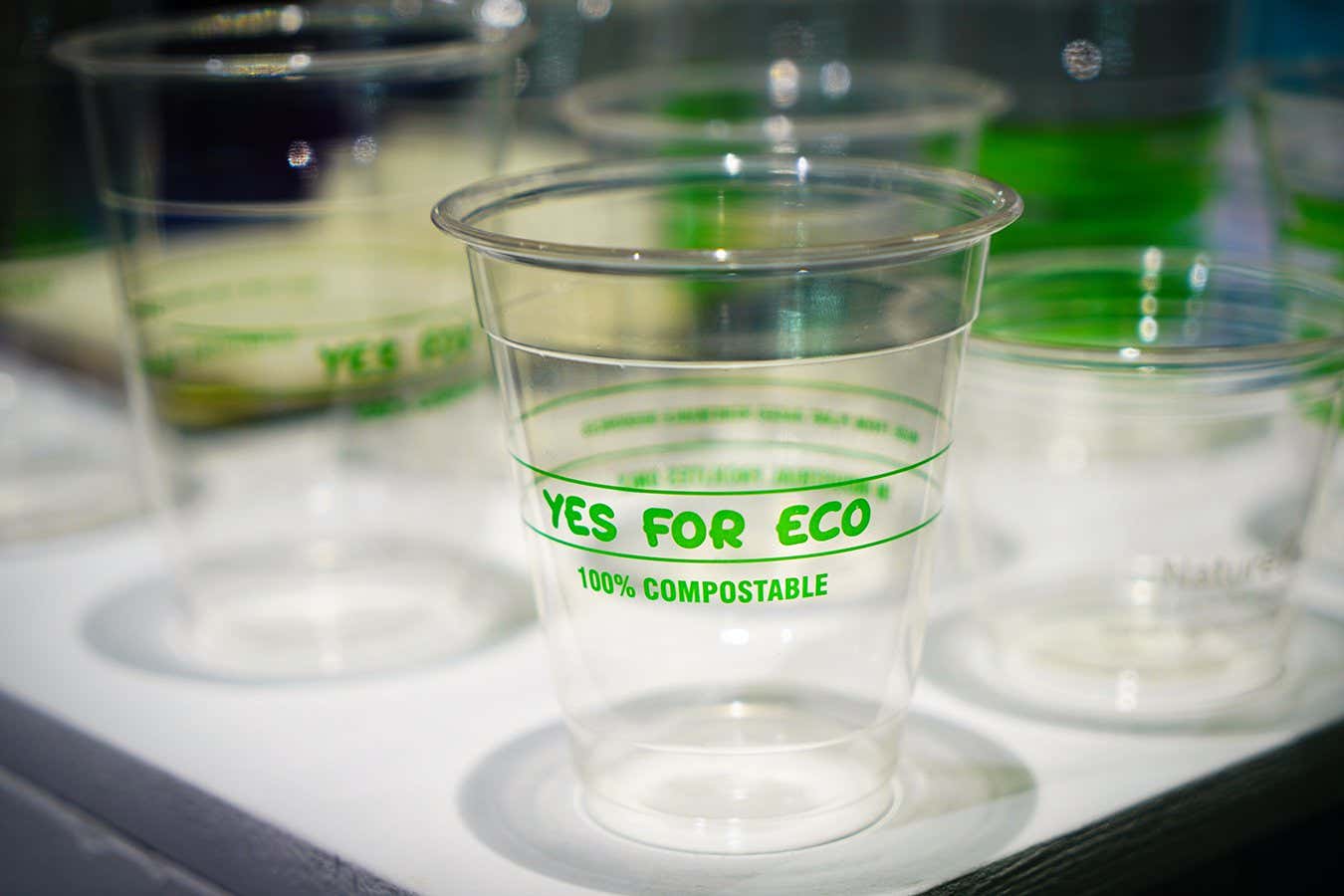
A common plant-based plastic marketed as compostable has been found not to degrade when it ends up in the ocean, remaining intact for more than a year.
Compostable “bioplastics” have been touted as a solution to plastic waste, which enters the ocean at the pace of 12 million tonnes per year. A leading alternative to traditional oil-based plastics is polylactic acid (PLA), a plant-derived material used in clothing, single-use cups and containers. PLA can be composted in industrial facilities, but researchers weren’t sure if the material would decompose naturally once in the ocean.
To find out, Sarah-Jeanne Royer at the University of California, San Diego, and her colleagues compared how several materials aged both at the ocean’s surface and suspended 10 metres below in a fine mesh cage. They used palm-sized swatches of textiles made from oil-based plastics, bioplastics like PLA and natural materials like cotton. Each week, they checked and photographed the samples, which were next to a pier in La Jolla, California, and took a small portion of each swatch to assess visually and chemically.
Advertisement
After 14 months at sea, their PLA sample remained just as intact as oil-based plastics like polypropylene and polyethylene terephthalate (PET). In contrast, natural materials like cotton-based fibres completely disintegrated and decomposed in about a month.
The team also mirrored the experiment in the lab with seawater and bacteria to mimic the natural environment. Neither the PLA nor the oil-based fabrics put off any carbon dioxide gas, confirming the plant-based plastics weren’t chemically degrading either. In the sea and in the lab, “they didn’t degrade at all”, says Royer.
The take-home message, says Frederik R. Wurm at the University of Twente in the Netherlands, is that “biodegradation always needs to consider the end-of-life scenario”.
That is why, when it comes to compostable plastics, descriptors like “biodegradable” can be misleading. Just because a bioplastic can be composted in a high-temperature, high-pressure facility doesn’t mean it will break down in a cold, wet environment.
“Consumers in general are not aware of what they are buying,” says Royer. She recommends avoiding single-use plastics, opting for reusable containers and purchasing less clothing.
Journal reference:
Plos One DOI: 10.1371/journal.pone.0284681
Topics: