Subscribe now

Health

Neurons that respond to vibration discovered in the clitoris and penis

The purpose of Krause corpuscles, sensory structures in the genitals, has long been a mystery, but it now seems they contain neurons that respond to vibration and are key to sexual motivation and function, according to work in mice

By Alice Klein

30 June 2023

Microscope image of Krause corpuscles

Microscope images of Krause corpuscles in the clitoris (left) and penis (right) of mice

Lijun Qi, Harvard University
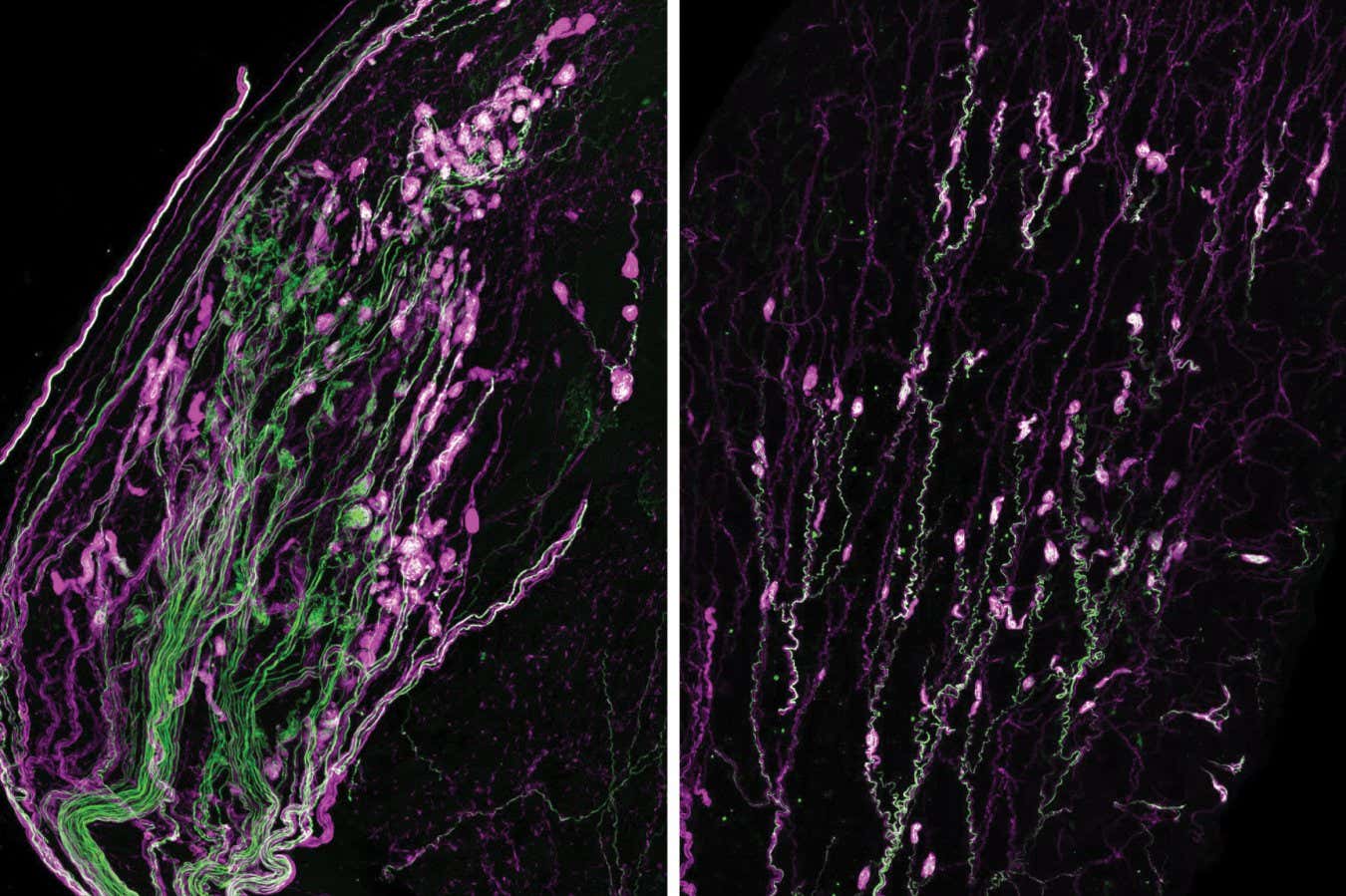
Mysterious neurons in the clitoris and penis turn out to respond to vibration and light touch, and seem to be crucial for healthy sexual function and possibly pleasure. The finding solves a 160-year-old mystery and may explain why vibrators are sexually stimulating.

In 1860, Wilhelm Krause, a German anatomist, identified clusters of nerve endings in the human clitoris and penis that were named Krause corpuscles. Their function was unclear, however, and they were largely forgotten.

Lijun Qi and his colleagues at…
Sign up to our weekly newsletter

Receive a weekly dose of discovery in your inbox. We'll also keep you up to date with New Scientist events and special offers.

Sign up

To continue reading, subscribe today with our introductory offers

Popular articles

Trending New Scientist articles

Piano Exit Overlay Banner Mobile Piano Exit Overlay Banner Desktop