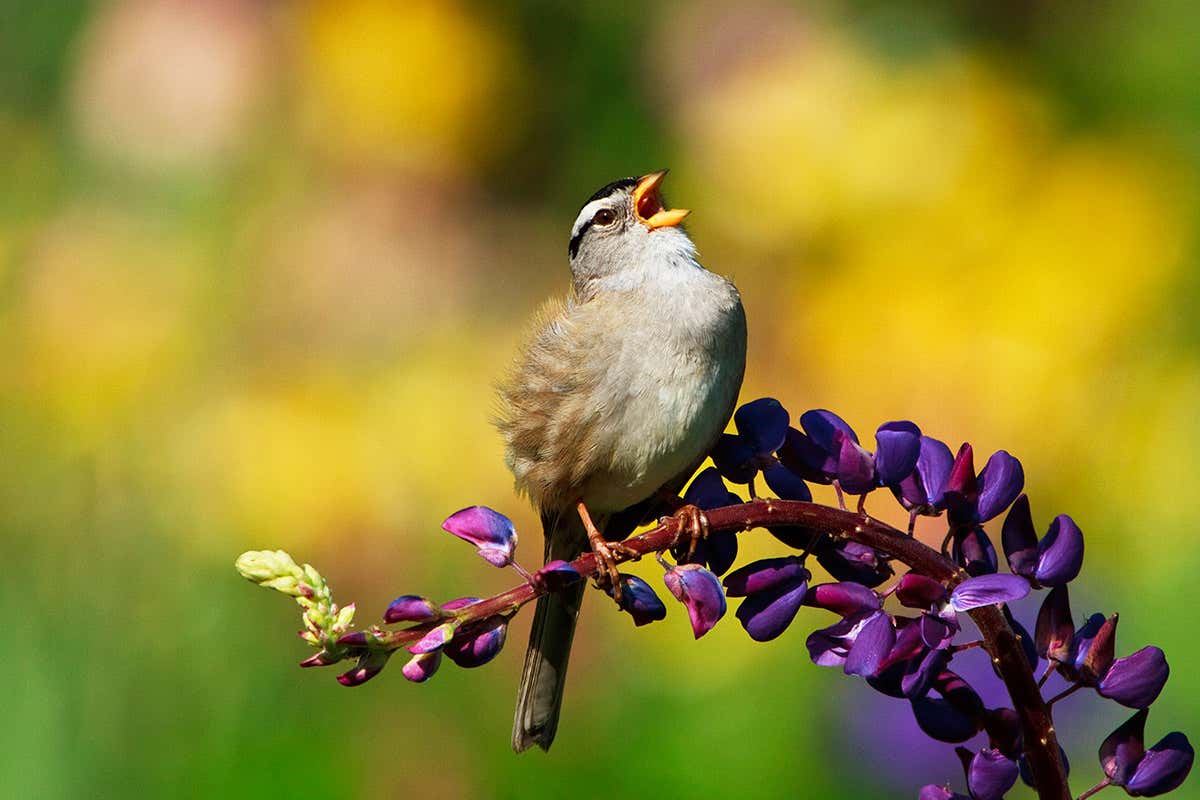
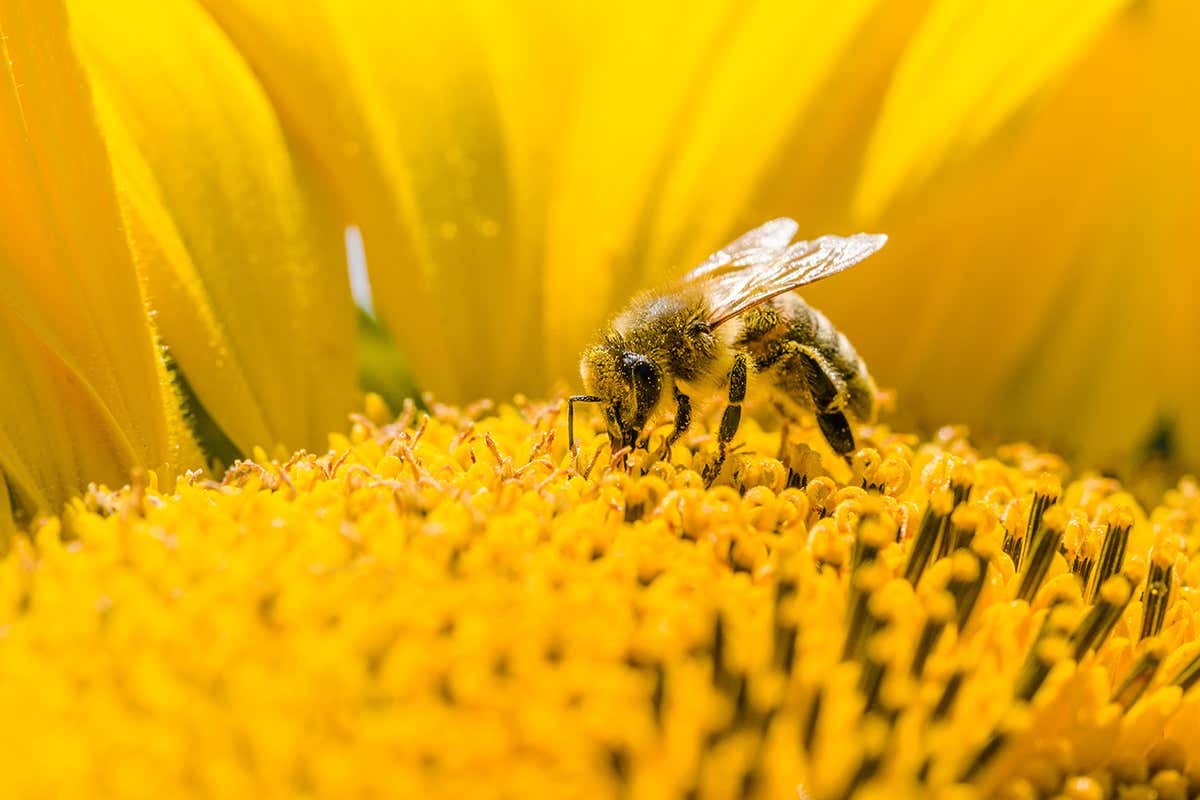
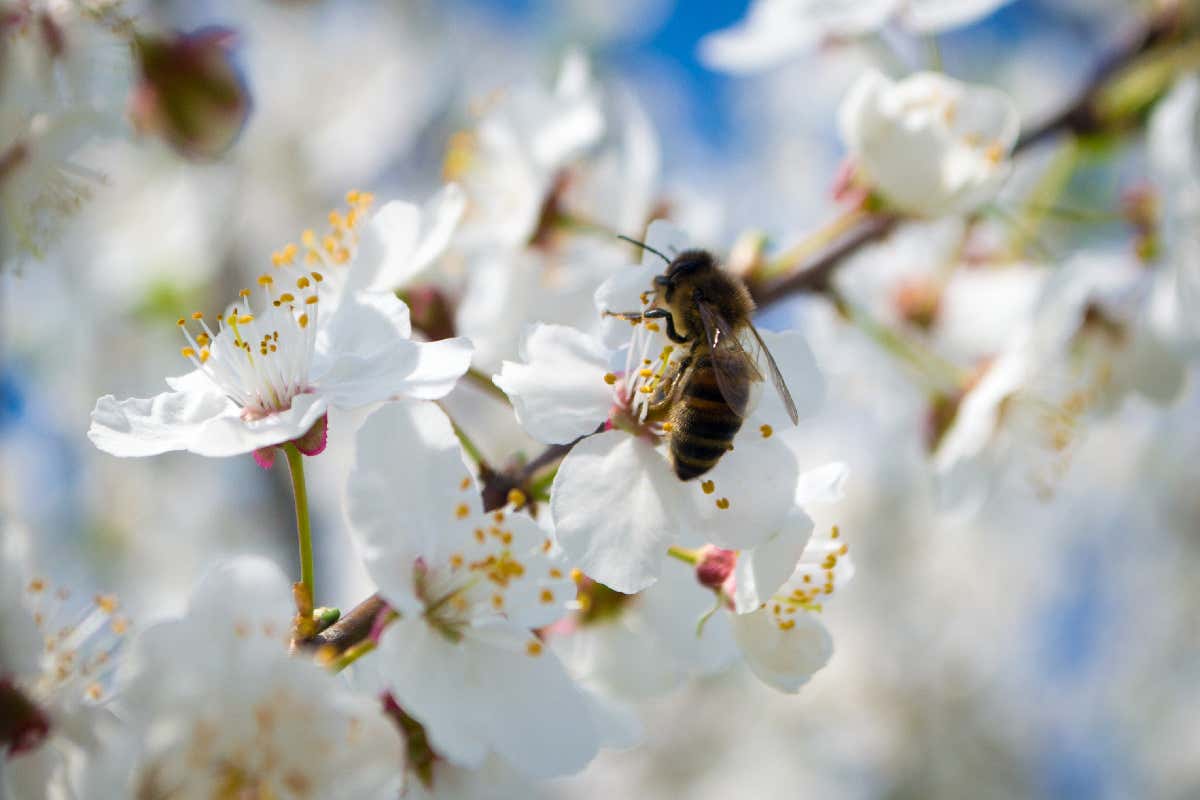
Wild pollinators, including the pure green sweat bee (Augochlora pura), were found in greater numbers in fields using integrated pest management Ali Majdfar/Moment Open/Getty Images
Both commercial bees and wild pollinators do much better on farms that use synthetic pesticides sparingly, according to a three-year study on US farmland.
Jacob Pecenka at Purdue University, Indiana, and his colleagues placed colonies of commercial honey bees (Apis mellifera) and bumblebees (Bombus impatiens) in fields of watermelon surrounded by corn, and collected pollinators visiting watermelon flowers.
At each site, they compared two fields with different pest management regimes. The conventional approach used corn…