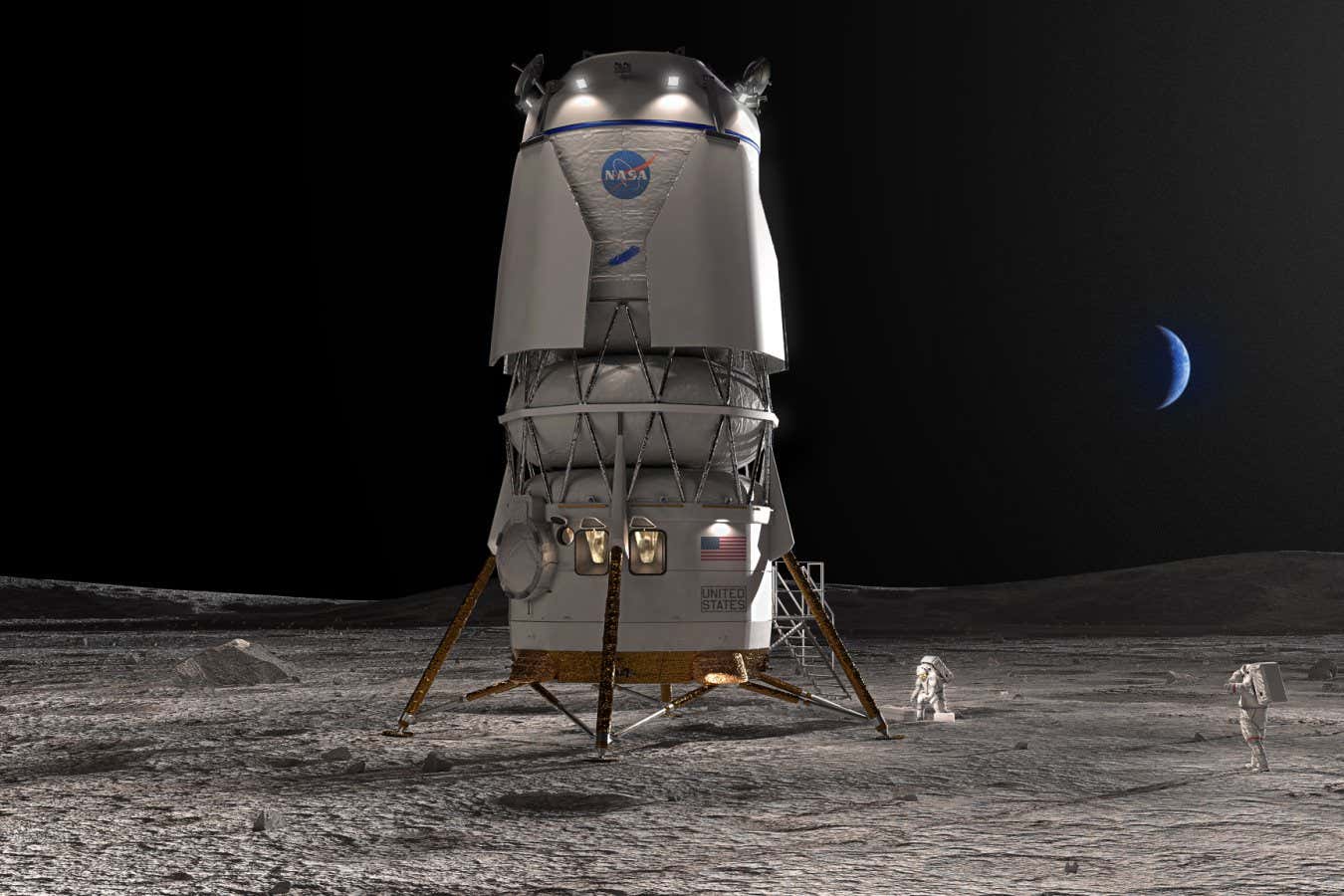
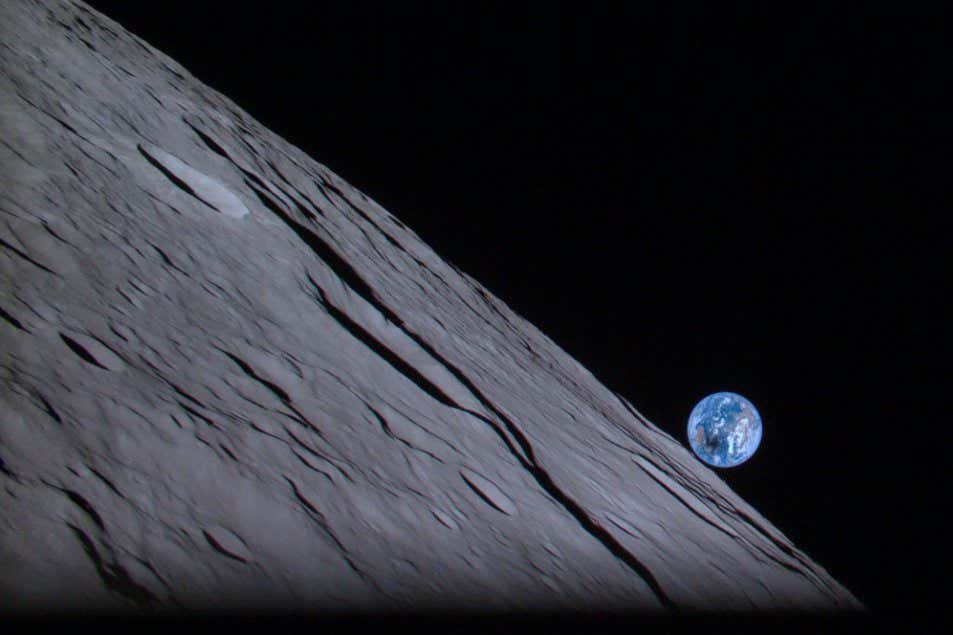
An early impression of how Roo-ver might look Australian Space Agency
It hasn’t been built yet and it won’t be hopping like its namesake, the kangaroo, but Australia’s first moon rover has officially been dubbed Roo-ver.
More than 8000 suggestions were submitted in a nationwide competition and 20,000 people voted from a shortlist of four candidates: Roo-ver, Coolamon, Kakirra and Mateship.
Advertisement
According to the Australian Space Agency (ASA), two local collaborations – AROSE and ELO2 – are each currently working on early-stage concepts for the lunar rover, which will be operated remotely from Australia.
Only one will be selected for a mission to the moon later this decade as part of NASA’s Artemis programme. The rover is expected to weigh approximately 20 kilograms and be the size of a check-in suitcase.
It is most likely to land near the moon’s south pole and will be designed to collect lunar samples that NASA will use for oxygen extraction experiments. Oxygen is critical both for rocket fuel and to help sustain any future permanent base on the surface.
Free newsletter
Sign up to Launchpad
Voyage across the galaxy and beyond with our space newsletter every month.
The ASA says Roo-ver is expected to operate for 14 Earth days (equivalent to about half a moon day). Part of the reason why NASA has chosen to work with Australia on this project is because of the country’s experience with remote and autonomous operations, garnered from working in harsh environments in its mining industry.
“The Australian Government is working to strengthen Australia’s robotics capability, and this mission is one of the most advanced robotics projects happening in our country right now,” said Enrico Palermo, head of the ASA, in a press release.
Siwa Haberlah from New South Wales, who nominated the new name, said she wanted something “iconically Australian”.
“A kangaroo is part of the Australian coat of arms and it’s time for Australian science to take the next leap all the way up into space,” she said in a press release.
Article amended on 5 December 2024
Topics:
![Small dome in the Compton-Belkovich region (61.33 ?N, 99.68 ?E). Evidence indicates a volcanic origin for this and other intriguing features in the region. Incidence angle is 64?, Sun is from the SSW, image is ~510 m across. NAC image number M139238146L [NASA/GSFC/Arizona State University].](https://images.newscientistbeta.com/wp-content/uploads/2023/07/07172644/SEI_163208069.jpg)