Subscribe now

Technology

First 'thermodynamic computer' uses random noise to calculate

Random physical fluctuations – or noise – can be a source of errors for conventional computers, but for a prototype "thermodynamic computer" they can be harnessed to run calculations

By Karmela Padavic-Callaghan

16 January 2024

The thermodynamic computer

Printed circuit board of a “thermodynamic computer”

Normal Computing
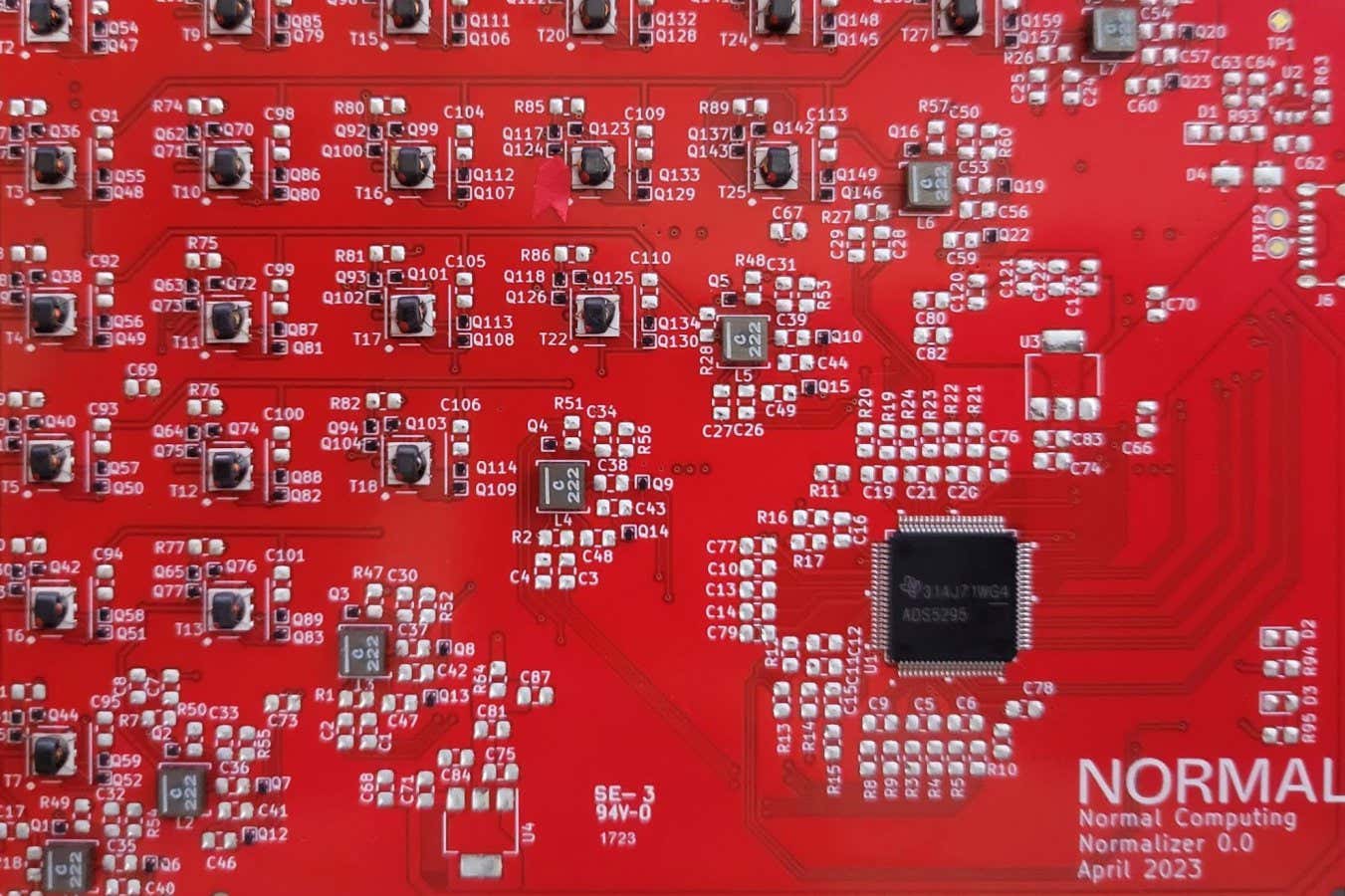
A first-of-its-kind computer can perform calculations using the random “noise” that is inherent in our world. It is built using standard commercial components and could eventually run artificial intelligence programs more efficiently than conventional computers.

In conventional computers, all calculations are reduced to sequences of 1s and 0s, represented as the switching on and off of many tiny switches. However, these computers must contend with random thermodynamic noise, like a piece of a circuit warming up and unexpectedly turning a 0 into a 1. This noise causes errors – but Patrick Coles…

Sign up to our weekly newsletter

Receive a weekly dose of discovery in your inbox. We'll also keep you up to date with New Scientist events and special offers.

Sign up

To continue reading, subscribe today with our introductory offers

Popular articles

Trending New Scientist articles

Piano Exit Overlay Banner Mobile Piano Exit Overlay Banner Desktop