Subscribe now

Space

Sleeping black hole is way more massive than it should be

The James Webb Space Telescope has found an unusual galaxy in the early universe with a black hole almost half the mass of the galaxy itself, raising questions about how it formed

By Jonathan O’Callaghan

13 March 2024

Black holes can go “dormant” if they aren’t actively feeding

Jurik Peter/Shutterstock
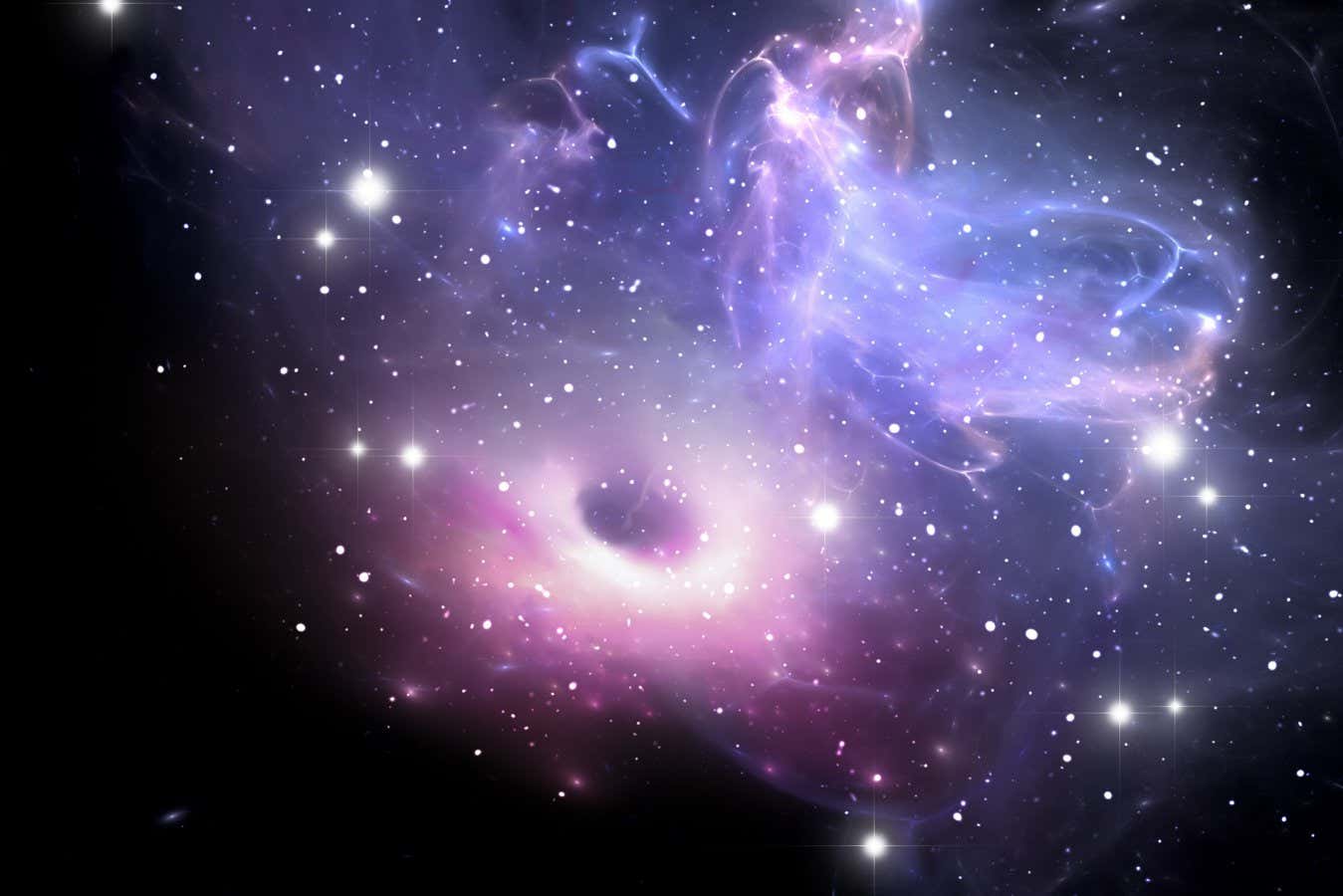
A black hole in the early universe has almost half the mass of its host galaxy despite no longer sucking in matter, raising questions about how black holes grow.

While Ignas Juodžbalis at the University of Cambridge and his colleagues were looking through data from the James Webb Space Telescope (JWST), they found something unusual. It was a faint galaxy, seen from our perspective as it was about 800 million years after the big bang, with a central black hole almost half the mass of the…
Sign up to our weekly newsletter

Receive a weekly dose of discovery in your inbox. We'll also keep you up to date with New Scientist events and special offers.

Sign up

To continue reading, subscribe today with our introductory offers

Popular articles

Trending New Scientist articles

Piano Exit Overlay Banner Mobile Piano Exit Overlay Banner Desktop