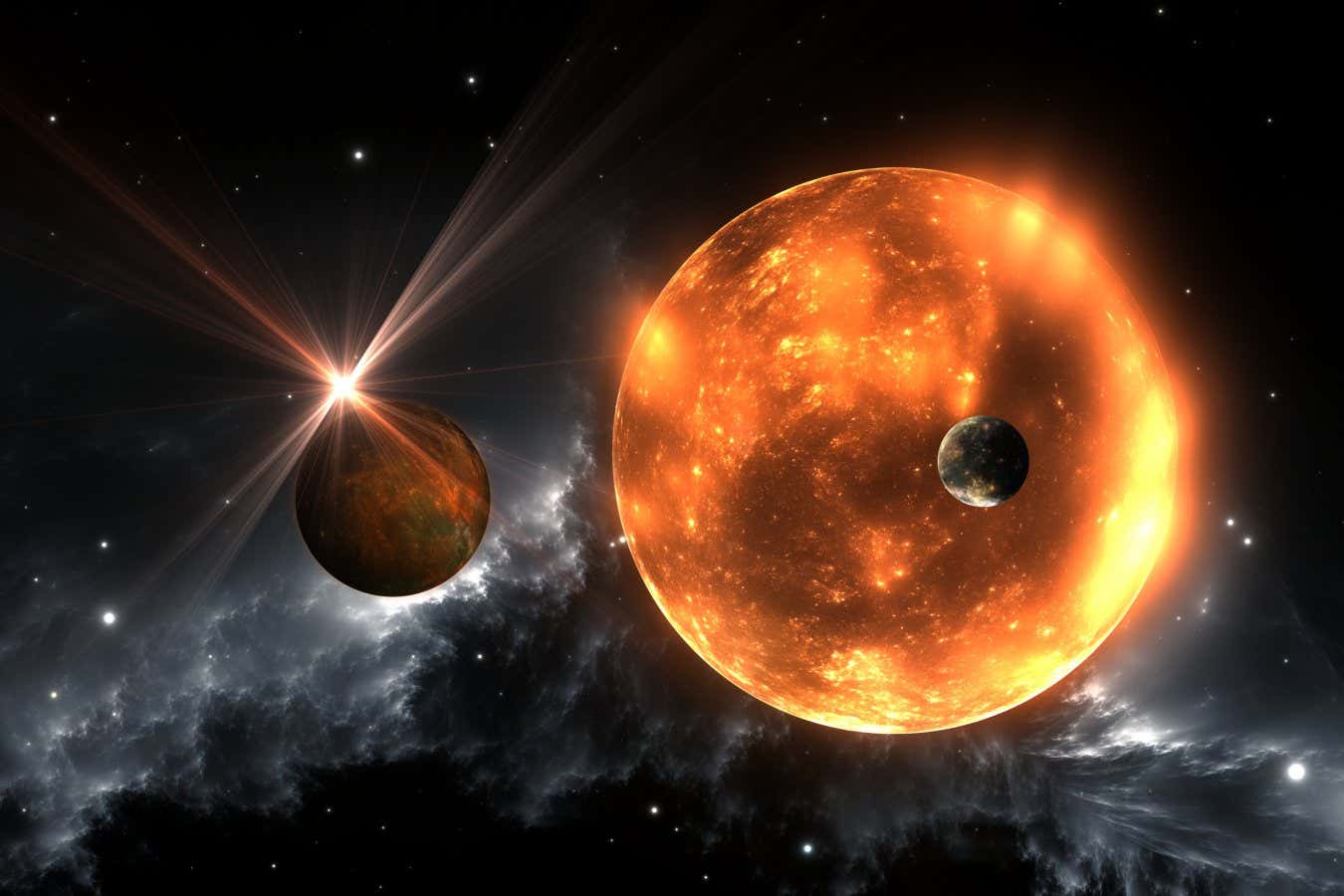
Illustration of an exoplanet in the early universe Darryl Fonseka/Alamy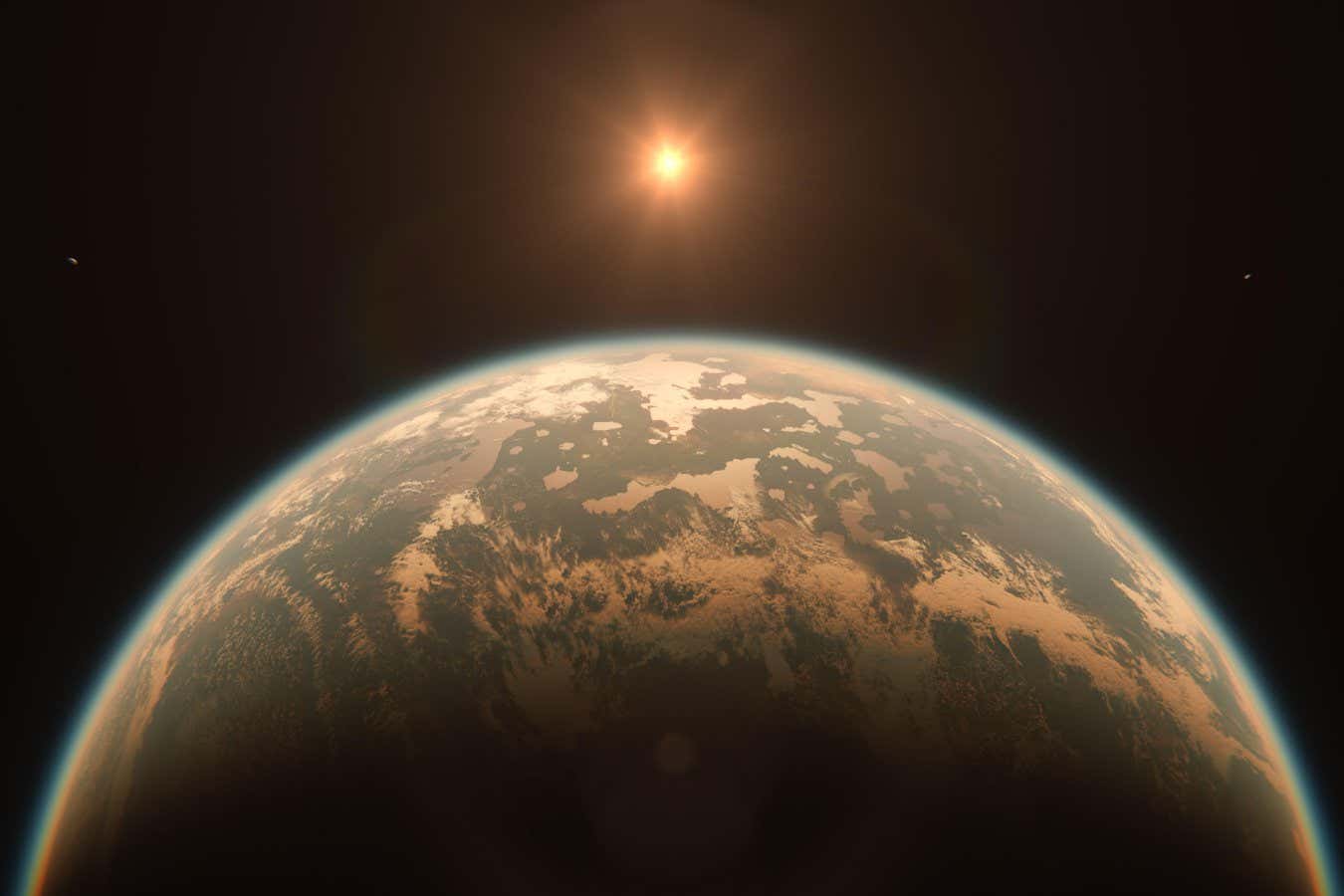
Conditions in the early universe might have enabled rocky planets with water to form much earlier than anticipated, potentially allowing life to begin sooner too.
Astrophysicists studying the early universe think planet formation didn’t begin in earnest until supernovae had released enough heavy elements to form planetesimals, the building blocks of rocky planets, around stars. Our sun and its planets arose when the universe was about 9 billion years old, and the oldest known planet developed 1 billion years into the life of the universe.