The fruit-sucking moth bears an uncanny resemblance to a leaf Bridgette Gower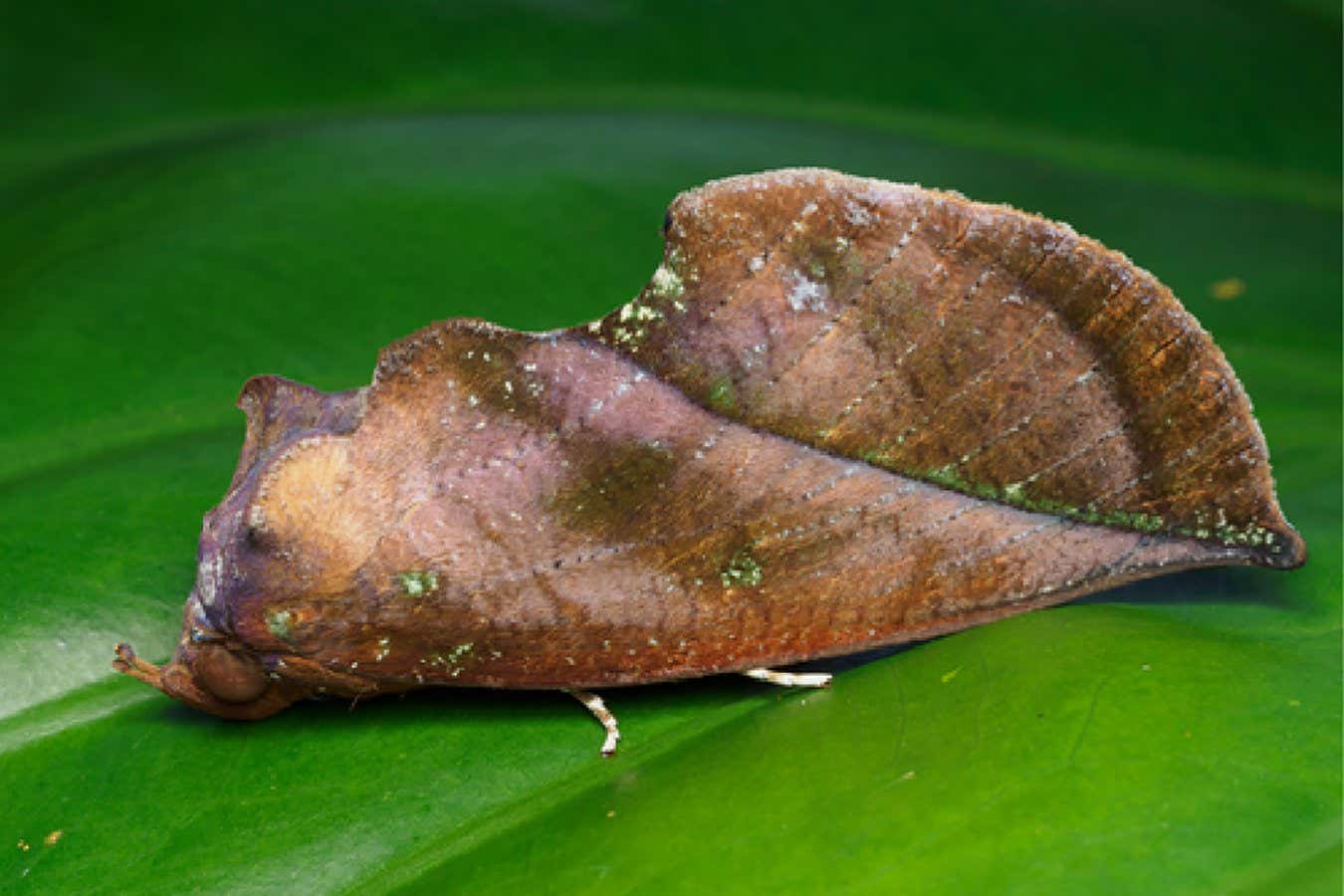
A moth found in northern Australia and South-East Asia has an astonishing camouflage trick: it creates an optical illusion to look like a three-dimensional leaf, complete with a raised midrib, when it is actually smooth.
“If I gave you a specimen now, you wouldn’t believe it was flat,” says Jennifer Kelley at the University of Western Australia in Perth. “When we showed it to people, they were very confused by it. It really does not look flat.”
Advertisement
The fruit-sucking moth (Eudocima aurantia) resembles a leaf to fool predators, especially birds, into thinking it isn’t food. Although it was first described in 1877, until now this likeness was thought to be caused by pigments and the shape of its body.
In fact, the moth uses extremely sophisticated physics to give the impression it is a leaf, says Kelley.
A close-up view of a fruit-sucking moth’s wing Jennifer Kelley et al. 2025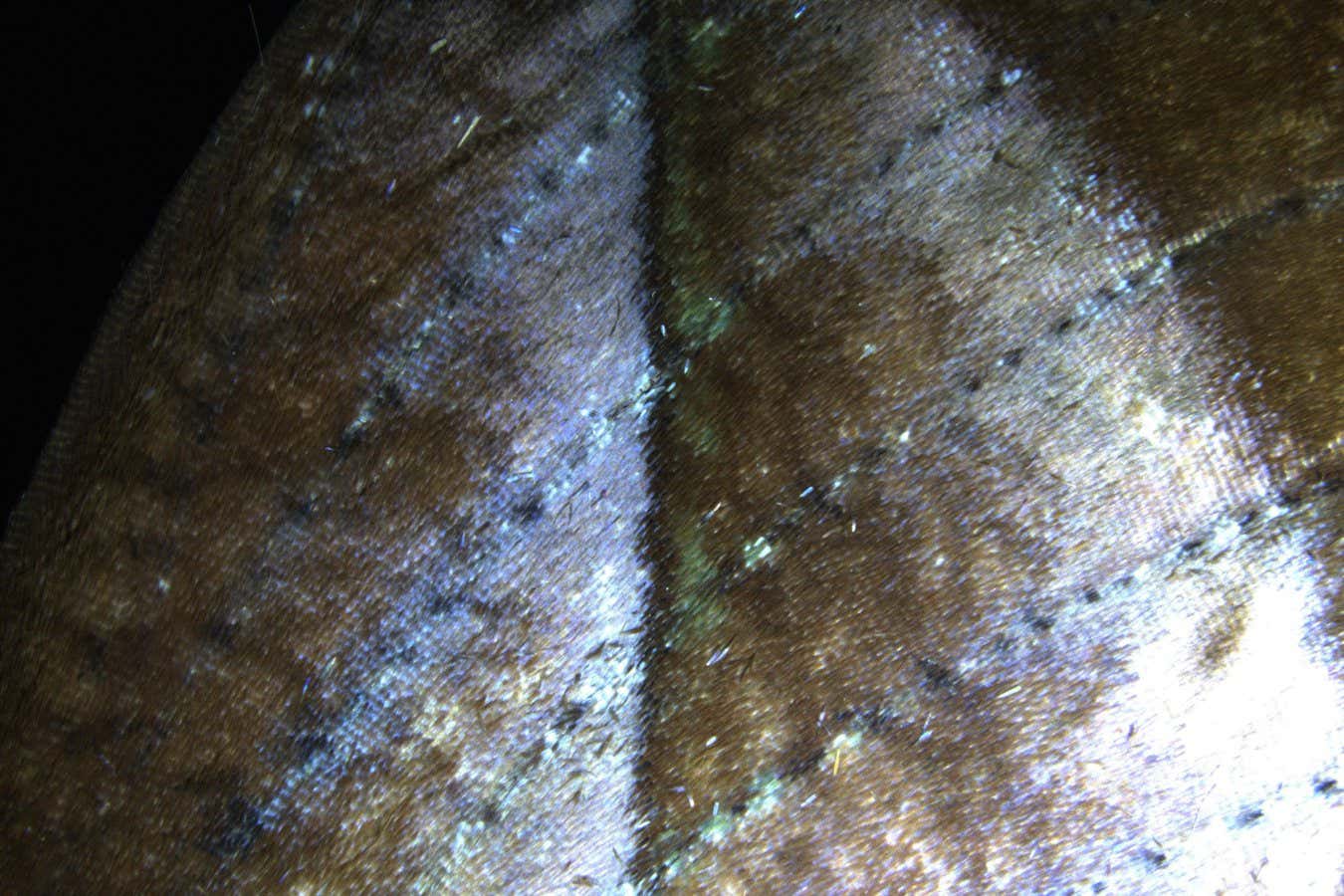
Free newsletter
Sign up to The Earth Edition
Unmissable news about our planet delivered straight to your inbox every month.
“The scales of the moth’s wings are nanostructures,” says Kelley. These produce mirror-like reflections that create the illusion of highlights on a smooth, curved surface, she says. This is a form of structural colouration, the same mechanism that produces iridescence, such as the colours of the rainbow on a bubble.
“It’s literally pretending to be 3D by just having these mirror-like structures in the special places on its wings to create the shiny spots that trick our brains,” she says. “It’s a completely unique use for structural colouration. Even though the moth has been sitting in the museum for hundreds of years, literally nobody noticed.”
Journal reference:
Current Biology DOI: 10.1016/j.cub.2025.01.029
Topics:


