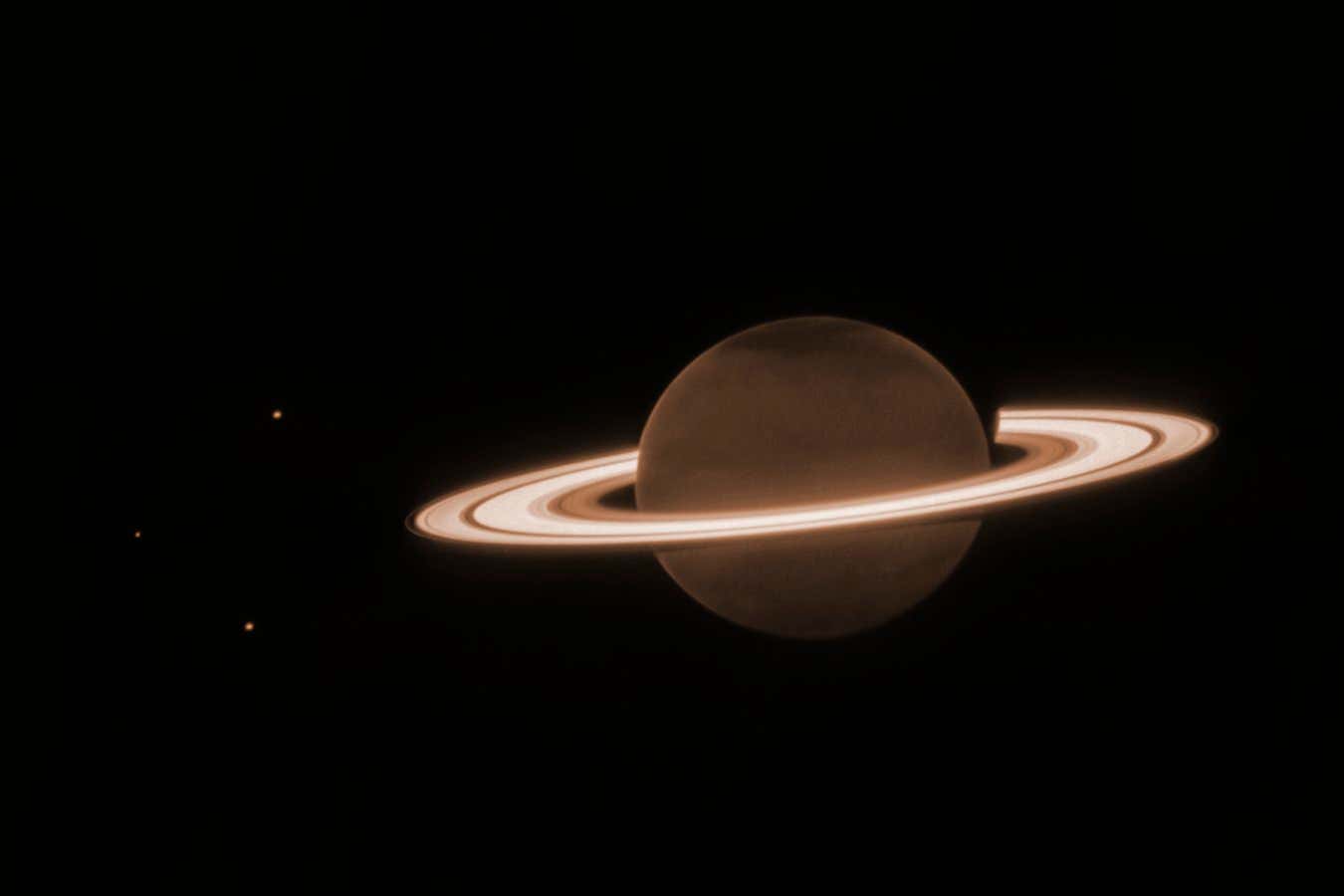
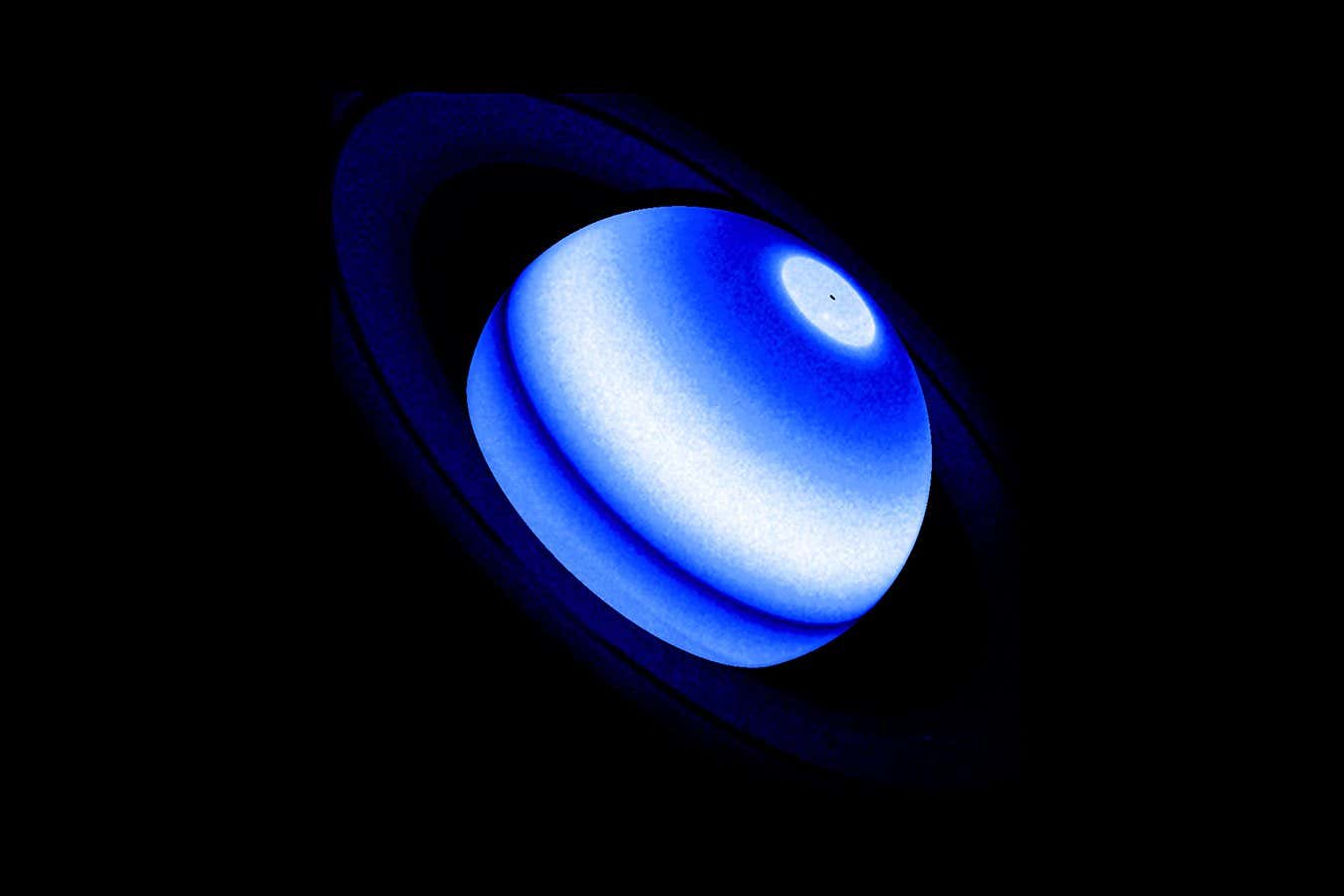
Saturn’s rings, seen edge-on, cast shadows on the planet in this image taken by Cassini’s visual and infrared mapping spectrometer (Image: NASA/JPL/U of Arizona)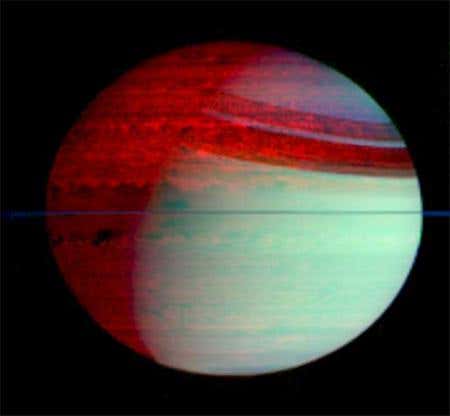
The heat from Saturn’s interior backlights clouds deep within its atmosphere, a new image from the Cassini spacecraft reveals.
The “Chinese lantern” effect was produced by combining images taken at several wavelengths from the craft’s visual and infrared mapping spectrometer in February 2006. The images were taken when Cassini was 1.6 million kilometres away from the planet and in the same plane as its famous rings.
In the nighttime portion of the image (left), the heat from Saturn’s interior illuminates clouds at lower altitudes from behind. Bright red areas show relatively cloud-free zones, while darker red regions mark cloudy spots. In the “daylit” portion of the image, however, sunlight scatters off haze high in the atmosphere (right).
Advertisement
The brighter glow of the northern hemisphere suggests it has fewer clouds and hazes than the southern hemisphere, a disparity researchers believe is seasonal. The balance may shift in a few years, when the northern hemisphere enters its springtime.
Topics: