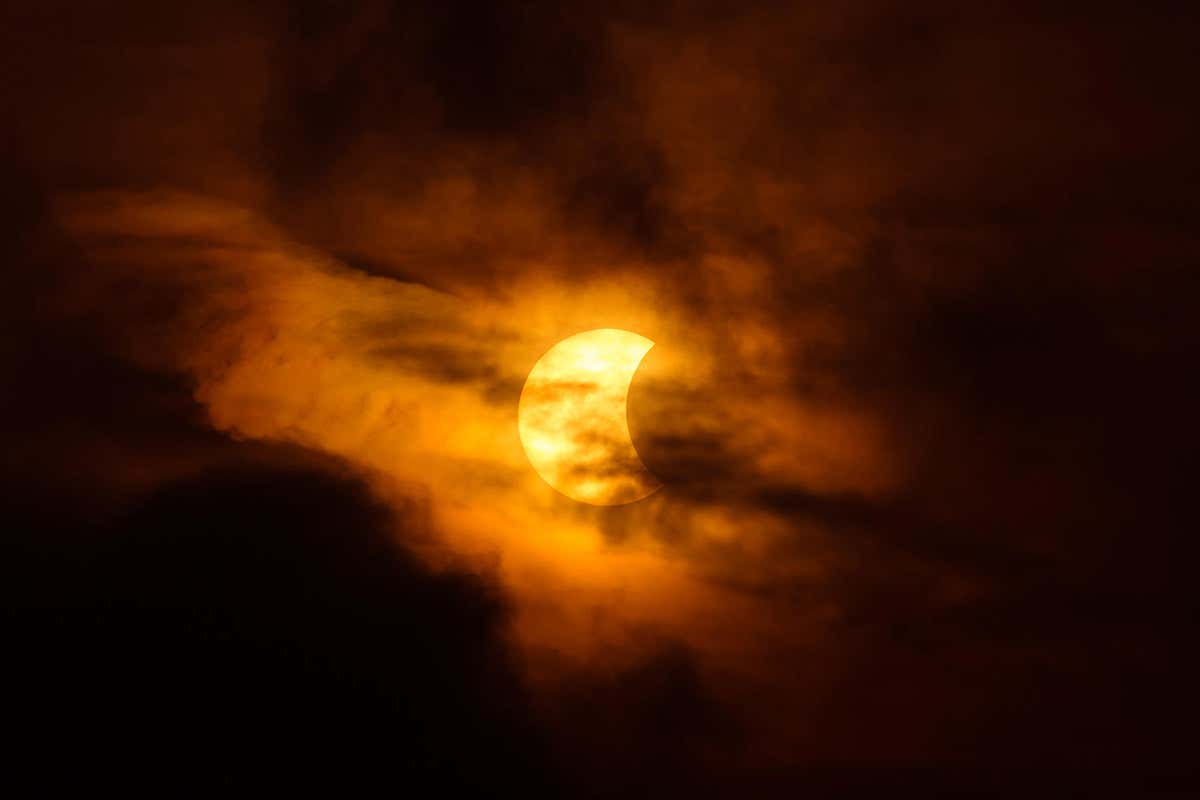
The Moon changed colour as it rose over Manhattan during the lunar eclipse (Image: Reuters) Chris North, a graduate student at Oxford University, UK, took this image of the blushing Moon through binoculars (Image: Chris North)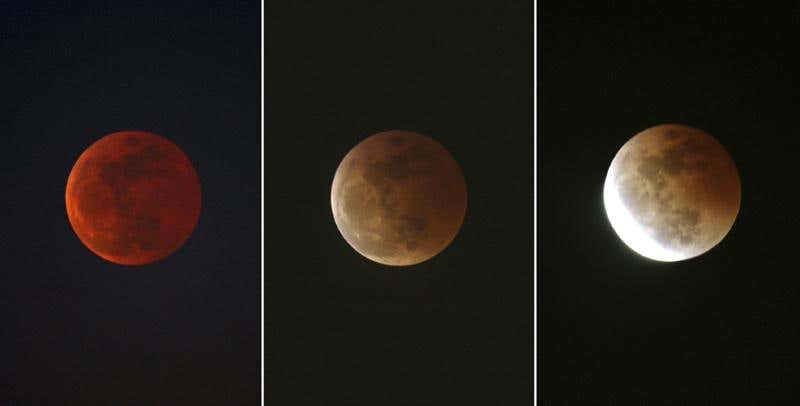
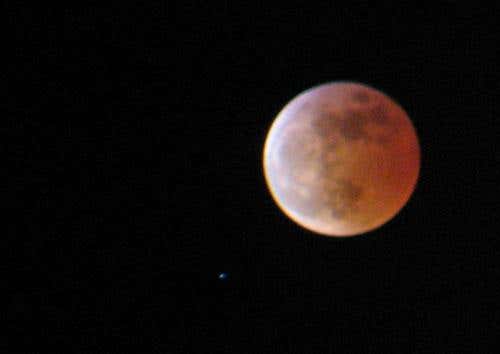
Millions of people around the world were treated to a spectacular lunar eclipse on Saturday, the Moon glowing a dark coppery red as it passed through the Earth’s shadow.
“The Moon took on a beautiful red hue,” says Robert Massey, a spokesman for the UK Royal Astronomical Society, who watched the total eclipse from his home in southeast London. “With a small telescope, you could see this wonderful, subtle shading, from the bright part in full Sun down to the darker shadows.”
At least part of the 3 March eclipse, which lasted about six hours, was visible from every continent on Earth. One edge of the Moon’s face began to subtly darken as the eclipse began at 2018 GMT.
Advertisement
The Earth’s shadow completely covered the Moon during the most dramatic phase, which lasted just over an hour – from 2244 to 2357 GMT.
Passing through Earth’s shadow made the Moon turn red because sunlight was refracted through the Earth’s atmosphere. Effectively, the Moon was lit up by all the world’s sunrises and sunsets.
The colour of the Moon during an eclipse is not always the same, however. “It depends on the dust content of the Earth’s atmosphere and perhaps the level of cloud,” says Massey. “The red colour was certainly very intense and perhaps a little darker than I was expecting.”
Providing the local skies were clear, the deepest part of the eclipse was visible from all of Europe and Africa, and in Asia westward of central China. It was also visible in central and eastern North America and all of South America.
Up to three lunar eclipses, including partial eclipses, can happen each year. The next total one will occur on 28 August 2007.
Topics: