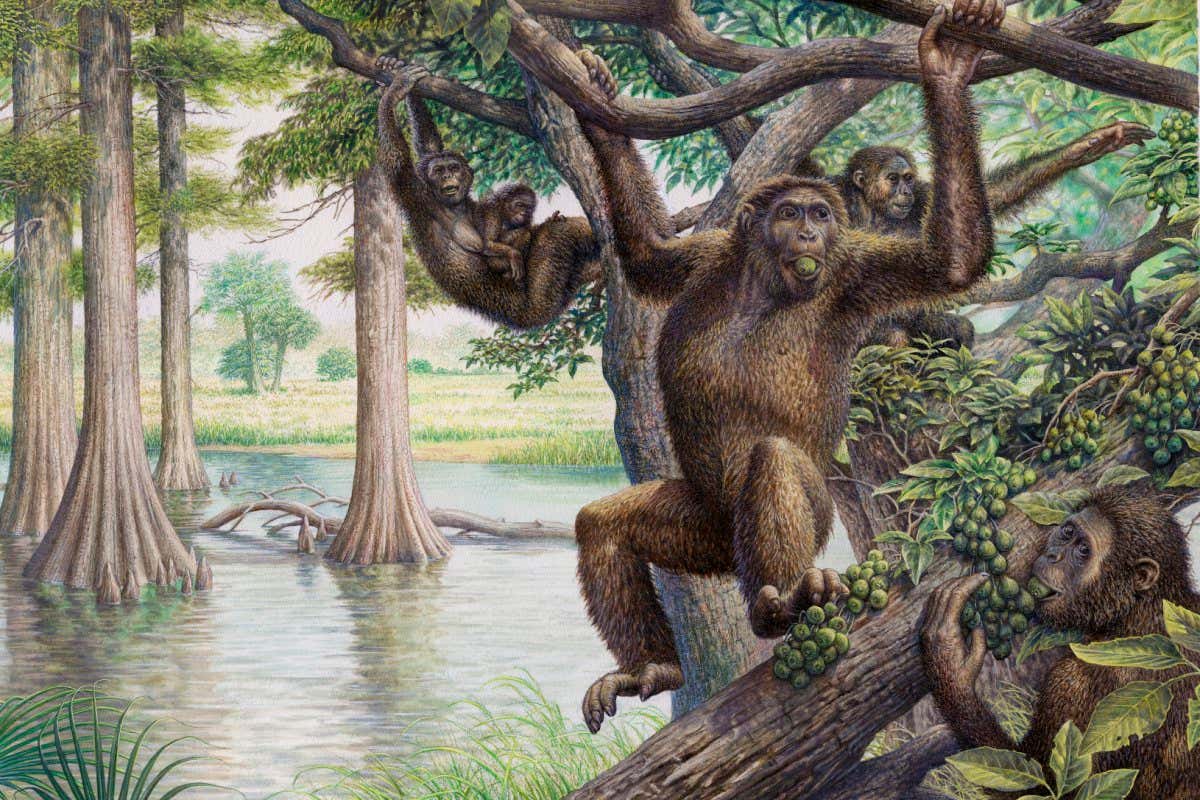
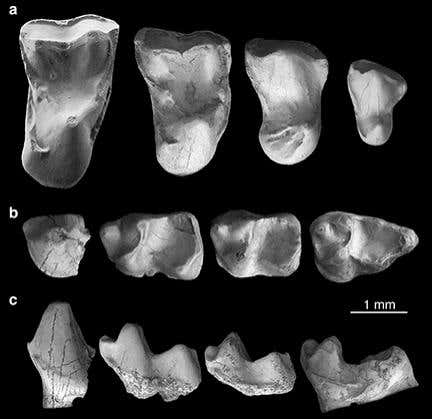
Fossil teeth of the mouse-sized monkey were found in Mississippi and dated to around 55 million years ago (Illustration: Mark A. Klingler/CMNH) The primate’s teeth indicate that it lived on a diet of fruit and berries (Image: Joe Suhan/CMU and Mark A Klingler/CMNH)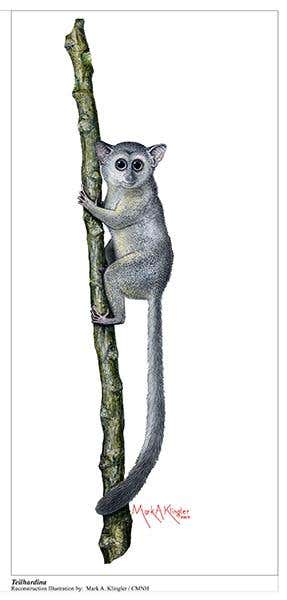
It was only the size of a mouse, but it has the distinction of being the first primate to scurry into the New World.
Fossilised teeth of the monkey Teilhardina magnoliana have been found in rocks in Mississippi. They were dated as younger than its Asian relatives, but more ancient than those already found in Europe and North America.
The monkey must have colonised the Americas via Alaska, crossing from Asia via the Bering land bridge 55 million years ago, says Chris Beard of the Carnegie Museum of Natural History in Pittsburgh.
Advertisement
Analysis of the teeth suggests America’s first primate enjoyed a diet of fruit and insects.
Journal reference: Proceedings of the National Academy of Sciences (DOI: 10.1073/pnas.071080105)
Topics: