The construction of a controversial £1.6 billion system of floating “gates” to protect Venice from flooding and erosion has been approved by the Italian government.
The Modulo Sperimentale Elettromeccanico project (MOSE) involves using a string of 79 inflatable gates to stem the flow of water through Venice’s three inlets into its lagoon.
The gates would be inflated when the local sea level rises dramatically – an event that happens about 50 times each year.
But the project has faced opposition from those who believe that it may further disrupt an ecological system already suffering from pollution from boats and the city’s drainage system. This has killed off some plants and animals.
Advertisement
“We have to consider the other problems for preserving the lagoon at the same time,” says Monica Ambrosini of the Venice Water Authority. “The high tide is not the only problem.”
Photo: Venice Water Authority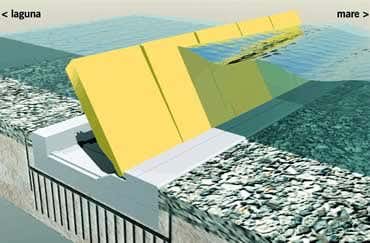
The government estimates that the system will take six to eight years to construct because the inlets are in constant use.
Close to catastrophe
Each gate is 20 metres wide, 20 to 30 metres high and between four and five metres thick.
When the water level is normal, the gates will lie folded flat on the bed of the lagoon across each inlet. At this point they will be filled with water. But if the tide level rises by one metre or more, air will be pumped into each gate, causing one end to float upwards and block the passage of the water.
Venice is built on the shore of the Adriatic Sea, and flooding has become a severe problem in the last few decades. High water levels in the lagoon can badly damage the porous limestone buildings in the city.
A combination of atmospheric pressure and particular wind patterns can temporarily raise the local sea level. Subsidence, combined with rising sea levels caused by global warming, has increased the chance of water levels rising to dangerous levels over the past few decades.
In 1966, many parts of the city drowned under severe floods when the water level rose by 1.8 metres. In November 2000 the tide rose by 1.3 metres. “If the wind had been different we could have had a catastrophe,” Ambrosini says.
The new gates are designed to deal with up to a two-metre increase in the level of water entering the lagoon.