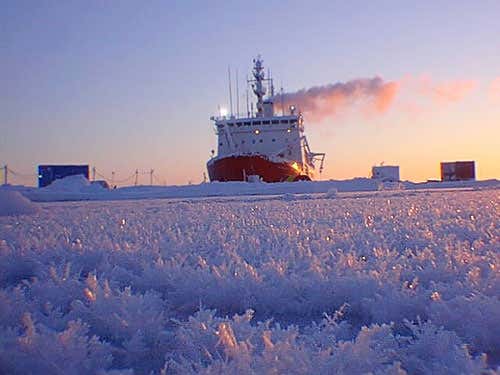
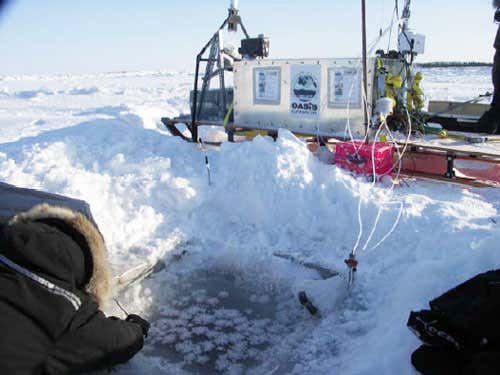
Albedometer measuring frost flowers on young ice (Image: US Army Cold Regions Research and Engineering Laboratory CRREL) Frost flowers on the ice shelf near Barrow, Alaska. The image was captured as part of a study by the OASIS project 2009 (Image: Carlye Calvin/ University Corporation for Atmospheric Research) The OASIS project pursues key big-picture science issues regarding air-surface chemical interactions in the Arctic, and their evolution in future climates (Image: Carlye Calvin/ University Corporation for Atmospheric Research) Central to the OASIS campaign is the quantitative and reliable determination of chemical and biological fluxes to and from ice and snow surfaces, as a function of the nature of the surface and other relevant environmental conditions (Image: Carlye Calvin/ University Corporation for Atmospheric Research) Frost flowers on the ice shelf near Barrow, Alaska (Image: Carlye Calvin/ University Corporation for Atmospheric Research) Frost flowers on the ice shelf near Barrow, Alaska (Image: Carlye Calvin/ University Corporation for Atmospheric Research) Frost flowers seen with research ship in background. The ship is part of the SHEBA expedition ’97 studying the surface heat budget of the Arctic ocean (Image: SHEBA project, University of Washington) OOTI sled operating on the ice near Kuujjuarapik in March 2008, sampling over frost flowers (Image: US Army Cold Regions Research and Engineering Laboratory CRREL) Frost flowers on dark surface ice (nilas) in the Barents Sea (Image: S. Kern, University of Hamburg)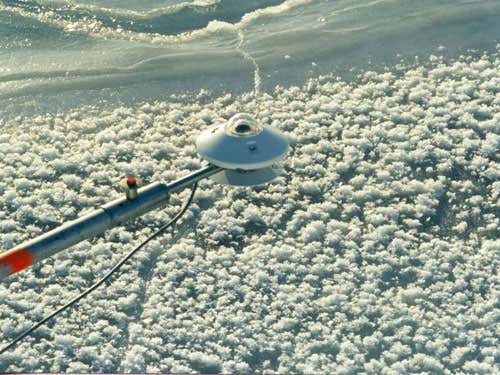
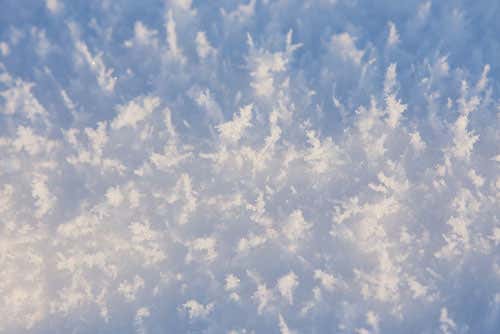
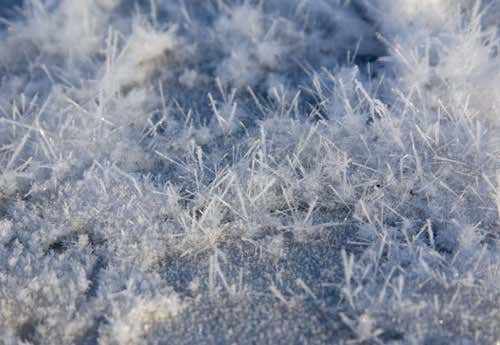
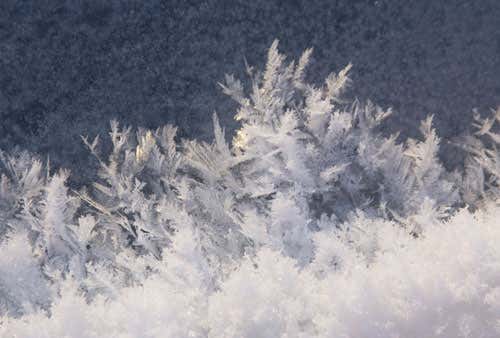
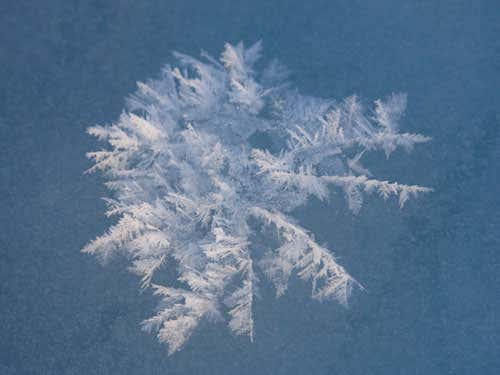
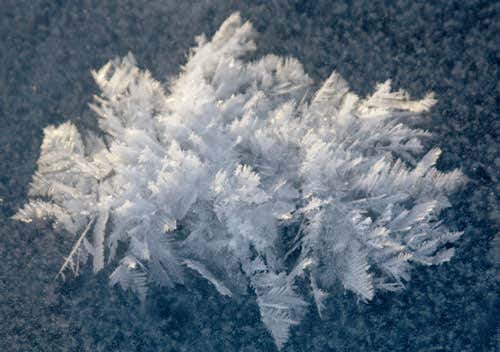
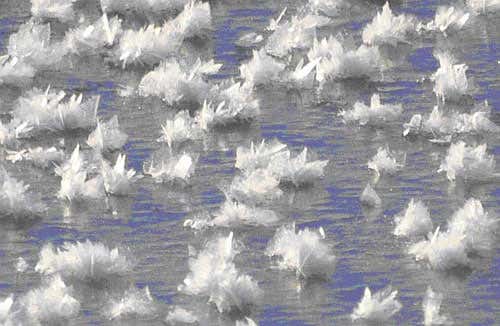
Not much grows in the icy polar regions, but for the fern-like clusters of ice crystals called frost flowers this is the perfect environment, especially when it’s still and dry.
Frost flowers bloom on fresh, thin sea ice, which makes it difficult to get close enough to study them. It was assumed that these structures were similar to hoar frosts, which form when water from supersaturated air – perhaps in the form of freezing fog – is deposited as ice crystals on a surface.
See a gallery of images
Advertisement
However, Grae Worster and Robert Style of the University of Cambridge found that frost flowers form mostly in still, dry air. The key factor is air that is much colder – by around 20 °C – than the water below the ice, they say.
Under these extreme circumstances ice vaporises into the dry air and then refreezes in the form of a frost flower. The pair confirmed this by recreating such conditions in the laboratory. They grew frost flowers from fresh water at 0 °C by cooling the surrounding air to around -25 °C.
The finding could change the way past climate is inferred from ice cores. High levels of salt in frost flowers have been assumed to come from sea spray kicked up by storms, but it now seems that these flowers can bloom in calm conditions.
Journal reference: Geophysical Research Letters (in press)
Topics: