Video: See some of the new species
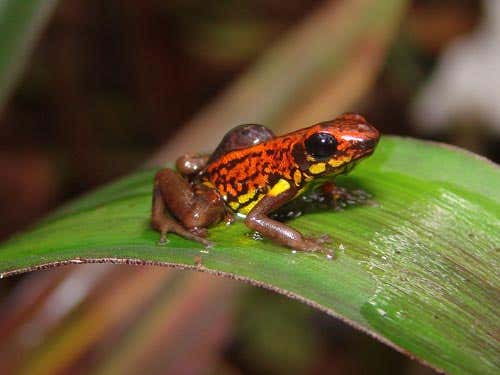
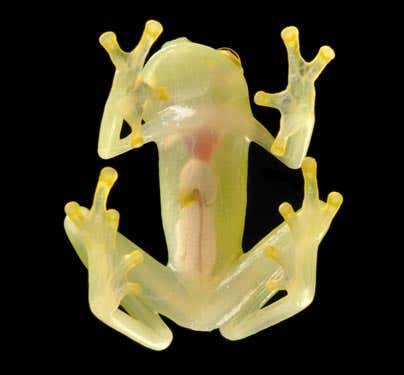
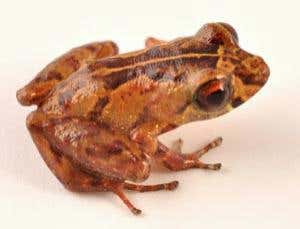
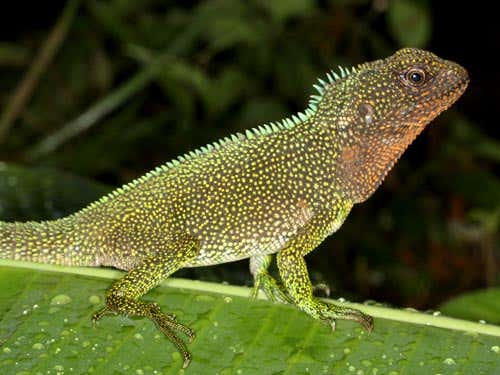
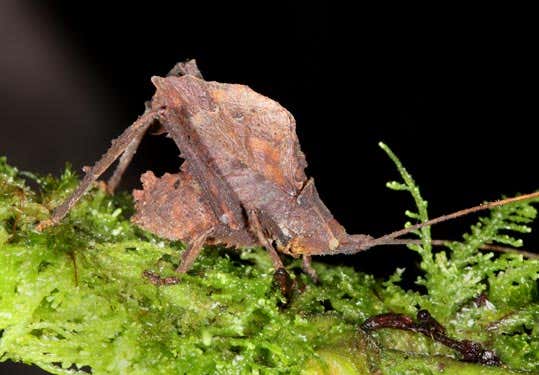
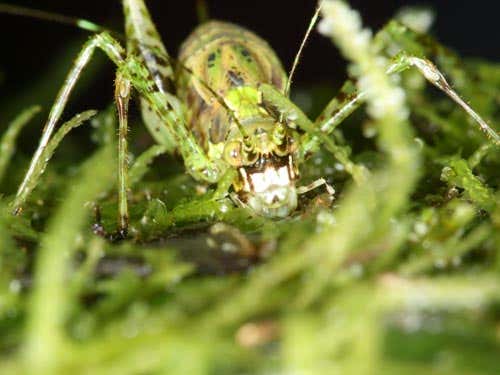
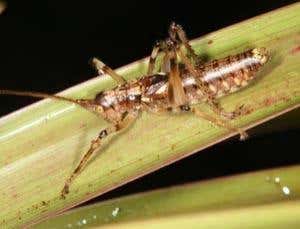
A bug-eyed salamander is was discovered in the Cordillera del Condor. It belongs to the genus Bolitoglossa and may be a new species (Image: Jessica Deichmann) This beautiful poison arrow frog, discovered on a conservation survey in south-eastern Ecuador, may be a new species. Here a male carries one of its tadpoles on its back (Image: Jessica Deichmann) The endangered Hyalinobatrachium pellucidum is a glass frog or crystal frog. Its internal organs can be seen through the translucent skin (Image: Luis Coloma) The survey discovered one of the Andes’ smallest terrestrial vertebrates – a tiny frog species. Males are just 1.3 centimetres long at most (Image: Luis A. Coloma) The conservation biologists also discovered what may turn out to be a new lizard (Image: Holger Braun) This new katydid, a type of cricket, produces a series of short chirps that are inaudible to the human ear (Image: Holger Braun) The white-faced gnome katydid may also be a new species. Only two females were found during the 2009 survey in southeastern Ecuador (Image: Holger Braun) This short-winged ringfoot katydid, also a possible new species, lives between 1800 and 2200 metres (Image: Holger Braun)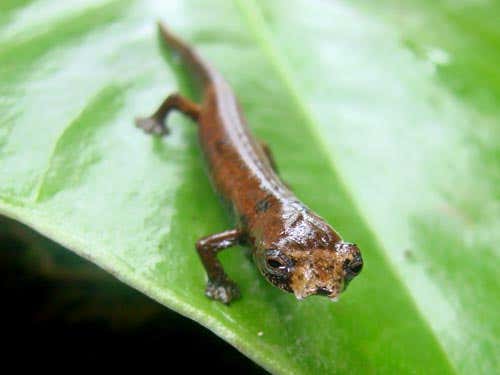
A bug-eyed salamander that looks like ET and a see-through frog are among the weirder species that were discovered by conservation biologists in a far-flung corner of Ecuador.
They were discovered in the Cordillera del Cóndor, an outlier of the main Andean chain which rises to a maximum elevation of about 2900 metres and marks part of the international border between Ecuador and Peru. Because of its geographical seclusion from the rest of the Andes, the Cordillera is thought to be home to many unique species that have evolved in isolation.
Peru and Ecuador fought over the region for more than 160 years and only agreed on the exact location of their border in 1998.
Advertisement
Hoping to encourage the Ecuadorian government to increase the protection of flora and fauna in the area, Conservation International, Fundación Arcoiris and the Catholic University of Ecuador sent teams of biologists to the cordillera to survey its wildlife.
They discovered a number of species which they believe are new to science, including a bug-eyed salamander, a tiny, endangered poison arrow frog, a colourful, polka-dotted lizard and a number of bizarre-looking crickets.
They also found a number of endangered species including Hyalinobatrachium pellucidum, a glass or crystal frog that has translucent skin.
Topics: