Iron Age Scots could have eaten milk with their porridge, says a British team.
They have found traces of bovine casein, a protein found only in cow’s milk, on post-neolithic pot shards. It is the first time anyone has found traces of prehistoric milk.
Photo: Corbis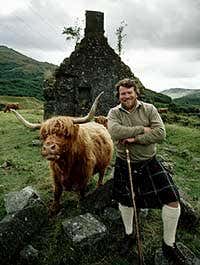
The discovery suggests that people living in Scotland 2500 years ago had a much more sophisticated society than thought, says research leader Oliver Craig at the University of Newcastle upon Tyne, UK.
Advertisement
“These were thought to be meat-farming people eking out a living. But if they were dairy farmers, they would have had a developed society,” he told New Scientist.
Selective cull
Ancient dairy farmers would have had to slaughter male calves so their mother’s milk could be taken for human consumption. A society that killed young cattle that could have grown to provide meat must have been fairly confident in its economy, Craig says.
Piles of neonatal cattle bones have been found at the Cladh Hallan site at South Uist, in the Outer Hebrides. It is impossible to judge the sex of very young cattle and be sure that all the bones are male, Craig says.
“But we do know they slaughtered around half the calf population. Our new finding supports the idea that these are male calf bones, and that the ancient Scots were dairy farmers,” he says.
Gruelly porridge
Craig’s team dissolved nine shard samples, to free any protein traces from the ceramic. They then used an antibody for bovine casein to identify traces of the ancient protein. Seven of the shards tested positive.
This provides solid evidence that the ancient Scots consumed cow’s milk, but it’s impossible to know exactly how they used it, says Craig.
The idea that they ate porridge isn’t too far-fetched, he says. “Though all we can really say is that they had the right ingredients. They didn’t have oats but they did have barley, which you can make into a gruelly kind of porridge – and they did have milk.”
More at: Nature (vol 408, p312)