Ghostly tartan (Image: Peter Tse)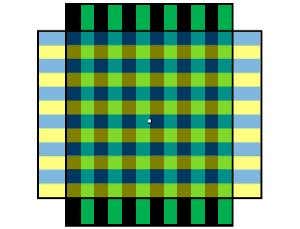
Many well-known optical illusions make an image appear out of nowhere: stare at a picture for a long time then look at a white surface, and you’ll see an after-image before your eyes in its complementary colours. But now Peter Tse from Dartmouth College in Hanover, New Jersey, has come up with a twist on this visual trick.
He created an image by criss-crossing two rectangles with different-coloured stripes. After looking at the pattern for about a minute, you’re asked to stare at the empty outline of the two shapes. Focussing on either the horizontal or the vertical rectangle determines the after-image that you see.
Such “ghost” images are caused by overstimulation of the eye’s photoreceptors, but the new illusion shows that shifting your attention can affect what appears as well.
Advertisement
See more: Don’t believe your eyes: This year’s best illusions


