(Image: JPL/NASA)
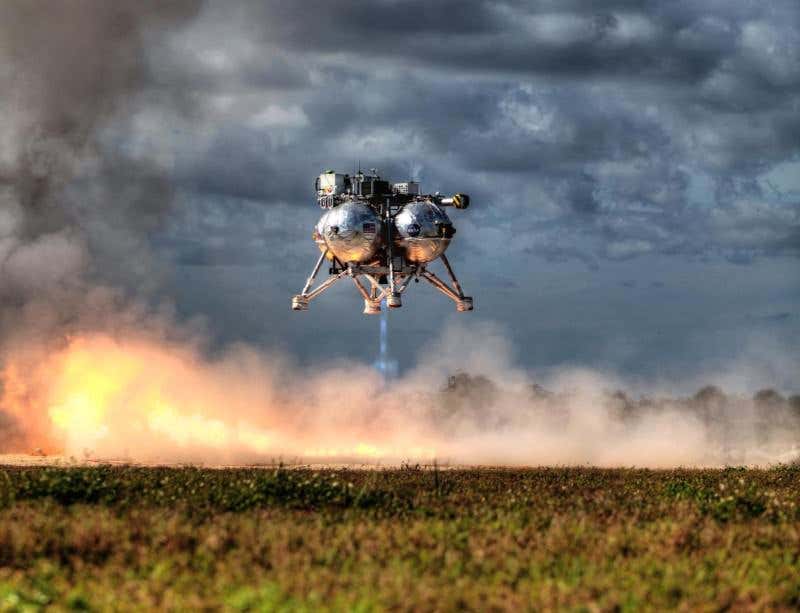
Untethered and, more importantly, not exploding this time around, NASA’s Morpheus lander roared into life and climbed 15 metres above a launch pad at the Kennedy Space Center in Florida on Tuesday.
Designed to be a test bed for future lunar, asteroid and planetary cargo lander designs, the liquid oxygen and methane-powered spacecraft then hovered and nudged itself sideways before landing 7.5 metres from where it took off – missing a target by just 15 centimetres.
Advertisement
This success is a far cry from 9 August 2012, when an earlier model crashed and burned on its first free flight test. That fate can be a regular problem for such landers: back in 1968 Neil Armstrong narrowly escaped death when his lunar module test bed went similarly awry. He ejected just in time.
Topics: