(Image: NASA/JPL-Caltech/UCLAMPS/DLR/IDA)
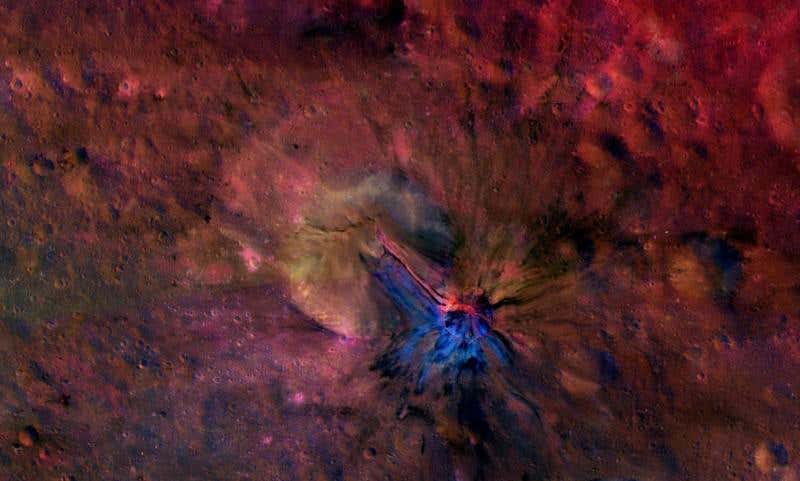
Think asteroids are just a bunch of boring, grey space rocks? Get yourself a pair of infrared specs and think again. The warm reds and deep blues of this false-colour image pick out the scattering of pyroxene around a crater called Aelia on the asteroid Vesta, which was snapped by NASA’s Dawn spacecraft in 2011.
Under normal light, Vesta looks like a lumpy grey blob. But some minerals reflect certain wavelengths of light more than others and infrared light reveals hidden details. The image above combines data from seven different filters of visible and infrared light.
Advertisement
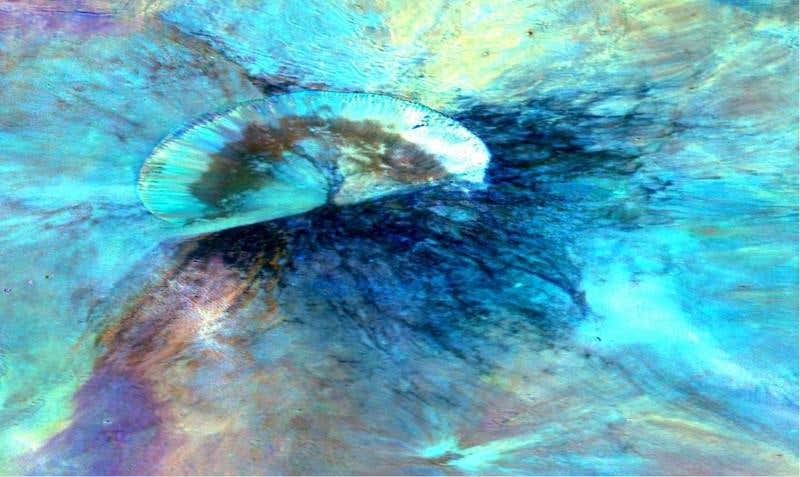
The aquamarine image below, meanwhile, is not a tropical asteroid sea. It is a crater called Antonia on another part of Vesta. The light blue areas are fine dust ejected from the asteroid’s deeper layers by the impact, while the darker areas are large chunks that buried the south end of the crater.
(Image: NASA/JPL-Caltech/UCLAMPS/DLR/IDA)
Dawn departed Vesta in September 2012 and is now on its way to Ceres, the largest asteroid in the solar system. It will arrive in 2015 and map the space rock in similarly exquisite detail.
Topics: