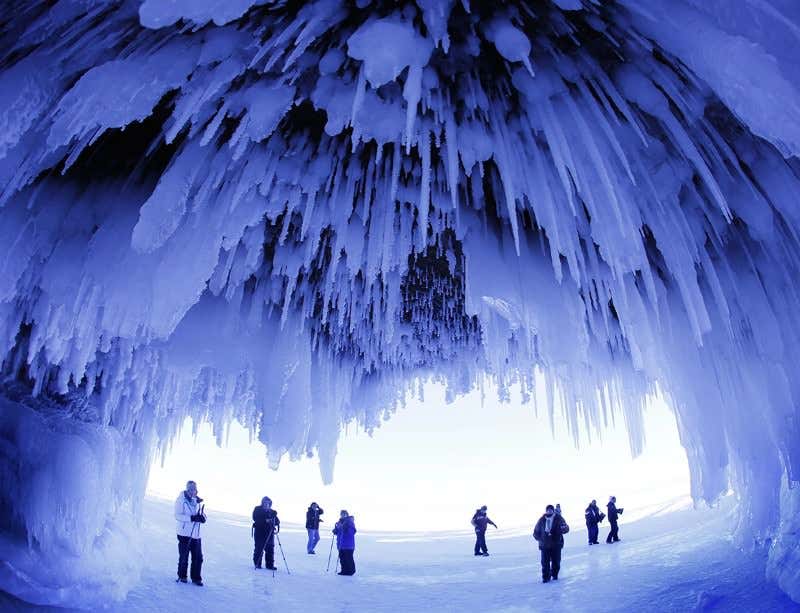
(Image: PA/AP/Minneapolis Star Tribune, Brian Peterson)
Look out below! These people appear doomed by a gigantic overhead explosion. But they’re safe. The firework-like formations are actually icicles formed by huge waves that batter the Apostle Islands sea caves in the south-west corner of Lake Superior, just off the coast of Wisconsin.
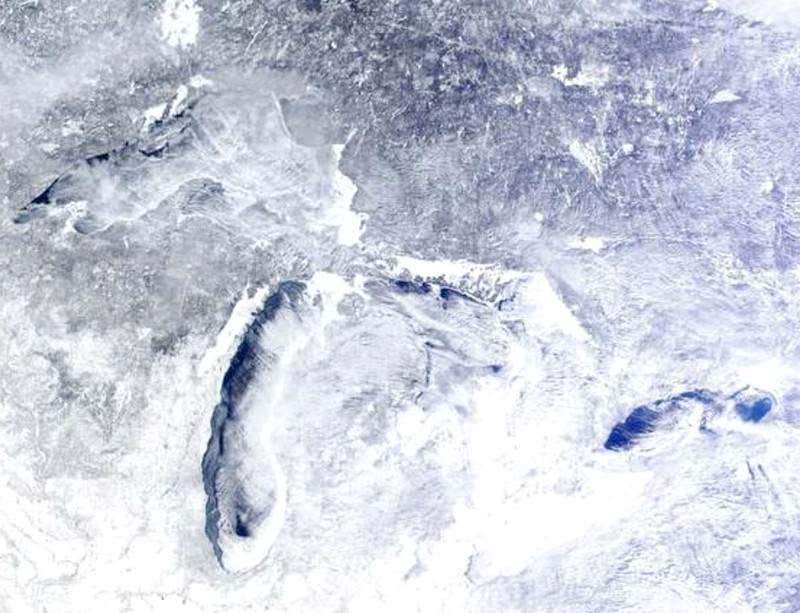
The caves are normally inaccessible. But the exceptionally cold weather in the US this year has led to almost record coverage of ice over the Great Lakes, creating a safe route to the caves for the first time since 2009.
Advertisement
(Image: NOAA)
An estimated 10,000 visitors have trekked over since the route was declared safe by the US National Parks Service on 15 January.
The Parks Service says that access could remain until as late as March, but warns visitors to take no chances with creaky ice on the lake, and to beware falling ice if they do make it to the caves.