(Image: ESO)
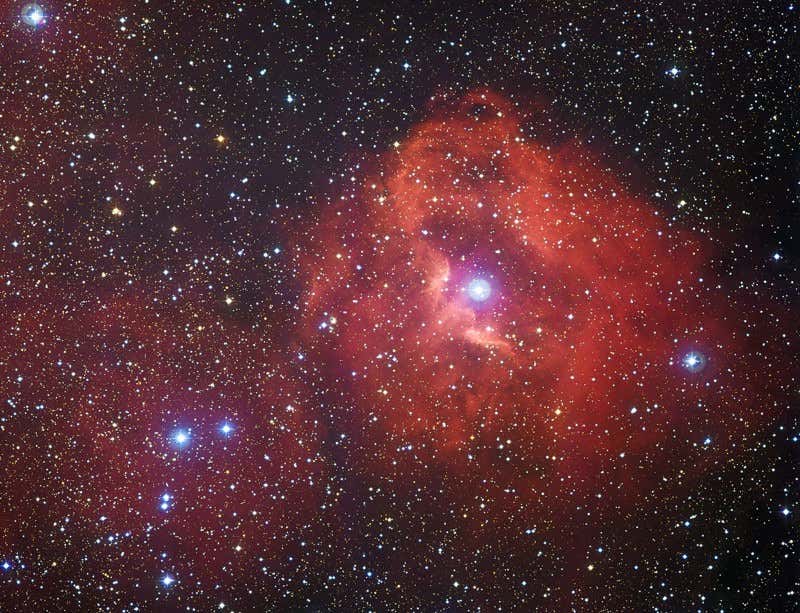
As the old saying goes: red sky at night, shepherd’s delight – or astronomer’s delight, in the case of this swirling cloud of glowing red hydrogen 7300 light years away from Earth.
But space shepherds will have to look elsewhere to predict space weather – these hydrogen clouds are so thin that they are too faint for the human eye to see, even if you were passing right through them. This image was captured using special filters by the Wide Field Imager at the ESO’s La Silla Observatory in Chile.
Advertisement
This nebula is known as Gum 41, but not because it looks sweet and chewy; it was first discovered by Australian astronomer Colin Gum in 1955. Gum 41 forms part of the Lambda Centauri nebula, which might sound like a lamb, but looks more like an angry chicken.
Topics: