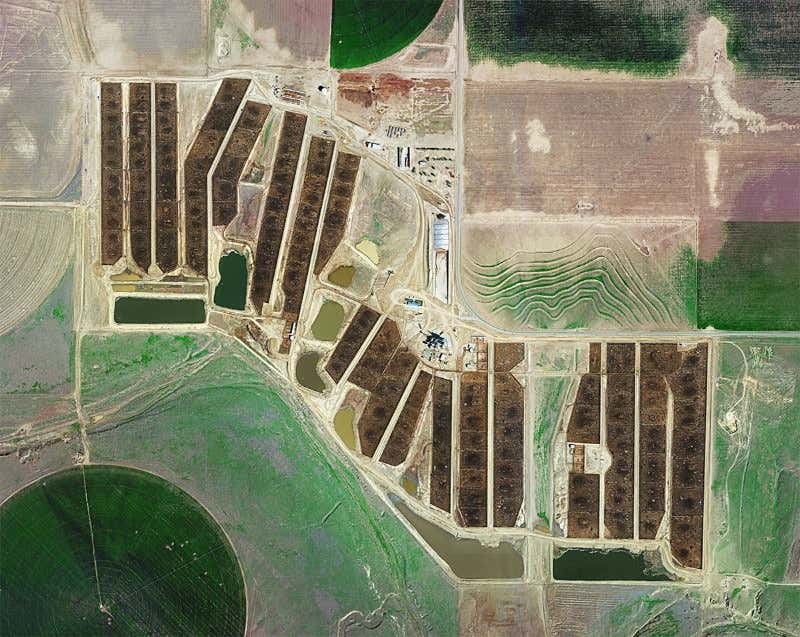
(Image: Mishka Henner, Centerfire Feedyard, Ulysses, Kansas, 2013. Image courtesy of Carroll/Fletcher and the artist)
Up close, gas fields and factory farms are no oil paintings. But by taking a bird’s eye view, Mishka Henner’s satellite images make works of art from places where humans subjugate nature.
This is a view of Centerfire Feedyard in Kansas, where cattle are gathered to be fattened for market. Henner’s other large-scale prints of Google Earth satellite images include oil and gas fields – another industry that takes over the landscape so we can meet our seemingly insatiable demand to consume.
Advertisement
Henner’s previous work includes a book series that contains the whole solar system, in miniature.
You can see his Oil Fields and Feedlots series, along with his photographs of US military outposts, at the Carroll/Fletcher gallery in London until 31 May.
Topics: