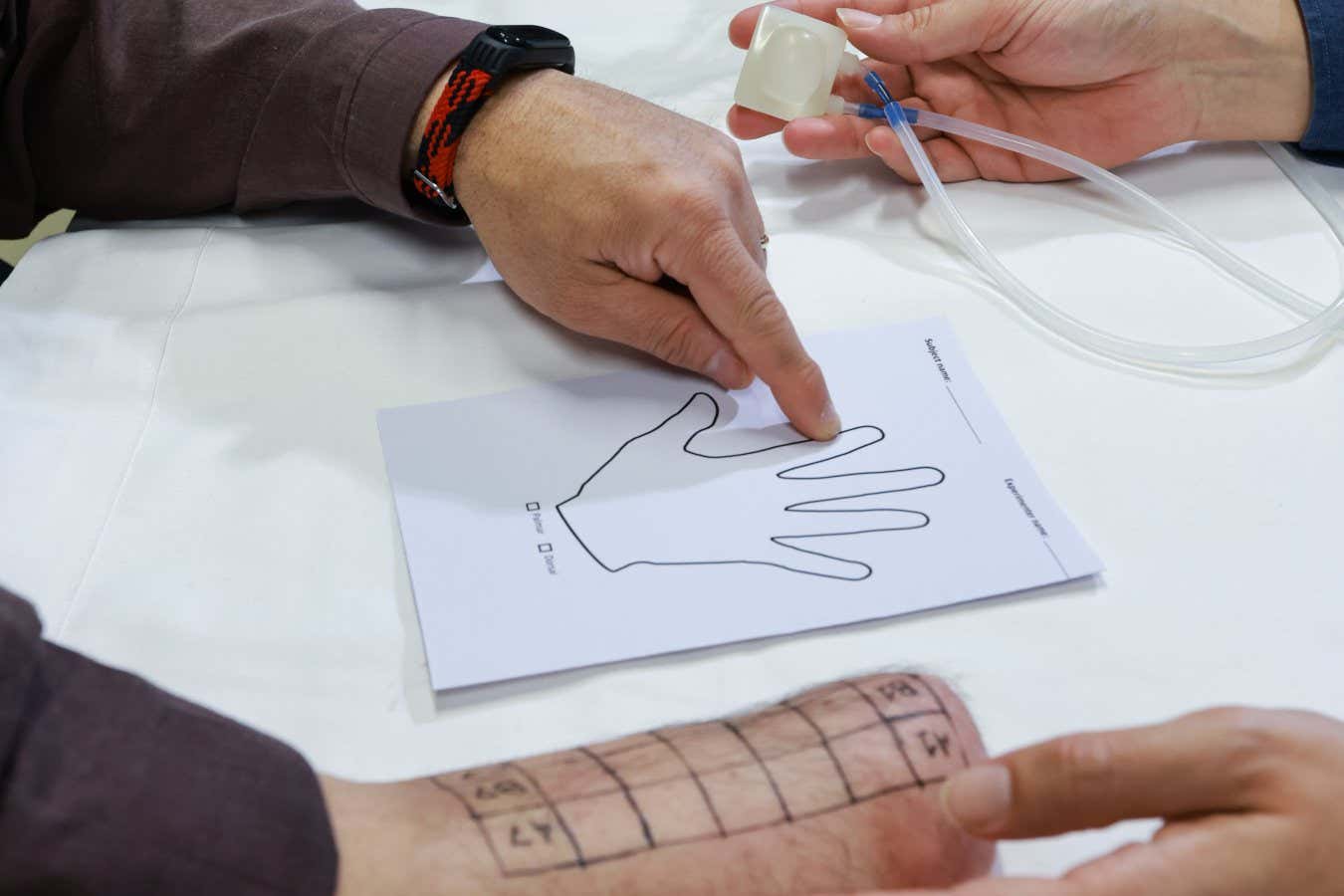
Bellows with potential (Image: University of Washington)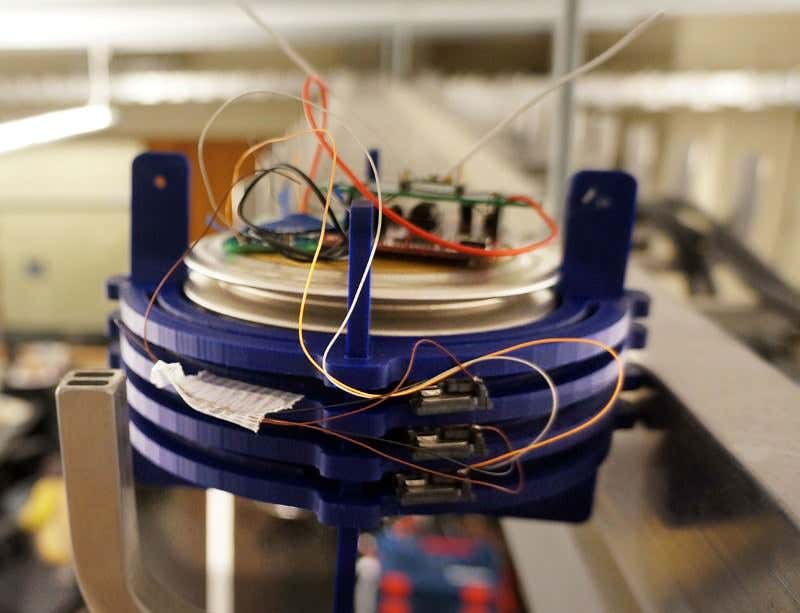
A device that harvests electricity from tiny changes in air temperature could power the sensors of the future.
Chen Zhao and colleagues at the University of Washington in Seattle filled a small bellows with chloroethane gas, which expands and contracts a great deal for small temperature fluctuations. The resulting movement of the bellows in turn moves a magnet inside a coil, producing a current.
The team found that for just a 0.25 °C change in temperature they were able to generate enough juice to wirelessly update an ebook page from 5 metres away.
Advertisement
The Washington team were inspired to develop their harvester after reading about the Atmos clock developed by Swiss inventor Jean-Léon Reutter in 1928. The clock had bellows filled with chloroethane, and an attached mechanism that wound the clock’s mainspring. Changes in ambient temperature of just 1 °C were enough to keep the clock going for two days.
The team is now attempting to improve the power output and shrink the device to the size of a D-cell battery. Zhao says the device could work continuously for decades without maintenance, making it ideal for powering hard-to-reach sensors, such as those monitoring pipes for leaks, or for indoor positioning beacons. Zhao presented the work this week at the UbiComp conference in Seattle.
Topics: