One of the images is of a wombat, rarely seen in other Australian cave art (Image: AFP/Australian Museum)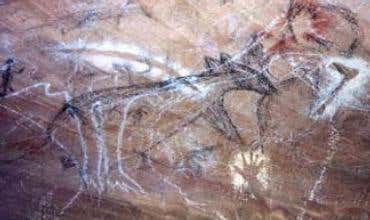
A cavern resplendent with Aboriginal cave art encompassing 4000 years is being hailed in Australia as the most important find in half a century. The cave was discovered by a backpacker in a remote and almost inaccessible part of Wollemi National Park in New South Wales.
Among the newly revealed images are fantastic images of half human/half animal creatures, a rare rendering of a wombat and numerous birds, lizards and marsupials. The find also includes stenciled images of arms and boomerangs.
“We are incredibly excited about what the cave has revealed to us of the long record of visitors to the area,” says Paul Taçon of the Australian Museum in Sydney, who led an expedition to analyse the paintings in May.
Advertisement
“It is amazing to contemplate why people repeatedly travelled great distances through such a rugged landscape to leave their marks out this cave time and again,” he says.
First discovered in 1995, the artwork lies in such a hard to reach location that experts were only able to carry out a full analysis recently. The precise location of the find is being kept secret to prevent it being disturbed by vandals or sightseers.
In total, there are 203 different stencils, drawings and paintings in 12 different layers. Experts believe the artwork dates from 2000 BC right up to the 19th century.