The scene contain rocks of many different shapes and shades (Image: JPL/NASA)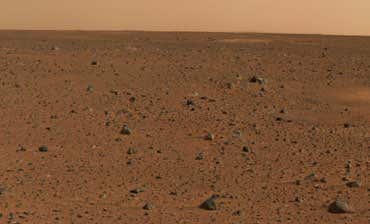
The first full colour image from the Mars lander Spirit has been released. It is the highest resolution picture ever taken of the Martian surface and reveals features that are already intriguing planetary scientists.
The image is the first segment of a planned 360° and 3D panoramic view of the robotic rover’s landing site. The remaining sections are being taken, stored on board the lander, and gradually relayed back to Earth.
The retracting air bags dragged an intriguing trail in the soil (Image: JPL/NASA)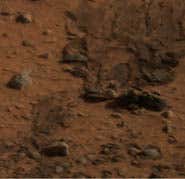
Advertisement
The scene shows a rich diversity of colours and shapes of rocks, a promising prospect for the rover’s excursions. But the biggest mystery so far is an area of soil that was apparently scraped by the lander’s airbags of as they were retracted.
The way the surface responded to the scraping is “bizarre”, said lead scientist Steven Squyres, at mission control in NASA’s Jet Propulsion Laboratory, Pasadena, California. “I don’t understand it, and I don’t know anyone on my team who understands it.”
The surface seems to have a cohesive layer on top that broke apart and perhaps folded in places as it was disturbed. It somewhat resembles soil layers seen in some Viking lander images, called duracrust, but the way it is cracked and folded is unique.
Working order
In addition to the panoramic camera, three of the four principal scientific instruments on board the rover have now been checked and found to be in perfect working order.
This comes as a great relief to mission scientists, because the craft’s bouncing and rolling touchdown jostles and jolts the instruments.
One of those instruments, the German-built Mossabauer mass spectrometer, had malfunctioned in tests during the flight. The problem had been overcome but when an instrument has already had mechanical damage, it raises the risk of further problems. Thinking about what might happen in the 20G stresses of touchdown “scared the living daylights out of us”, Squyres said.
When the tests showed it was working fine, the scientists erupted in another scene of jubilation just like the one following the successful landing Saturday night. “It was the same thing, only in German,” Squyres quipped.