Shiny, polished pebbles were unearthed in a trench (Image: NASA)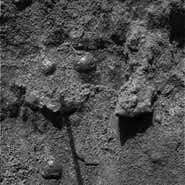
The latest close-up inspections of Martian soil and rock by the NASA rovers Spirit and Opportunity continue to provide tantalising and unexpected results. A rock that had looked sedimentary proved to be volcanic, while a freshly-dug trench is showing what may be hints of some recent water activity.
Opportunity has now completed a full set of microscopic imaging and two kinds of spectroscopy inside a trench that it dug earlier this week. By spinning one wheel while locking the other five, the rover gouged out a furrow 50 centimetre long and 10 centimetre deep in the soft, powdery soil.
On Thursday, it placed its instrument arm on six different locations on the side and bottom of the trench. The sides of some tiny spheres were spotted embedded in the soil in the trench side – similar to those seen earlier on the soil and in an outcrop of bedrock.
Advertisement
But the ones in the trench appear shiny and polished. This could indicate sedimentary origins, with the stones becoming buffed gently as they rolled at the bottom of shallow water.
Also, the sand-grain or smaller particles in the soil seem to be clumped or cemented together, says science team member Albert Yen. The clumping suggests salts which can migrate with water vapour through the soil “providing a weak cement,” he says.
The team is now looking for evidence of salts in the data just received from the Mossbauer spectrometer and the Alpha-Proton X-ray Spectrometer taken inside the trench.
Distance record
Opportunity is now heading toward a section of the outcrop, called El Capitan, which seems to include the full suite of layers that is seen in different parts of the outcrop, says team leader Steven Squyres. “There’s different kinds of material here” in the bedrock, as revealed by its different rates of weathering, he says.
By going to El Capitan, “from a single rover parking spot, we can reach both parts of the unit” with the robotic arm, according to Squyres.
Meanwhile, on the other side of Mars, the twin rover Spirit has officially reset the record for total distance travelled on Mars. The previous record-holder was the tiny 1997 rover Sojourner which journeyed 102 metres.
Freeze-thaw cycles
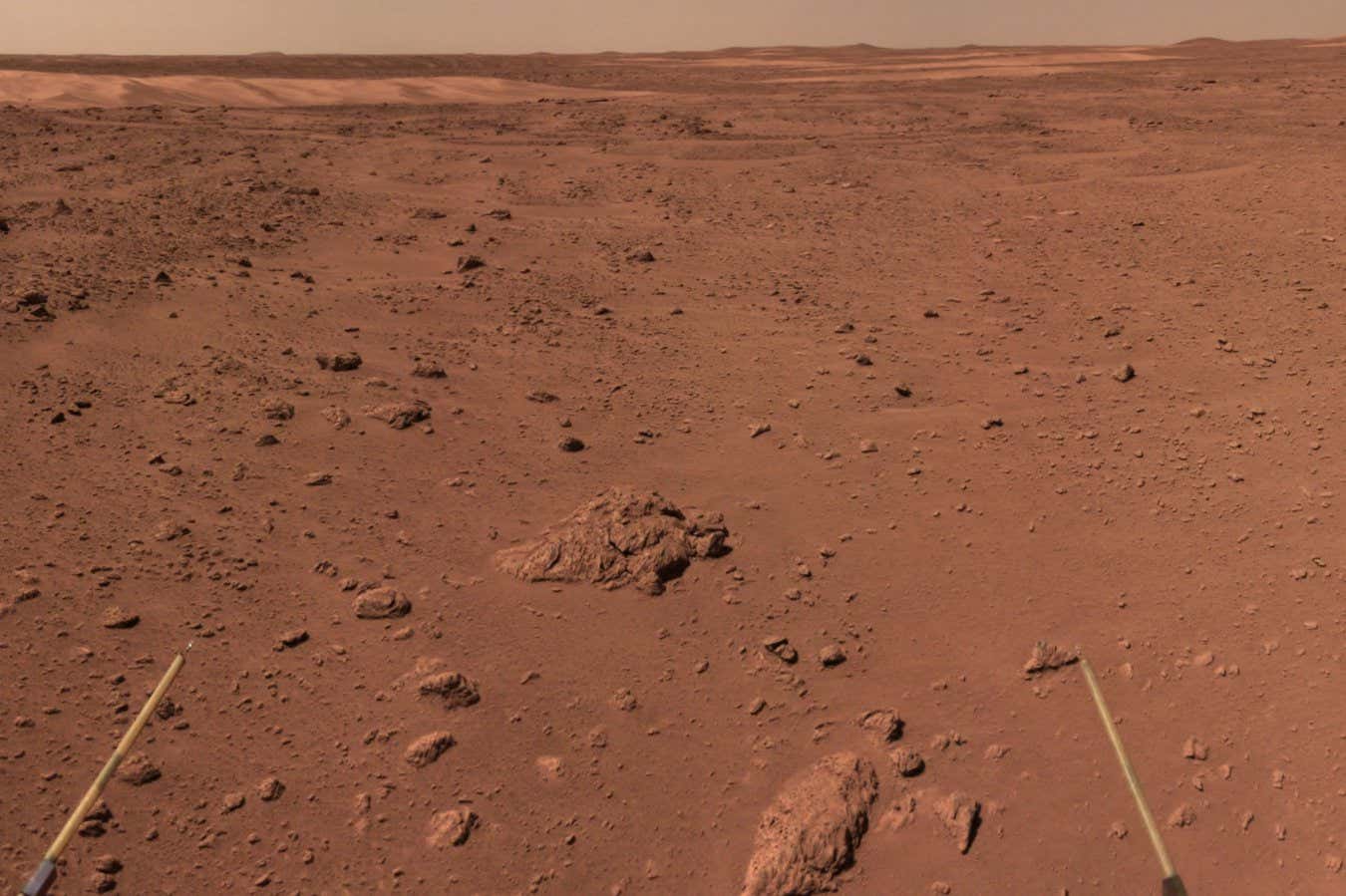
Spirit has now gone more than 110 metres from its landing spot and is about halfway to the rim of a crater called Bonneville. The sheer crater rim is expected to provide a window into deeper layers of the soil in this region, which may have once been a lakebed.
There are already some intriguing features being seen there, says David DesMarais, a science team member from NASA’s Ames Center. Tiny geometric indentations in the soil there resemble the cracking seen in some soils as they go through periodic freeze-thaw cycles or moistening and drying, either of which could mean the recent presence of some water in the Gusev site’s soil, he says.
But one rock that had tantalised the scientists this week turned out to be quite ordinary. Spirit had spotted a rock that looked flaky, resembling the finely-layered rocks seen by Opportunity in its very different location. But closer examination showed this rock to be just ordinary basalt.
Topics: