‘What do scientists do, Daddy?’ Well, they do research in laboratories and .. ‘And?’ And they spend lots of time filling in long forms for other scientists to read, saying what they want to do next. And then sometimes they are locked in a room for a day or two, to look at a big stack of these forms, and decide which ideas they like. ‘Why do they do that?’ It’s called peer review.
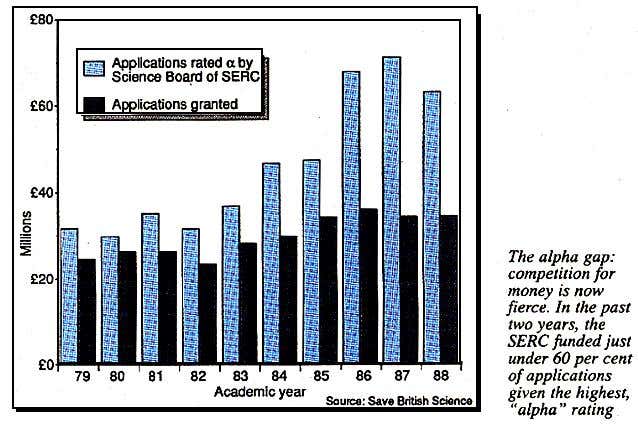
And for a long time it worked quite well. The tradition of asking scientists of repute to judge the quality of others’ work goes back to the birth of the Philosophical Transactions of the Royal Society over 400 years ago. It is now tightly woven into the fabric of scientific communities in all disciplines. To quote one recent definition, it is accepted as ‘an organised method for evaluating scientific work which is used by scientists to certify the correctness of procedures, establish the plausibility of results, and allocate scarce resources (such as journal space, research funds, recognition and special honour).’ Of these, the allocation of research funds is the area of decision-making where the peers increasingly find others looking over their shoulders. These others do not like what they see. The authors of the definition above, American sociologists Daryl Chubin and Edward Hackett, reckon that the peer reviewers who allocate grants now bear more of a burden than was ever intended: ‘The importance of obtaining research support, the competition for support, and the sheer volume of proposals have increased in recent decades.’ In a new book, Peerless Science (published by the State University of New York, 1990), they call for the system…