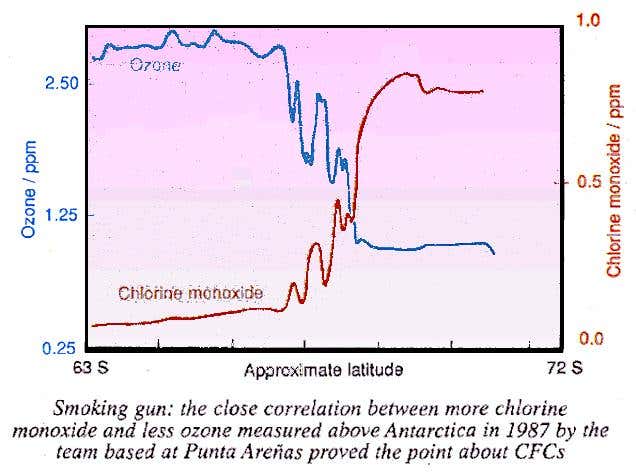
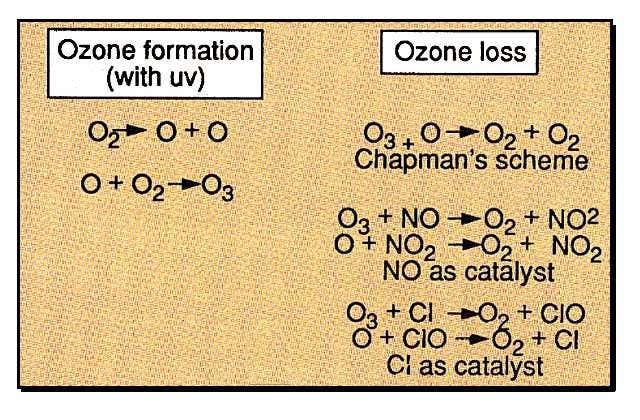
On 16 September 1987, 21 nations and the European Community signed the Montreal Protocol, the first international agreement to restrict the release to the atmosphere of substances deemed damaging to the global environment. Growing public, scientific and political concern about the massive loss of ozone above Antarctica each southern spring was undoubtedly a driving force for reaching this accord. The ozone hole was firt reported in 1985 . By 1988 there was irrefutable evidence linking this seasonal loss with the presence in the stratosphere of chlorine atoms, largely derived from chlorofluorocarbons (CFCs). And in June this year the terms of the original protocol were tightened further; use of CFCs should be phased out by the end of the century. It appears on the surface that the international community acted with commendable speed in tackling this problem.
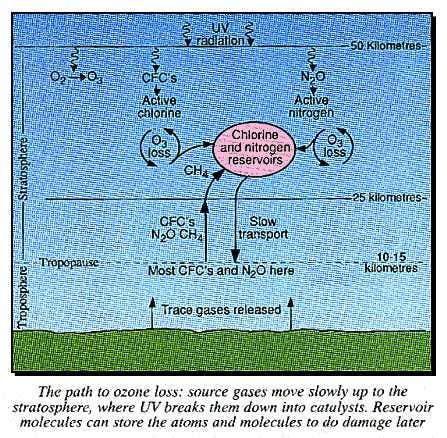
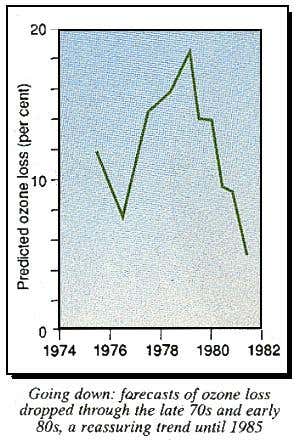
But the action taken in the 1980s was the culmination of a long-running detate about CFCs that began in the mid-1970s. Throughout this period, computer models were predicting that continued release of CFCs would damage the ozone layer, but until 1985 there was no hard evidence that there had been any loss. Nevertheless, governments gathered together to limit emissions of the supposedly dangerous CFCs. In fact, this process began at a time when the predictions from the models gave gradually decreasing forecast of the expected ozone loss. When proof came in 1985, the damage was very different from any of the predictions. With hindsignt, it is no surprise that the models of the time did not predict what actually happened, nor that the limited data about ozone distribution did not reveal all. But…