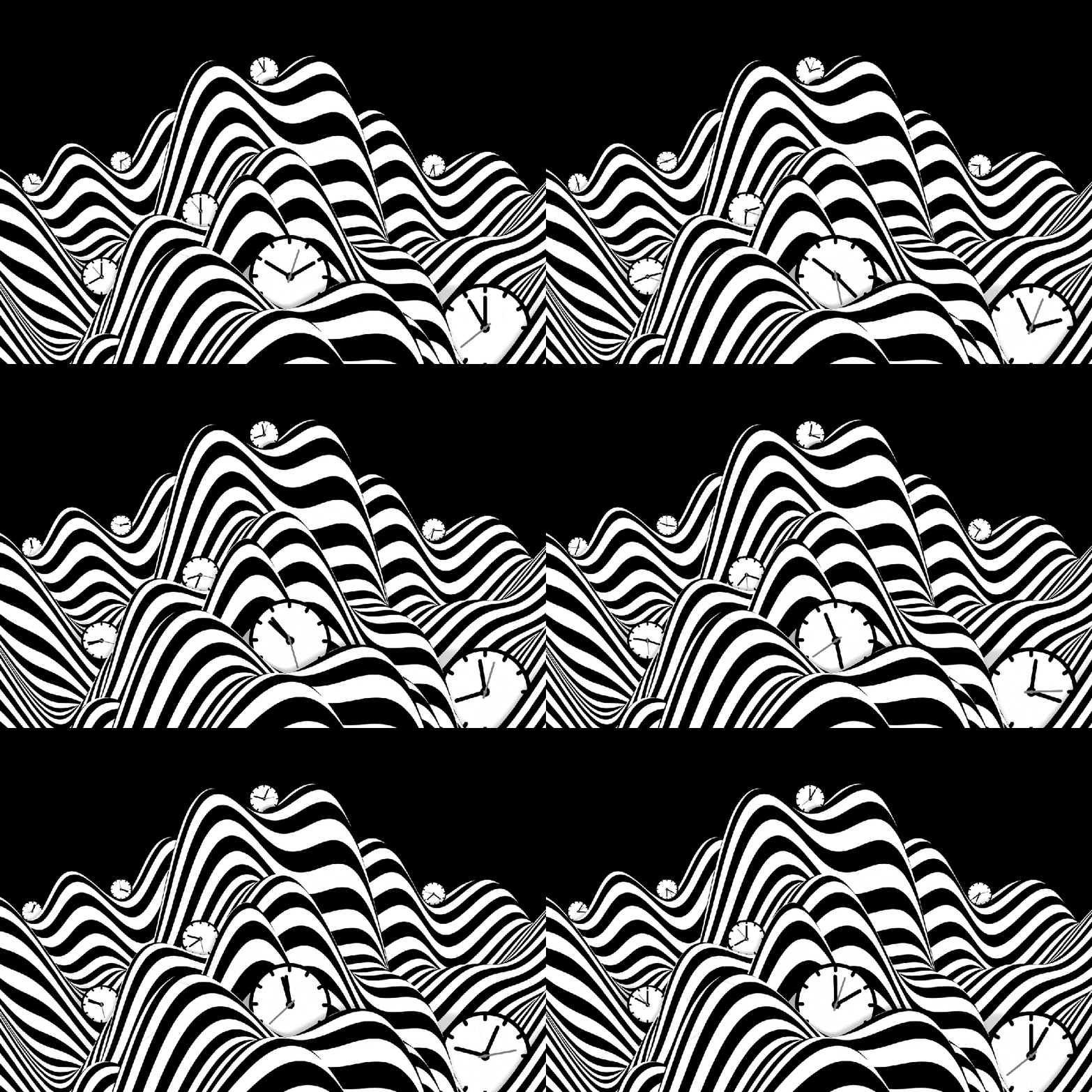
IT was mighty quiet in our Universe: devoid of all matter and energy. Then
another universe collided with it. Suddenly space became a searing soup of
particles and radiation, far hotter and denser than the centre of the Sun.
This, says a team of physicists, is how the big bang happened. The approach
of the parallel universe caused the expansion of space, and the collision itself
produced all energy and matter. A comprehensive description of this new theory
has been submitted to the journal Physical Review D.
The model is a viable alternative to the theory of cosmic inflation, which…