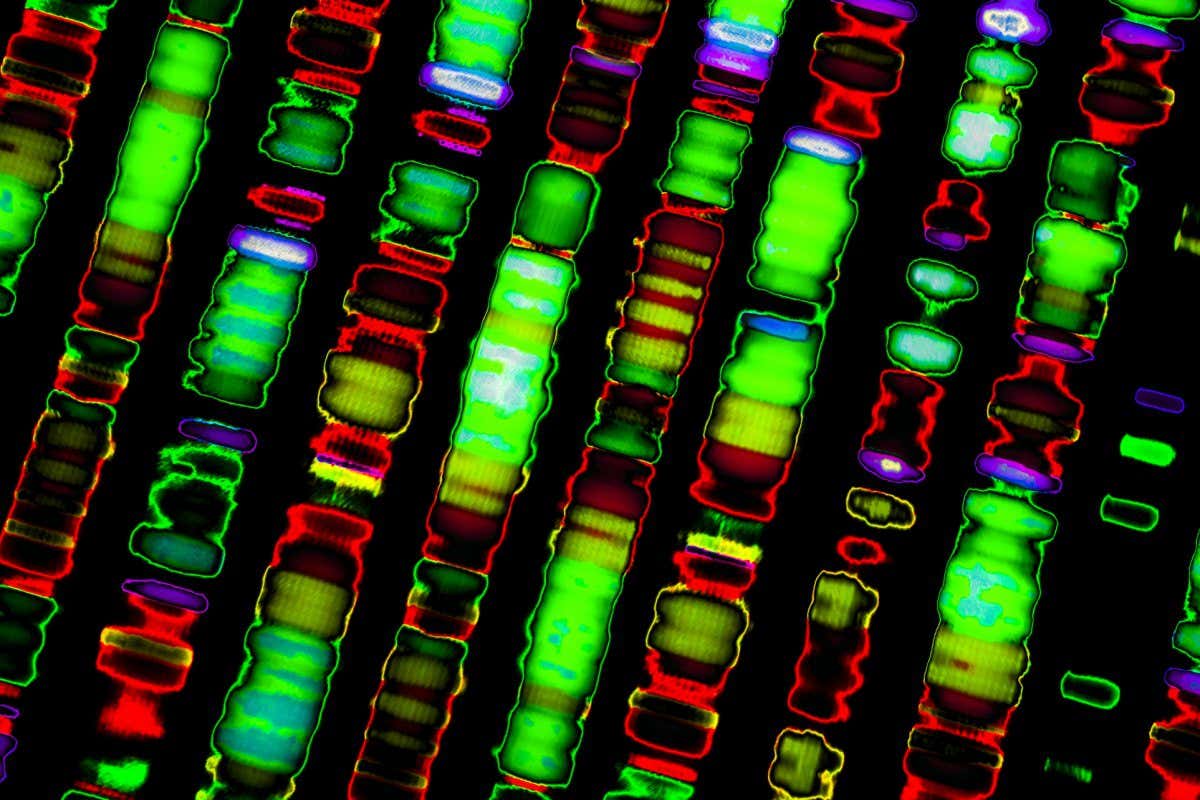
A CONTROVERSIAL theory could help explain growing evidence that many genes do more than code for proteins.
At the simplest level, part of one of the two strands of DNA – the “sense” strand – is copied to create a single-stranded RNA that acts as a template for making a protein. But it is becoming clear that animals produce far more RNA than needed to make proteins.
The main reason for this, according to Tom Gingeras of the Californian DNA chip company Affymetrix, is that many genes also churn out something called “antisense” RNA. Antisense RNA, made from the other, complementary DNA…