POWER from nuclear fusion could become more practical thanks to a new way of protecting the inside of reactor vessels from super-hot plasmas. If the technique works as promised, it could save hundreds of millions of euros a year in future fusion reactors.
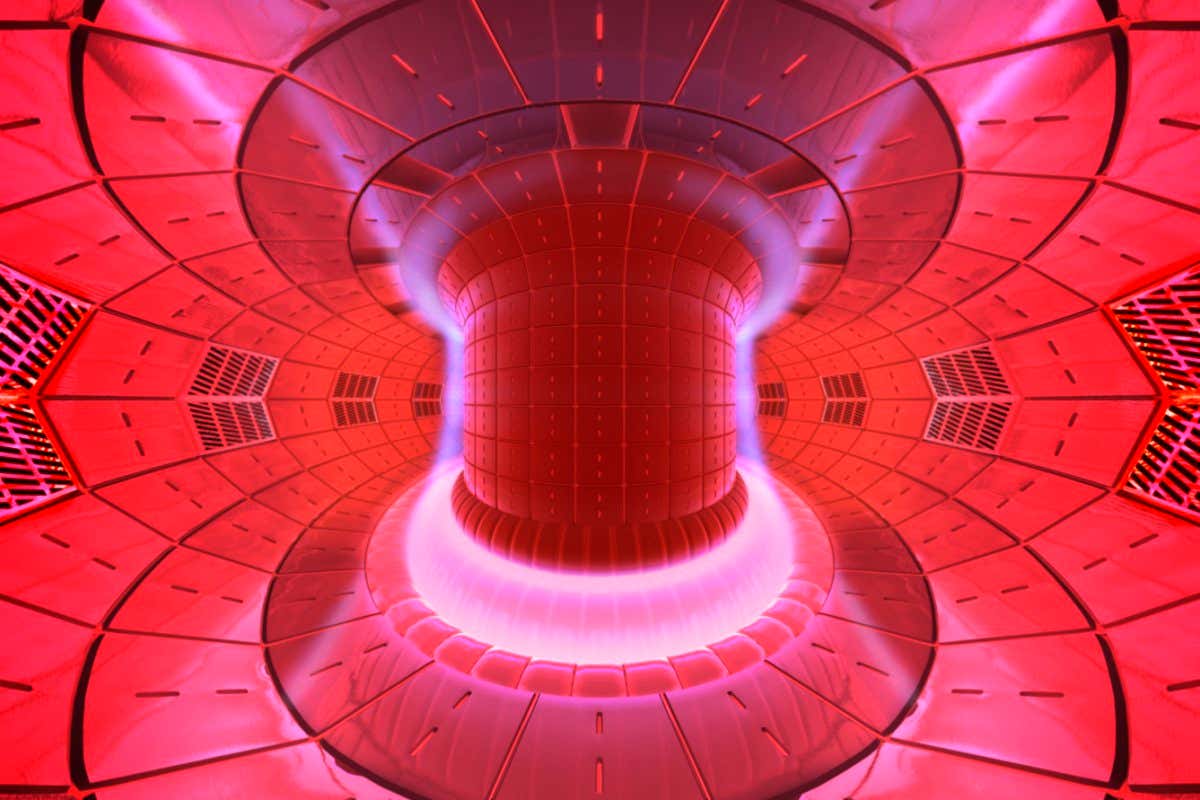
Fusion reactors work by heating a plasma of hydrogen isotopes to 100 million °C, causing the isotopes to fuse together and release energy. The plasma is contained within a doughnut-shaped magnetic field created by powerful superconducting magnets.
However, the inside of the steel reactor vessel can be damaged by plasma instabilities called edge-localised modes (ELMs). Like a…