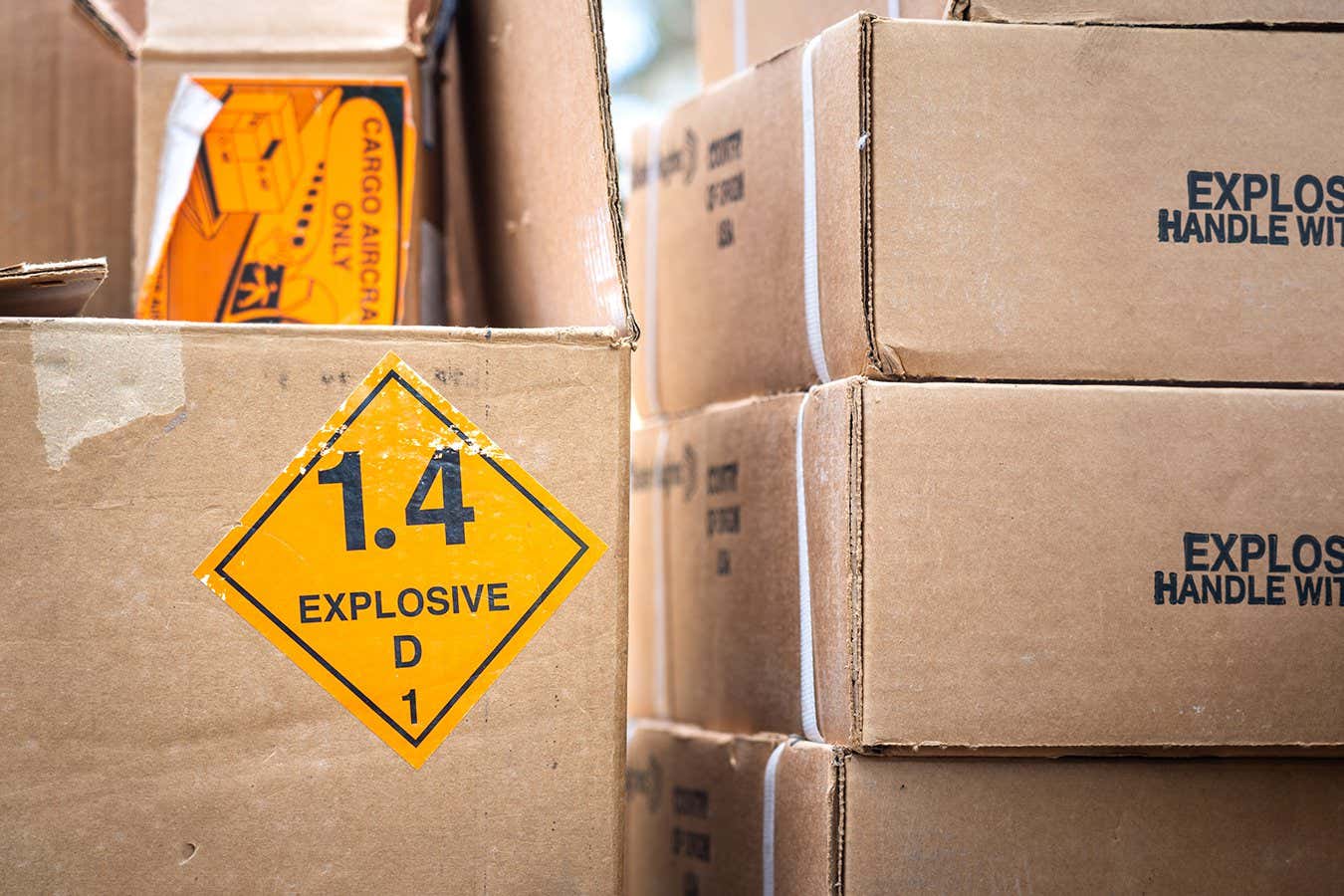
DNA could help police to sniff out explosives. An artificial “nose” made of a single strand of DNA can detect a range of chemicals at very low concentrations.
Joel White and colleagues at Tufts University in Boston and CogniScent, a company in nearby North Grafton, attached a fluorescent dye to a short strand of DNA. They wafted a number of vapours over it, including toluene, an ingredient for making TNT. The vapours interacted with the unpaired DNA bases, influencing the dye’s fluorescence. The degree of change depended on the vapour, allowing the “nose” to distinguish at least eight different chemicals (…