Subscribe now

Martian rock steps mark past climate swings

By Stephen Battersby

10 December 2008

New Scientist. Science news and long reads from expert journalists, covering developments in science, technology, health and the environment on the website and the magazine.

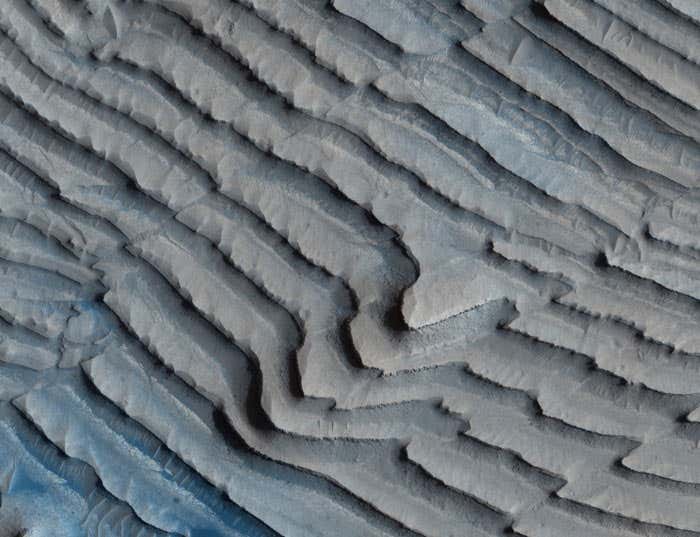
Step-like layers in a crater in the Arabia Terra region of Mars hint at past climate swings

(Image: NASA/JPL/U of Arizona)

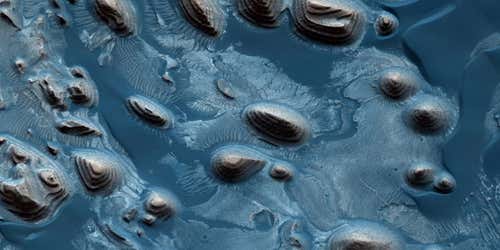
Erosional mounds inside a crater show rhythmic layering in this false-colour image

Erosional mounds inside a crater show rhythmic layering in this false-colour image

(Image: NASA/JPL/U of Arizona)

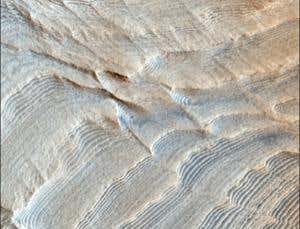
Two scales of stratification appear in this false-colour image of a crater called Becquerel. Each thin layer - measuring a few metres tall - may have been laid down during a 120,000-year cycle in which Mars tilts back and forth on its axis.  Those thin layers are bundled together in groups of 10, which probably correspond to modulations in the strength of the 120,000-year cycle over time

Two scales of stratification appear in this false-colour image of a crater called Becquerel. Each thin layer – measuring a few metres tall – may have been laid down during a 120,000-year cycle in which Mars tilts back and forth on its axis. Those thin layers are bundled together in groups of 10, which probably correspond to modulations in the strength of…
Sign up to our weekly newsletter

Receive a weekly dose of discovery in your inbox. We'll also keep you up to date with New Scientist events and special offers.

Sign up

To continue reading, subscribe today with our introductory offers

Popular articles

Trending New Scientist articles

Piano Exit Overlay Banner Mobile Piano Exit Overlay Banner Desktop