Subscribe now

Space

Is the Roman Pantheon a colossal sundial?

By Jo Marchant

28 January 2009

New Scientist. Science news and long reads from expert journalists, covering developments in science, technology, health and the environment on the website and the magazine.

A hollowed-out hemisphere with a hole in the top was a type of sundial used in Roman times, albeit on a much smaller scale, to show the time of year

(Image: credit: Paul Chesley/ Stone/Getty)
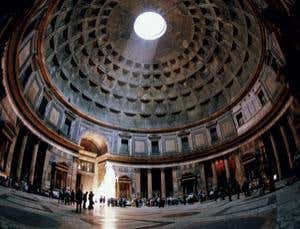
HAS the grand Roman Pantheon been keeping a secret for nearly 2000 years? An expert in ancient timekeeping thinks so, arguing that it acts as a colossal sundial.

The imposing temple in Rome, completed in AD 128, is one of the most impressive buildings that survives from antiquity. It consists of a cylindrical chamber topped by a domed roof with an oculus in the top…


Sign up to our weekly newsletter

Receive a weekly dose of discovery in your inbox. We'll also keep you up to date with New Scientist events and special offers.

Sign up

To continue reading, subscribe today with our introductory offers

Popular articles

Trending New Scientist articles

Piano Exit Overlay Banner Mobile Piano Exit Overlay Banner Desktop