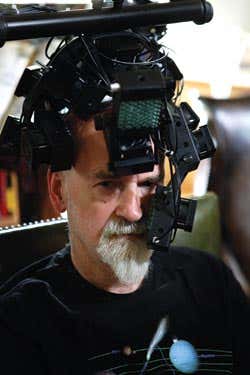
A hole in the skull could increase blood flow to the brain (Image: Zephyr / SPL) Terry Pratchett wearing the laser helmet. After Pratchett was diagnosed with Alzheimers in 2007, he wore this helmet in the hope that it would help repair brain cells by penetrating the skull with light (Image: RDF Media)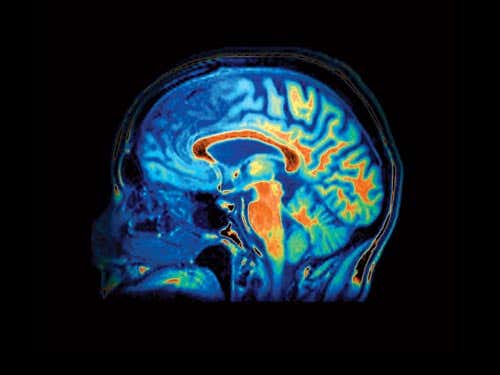
IN THE early 1960s, a young Russian neurophysiologist called Yuri Moskalenko travelled from the Soviet Union to the UK on a Royal Society exchange programme. During his stay, he co-authored a paper published in Nature. “Variation in blood volume and oxygen availability in the human brain” may not sound subversive, but it was the start of a radical idea.
Decades later, having worked in Soviet Russia and become president of the Sechenov Institute of Evolutionary Physiology and Biochemistry at the Russian Academy of Sciences in St Petersburg, Moskalenko is back in the UK. Now collaborating with researchers at the Beckley Foundation in Oxford, his work is bearing fruit.
And strange fruit it is. With funding from the foundation, he is exploring the idea that people with Alzheimer’s disease could be treated by drilling a hole in their skull. In fact, he is so convinced of the benefits of trepanation that he claims it may help anyone from their mid-40s onwards to slow or even reverse the process of age-related cognitive decline. Can he be serious?
For thousands of years, trepanation has been performed for quasi-medical reasons such as releasing evil spirits that were believed to cause schizophrenia or migraine. Today it is used to prevent brain injury by relieving intracranial pressure, particularly after accidents involving…